
When the rain hits right as everyone is getting restless, I reach for the same sanity-saving tool every time: an indoor scavenger hunt. It feels like a game to the kids, but for me it is a sneaky way to turn wild energy into focused movement without pulling out screens. The best part is you can run one with almost no prep using stuff you already have.
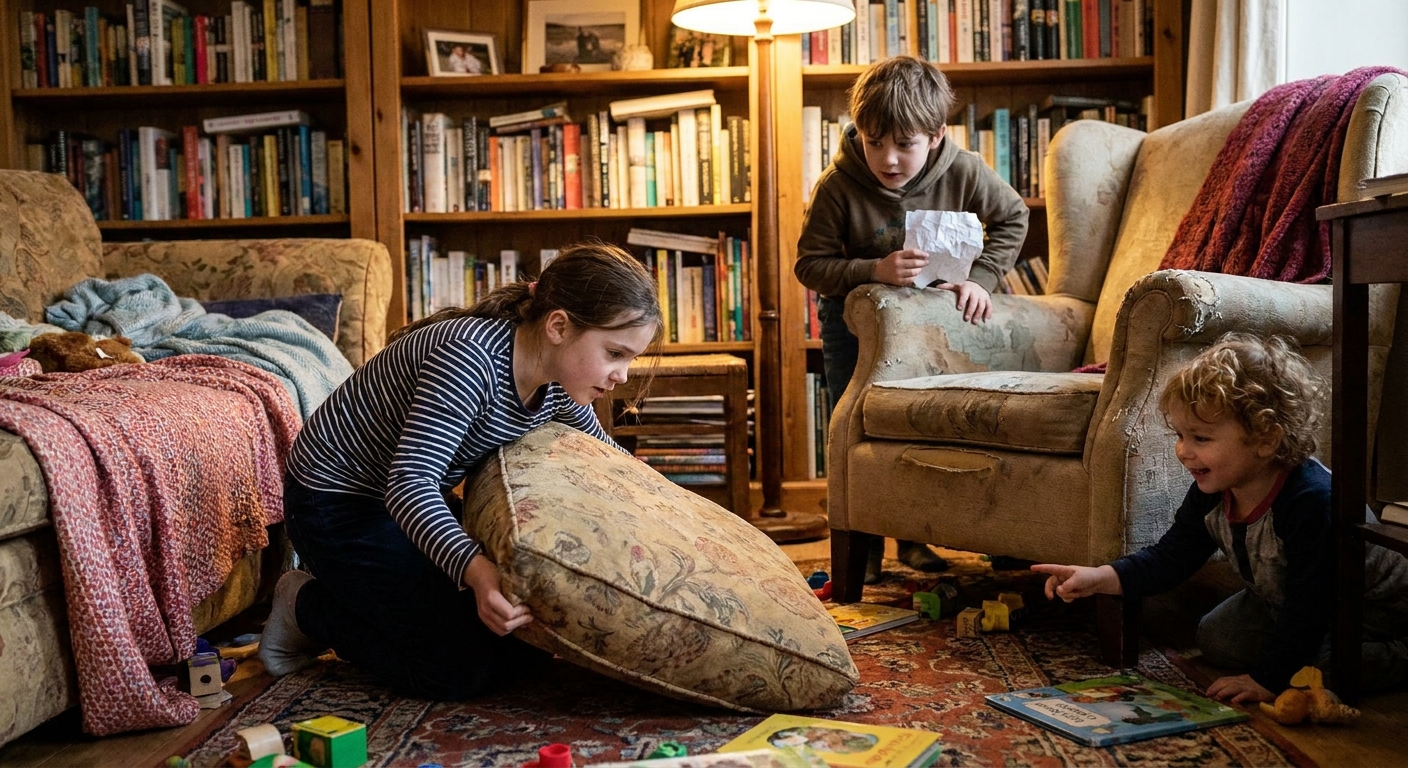
Below are my favorite indoor scavenger hunt setups, clue lists you can copy, and a few small tweaks that make the whole thing run smoother, even with mixed ages.
My 5-minute setup
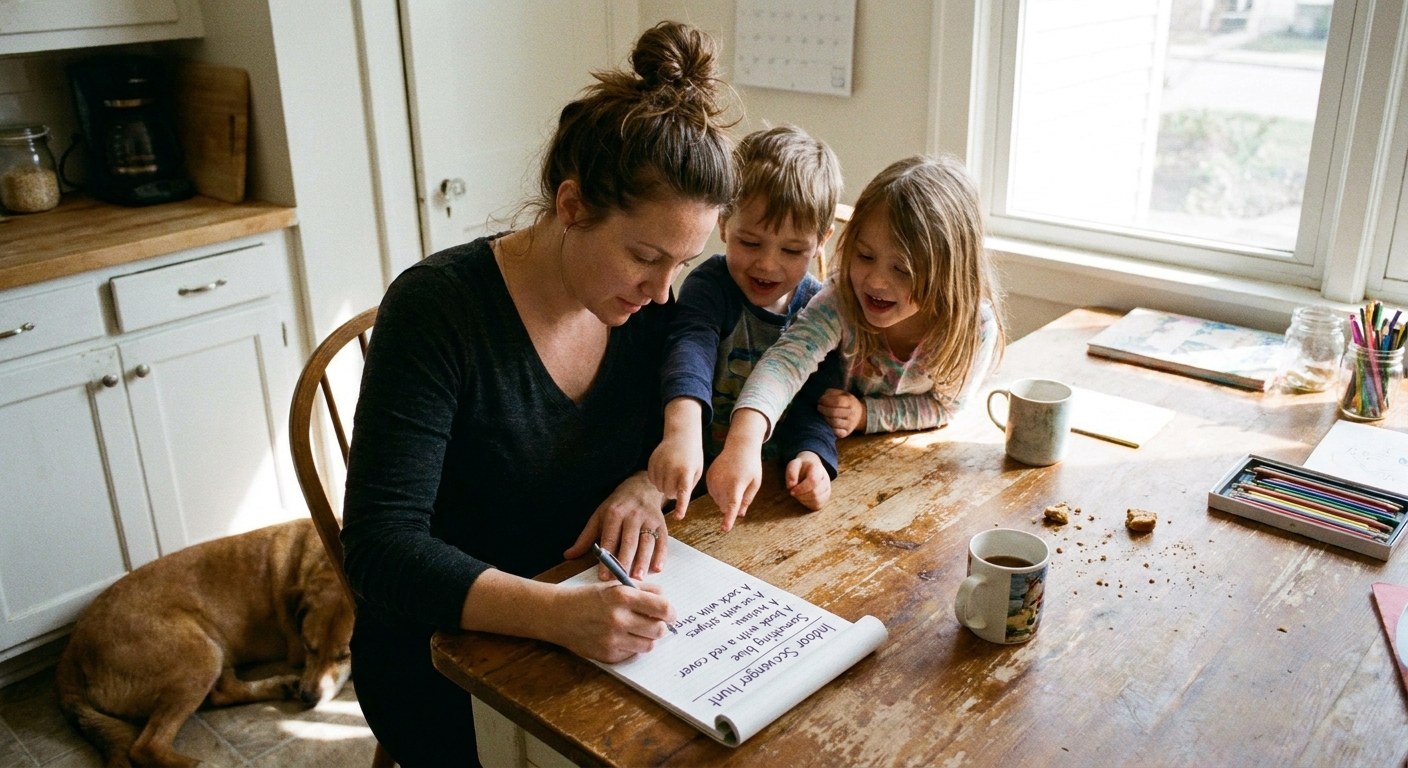
If you have 5 minutes, you often have enough time to get a solid hunt going. This is my basic formula, especially when I did not plan ahead and the dog is also bouncing off the walls.
- Pick the hunt style: “Find and bring” (best for younger kids) or “Find and write down” (best for older kids). If writing feels like a mood killer, “find and tell me” works too.
- Choose boundaries: 1 to 3 rooms. I usually do living room, hallway, and one bedroom.
- Set a container rule: everyone gets a bag, basket, or pillowcase. One item per prompt, no dumping bins.
- Set a timer: for many kids, 10 to 20 minutes is the sweet spot. It keeps it exciting and can help prevent wandering and stalling.
- Choose the ending: quick show-and-tell, then a reset. I love pairing it with the 10-minute family tidy-up game so everything goes back where it belongs.
House rule that prevents meltdowns (in my house, anyway): If someone finds the “best” version of an item first (biggest spoon, fluffiest sock, funniest book title), they get to call it and move on. No arguing over who found it first.
Quick safety note: I tell kids upfront: no climbing on furniture, no reaching behind appliances, and an adult handles anything high up or in the laundry or utility area.
Indoor scavenger hunt lists
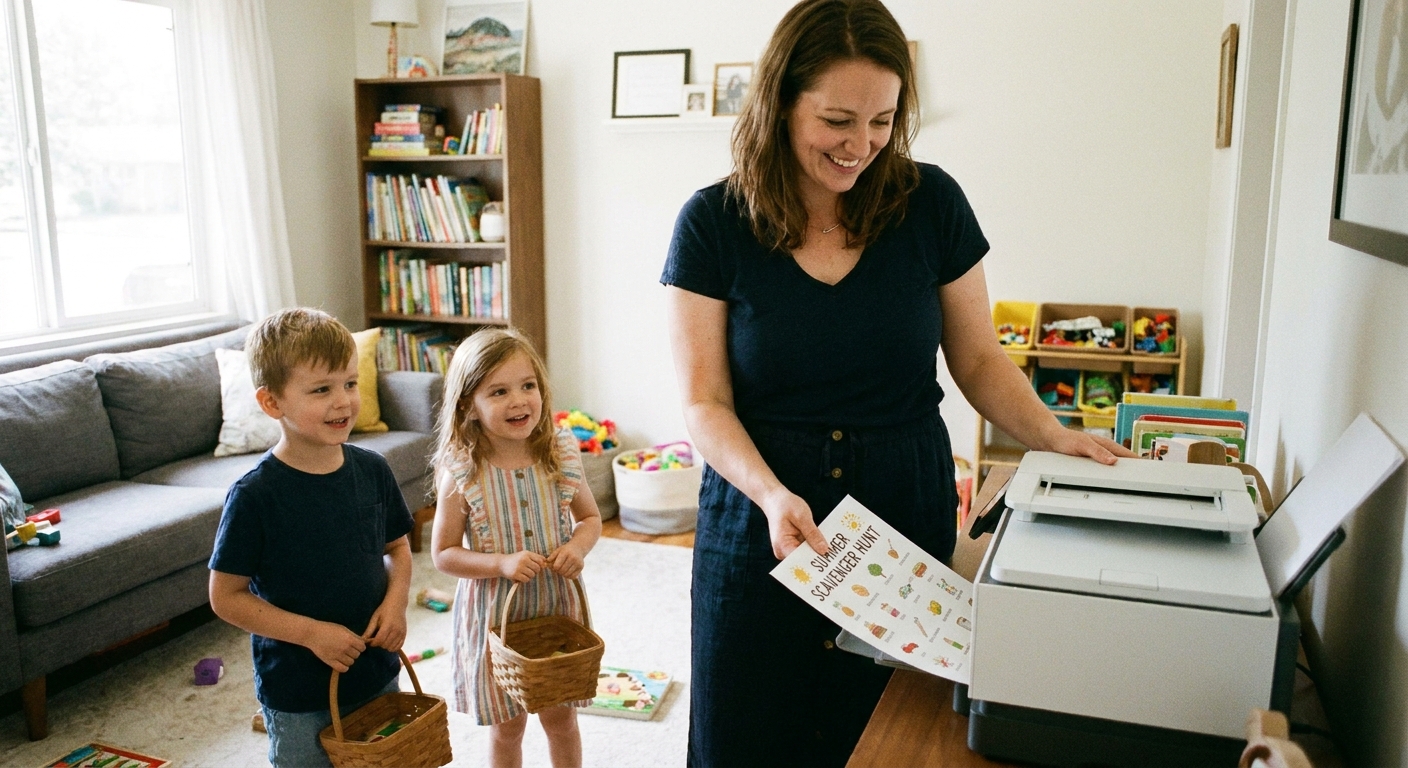
These lists are designed to work without printing. You can write them on a sticky note, a whiteboard, or read them out loud while kids shout “Got it!”
1) Classic household item hunt (all ages)
- Something soft
- Something that opens and closes
- Something with a zipper
- Something that smells good
- Something that makes noise
- Something you can wear
- Something with a number on it
- Something round
- Something that is your favorite color
- Something that belongs in the kitchen
2) Color and shape hunt (toddlers to early elementary)
- Something red
- Something blue
- Something green
- Something yellow
- A circle
- A square
- A rectangle
- Something striped
- Something with polka dots
- Something shiny
3) “Only in this room” hunt (keeps kids contained)
Pick one room and keep it simple.
- Find 3 things made of fabric
- Find 2 things that plug in (identify only, do not unplug)
- Find 4 things with words on them
- Find 5 things that are the same color
- Find 1 thing you have not used in a week
4) Cozy rainy-day hunt (calmer energy)
- A blanket
- A book with a person on the cover
- A mug (plastic is fine)
- Something that feels warm (socks, hoodie, hat)
- A stuffed animal
- Something that reminds you of summer
- A puzzle piece
- A crayon or marker
- A snack wrapper (empty is fine)
- Something that smells like soap
5) The “sneaky learning” hunt (without making it school)
- Something that starts with the letter B
- Something that rhymes with “cat”
- Something with the number 3 on it
- Something that is heavier than a spoon
- Something lighter than a shoe
- Something with a pattern
- Something that is longer than your hand
- Something you can count (buttons, blocks, coins)
- Something that is a triangle shape
- Something that is used for writing
If you want to make your own lists quickly (and reuse them), I walk through the exact process in DIY scavenger hunt lists in word processors.
Clue-based indoor hunts
If your kids love solving things, clue hunts feel special even when the “treasure” is just a snack or a note that says “Pick the movie tonight.” You can hide clues in plain sight and still get a big reaction.
How I run a clue hunt
- Choose 5 to 8 clue spots you can access quickly: pillow, fridge, shoe basket, under a book, in a clean sock, taped to a table leg.
- Write one clue per spot that points to the next location.
- End with a “treasure”: a small bowl of snacks, a new library book, a coupon for picking dinner, or 5 minutes of extra bedtime story.
Safety tweak I always use: I avoid outlets, cords, behind TVs, and anything that would tempt kids to pull or unplug something. If a clue is near something plugged in, it is “look only.”
8 ready-to-use indoor clues
- “I am cold and I hum. I keep your food safe when day is done.” (fridge)
- “Find me where shoes go to rest their toes.” (shoe area)
- “Look where we wash our hands and faces.” (bathroom sink)
- “I have pages but I am not a notebook.” (inside a book)
- “I get filled with socks, then I spin around.” (washer or laundry area, adult-only)
- “I am soft and cozy and live on the couch.” (blanket basket or couch)
- “I light up your room with just one click.” (lamp switch, safely reachable)
- “I hide where you sit to eat.” (under a chair or taped under the table edge)
Mixed ages tip: Let younger kids be the “finders” and older kids be the “readers.” In my experience, it can help reduce sibling bossiness because everyone has a job.
If someone gets stuck: I allow one swap per kid (“pick a different clue spot”) or I give a hint after 30 seconds. Keeping momentum matters more than keeping the list perfect.
7 themed hunt ideas
Themes make the same house feel new. You can do these with zero special supplies.
- Spy hunt: kids whisper, wear dark clothes, and collect “evidence” like a button, a receipt, a paperclip, and a leaf tracked in from outside.
- Superhero mission: find items that “power up” a hero: something red, something that ties, something that shines, something that protects (helmet, knee pad).
- Alphabet sprint: find something that starts with A, then B, then C. Stop whenever attention fades.
- Book character hunt: find a character that is an animal, a character that wears a hat, a character with a friend, a character who looks brave. Pair it with household objects as story characters if you want to keep the story play going.
- Pantry treasure hunt: find foods by category like “something crunchy” or “something you eat at breakfast.” Keep it look-only if you do not want snack chaos.
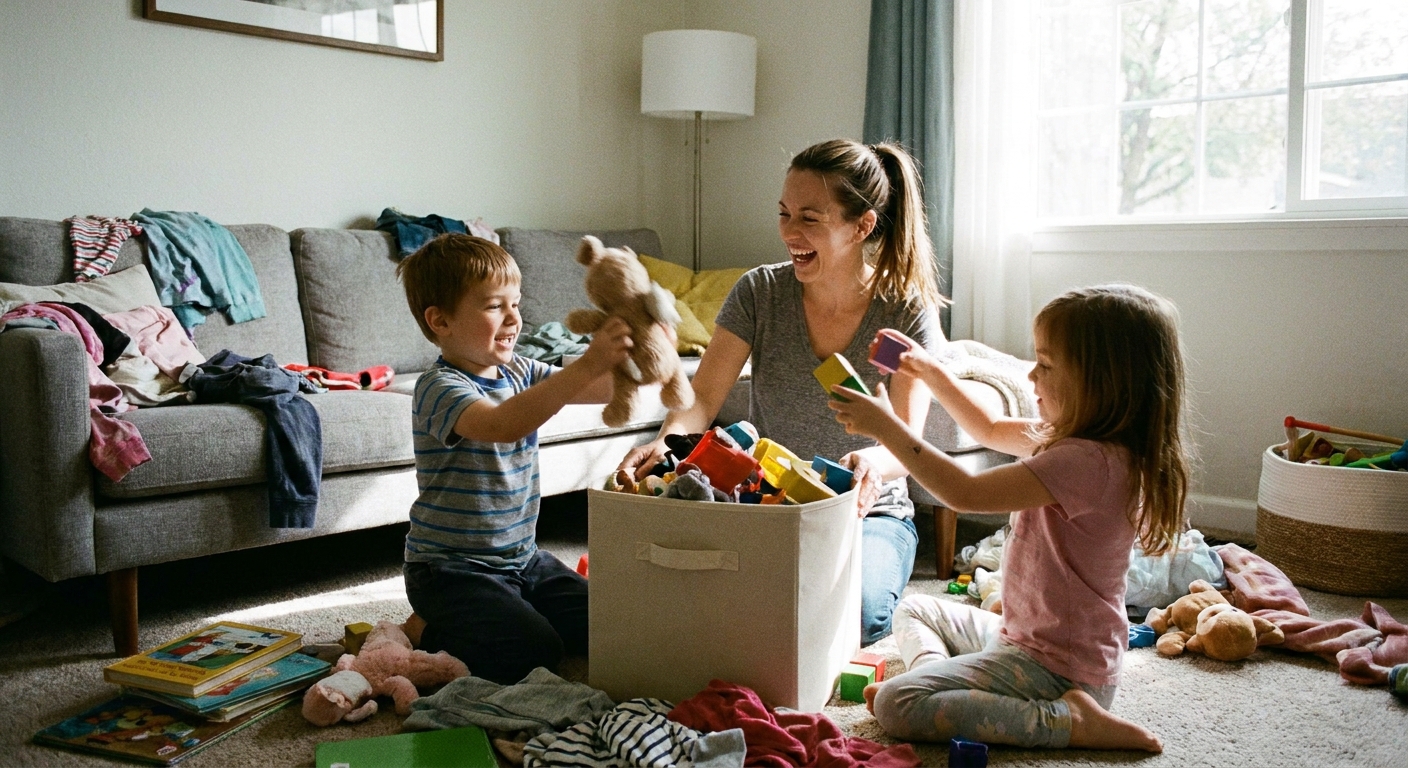
- Under-5-minute clean-up hunt: call out categories: “Find five things that belong in your room.” “Find three books for the shelf.” This flows nicely into a real reset.
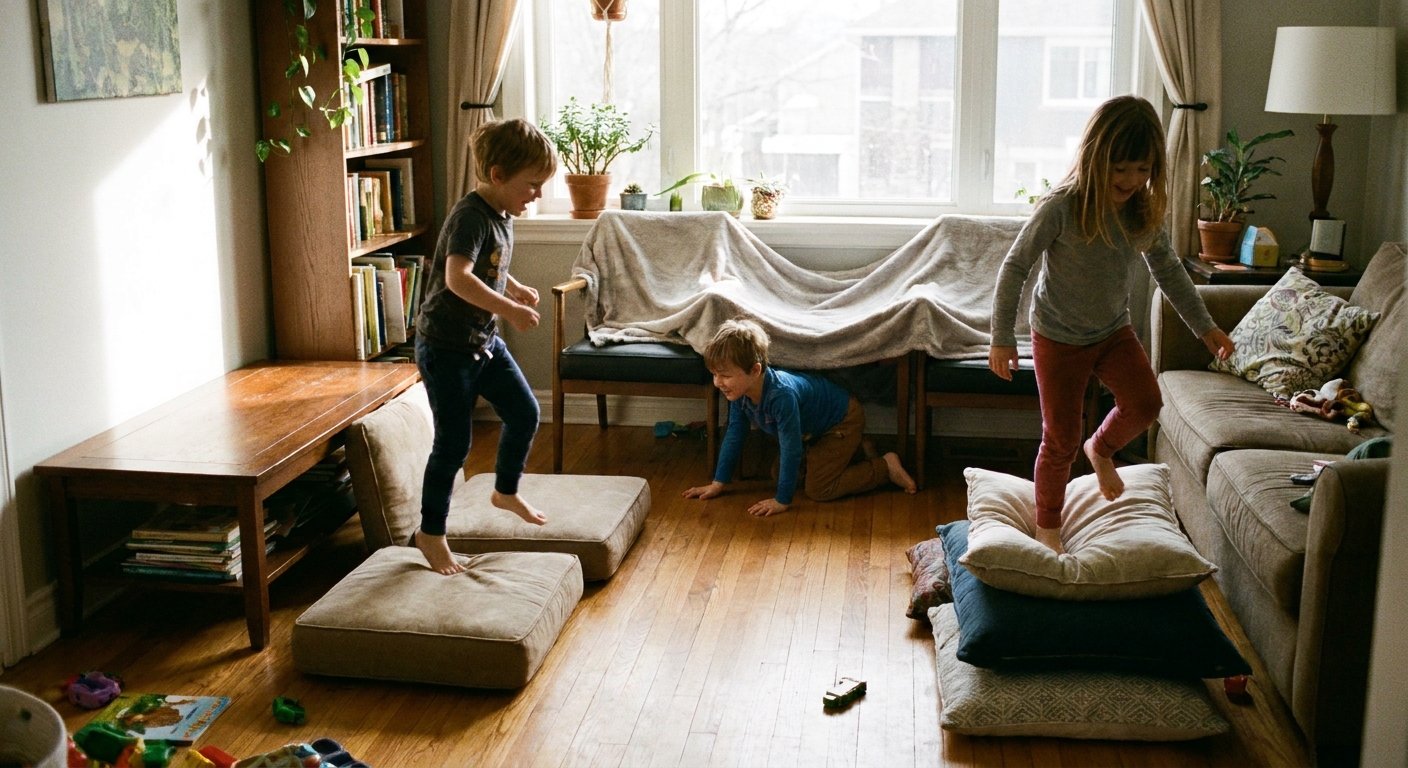
- Blanket fort quest: build the fort first, then the hunt items must be brought back to “base.” If you want a quick fort plan, use sturdy blanket fort in 10 minutes.
Make it work by age
Toddlers (ages 2 to 4)
- Use 6 to 8 items max.
- Use very concrete prompts: “Find a spoon,” not “Find something metal.”
- Do “bring it to the couch” style so they feel successful fast.
- Avoid anything breakable or tiny.
Elementary kids (ages 5 to 10)
- Try timed challenges: beat your first round time by 30 seconds.
- Add one silly item: “something that makes you laugh.”
- Let them make a list for you after your round. Kids love flipping roles.
Tweens (ages 11+)
- Switch to photo scavenger hunts using a phone camera, if screen rules allow. Keep it short and purposeful.
- Set a simple privacy rule: no photos of personal documents (mail, bills, school paperwork) and no posting. If you prefer, make it object-only, not people.
- Try riddle clues and add a final “escape room” style step like finding a key taped under a drawer.
- Put them in charge of hiding the next hunt for younger siblings.
Small space or accessibility swaps
- Point-to-it hunt: instead of bringing items, kids point and call it out. This is great for limited mobility and for households that do not want piles.
- From-your-spot hunt: each kid stays on a couch cushion and searches with their eyes only: “Find something round you can see from here.”
- Sensory-friendly hunt: skip scratchy, loud, or strongly scented items. Use categories like colors, shapes, or “something you like to look at.”
Rules that prevent chaos
I love a high-energy game, but I love a peaceful ending more. These simple rules keep things fun without turning your house upside down.
- No dumping rule: you can look in bins, but you cannot dump them out.
- One spot at a time: if you pull something out, you put it back before moving on.
- Safe zones: parents’ bedroom, office, and any craft drawers that you do not want disturbed are off-limits.
- Gentle hands: if it can break, it does not belong on the list.
- End with a reset: everyone returns items for 3 minutes before prizes or snacks happen.
If your kids are in a climbing mood, you can also channel that energy into a course instead of a hunt. This pairs well with 10 fast indoor obstacle course ideas using living room furniture.
Prizes that are not junk
You do not need prizes at all, but a little payoff can help on long rainy afternoons. Here are rewards that work in my house without adding clutter.
- Pick the family movie (pair with a themed family movie night)
- Choose dessert, or choose the fruit to go with dessert
- Extra bedtime story or a silly story round at dinner (I love the add-a-sentence dinner table story)
- Build the blanket fort “HQ” for 20 minutes
- Pick the next rainy-day activity: craft, puzzle, or science experiment
Quick add-ons
If you need to stretch the afternoon, these add-ons keep the momentum going without starting a whole new project.
- Story finish: after the hunt, everyone picks one found item and you build a group story. Use a prompt from 50 quick story starters if you are tapped out.
- Snack break with purpose: make something together in 10 minutes like no-bake energy bites with toddlers.
- Science twist: hide the next clue under a cup, then do one tiny experiment between clues using baking soda and vinegar kitchen science.
FAQ
How long should an indoor scavenger hunt last?
For many kids, 10 to 20 minutes is the sweet spot. If you want a longer activity, do two short rounds with a water break in between instead of one long hunt.
What if my kids fight about fairness?
Make it cooperative: one list, one basket, one team. Give each child a role like Reader, Finder, Collector, and Checker. Rotate roles halfway through.
How do I do this without printing anything?
Pick 10 prompts and read them out loud, or write them on a sticky note. If you want reusable lists, you can keep a few in a kitchen drawer and rewrite them on scrap paper each time.
What is the easiest version when I am exhausted?
Choose one room and do a “find 10 things” hunt. No riddles, no hiding, no prizes. End with everyone returning items for 3 minutes, then switch to a calm activity like reading or a simple board game.