

In my house, the mess multiplies the second I look away. Three kids, one very enthusiastic rescue dog, and a kitchen that somehow attracts cups like a magnet. I used to think “cleaning with kids” meant doing it twice, once badly and once correctly. Then I finally admitted what was really happening: my kids were not refusing to help, they were refusing to be bored.
So we made it a game. Not a fancy, Pinterest-perfect system. Just a 10-minute tidy-up that feels like a sprint, not a punishment. It is the fastest way I know to reset the house before dinner, before bed, or before someone comes over and I do the panic-shuffle of doom.
Why it works
Ten minutes is short enough that kids will try it, and long enough to make a visible dent. The real magic is that you are not asking for “clean the whole house.” You are asking for a timed challenge with a finish line.
- Time limits reduce arguing. There is no endless “How long do I have to do this?”
- Fast wins build momentum. Kids are more likely to help tomorrow if they can see the difference today.
- Everyone moves at once. When the whole family cleans at the same time, it feels fair.
If you want more simple, realistic family activities like this, our Family Activities guide is where I keep my best go-to ideas.
The rules
These are the rules we repeat every time. Consistency is what turns this from a one-off “fun thing” into a routine that happens without a negotiation.
- Rule 1: Everyone plays. Even toddlers can “match socks” or put board books in a basket.
- Rule 2: You tidy, you do not organize. No deep sorting, no “but where does this really belong?” debates.
- Rule 3: Trash first. Quick win, big visual impact.
- Rule 4: Anything you cannot decide goes in the Maybe Basket. (More on that below.)
- Rule 5: Stop when the timer stops. This is key. The timer is the boss, not you.
Set up once
You only need a few things, and you probably already have them.
- A timer (phone timer works, but a small kitchen timer feels more “official” to kids).
- One laundry basket for out-of-place items.
- One trash bag or small bin you can carry room to room.
- Two drop zones: one for shoes and one for backpacks or sports stuff.
The Maybe Basket
The Maybe Basket is where you toss anything that slows you down: mystery toys, random cords, lone Lego creations someone will cry about if you touch, permission slips, hair accessories, you name it.
At the end of the day (or the next morning), you empty it with your coffee when nobody is asking 400 questions. This single trick prevents tidy-up time from turning into a 45-minute detour.
One guardrail: if the Maybe Basket is still half-full after 48 hours, we do a two-minute “claim it or I park it” round. Kids can grab what they care about. Everything else gets put away where I think it goes, and if I truly cannot place it, it lives in a small lidded bin until the weekend.
How to play
Minute 0 to 1: Kickoff
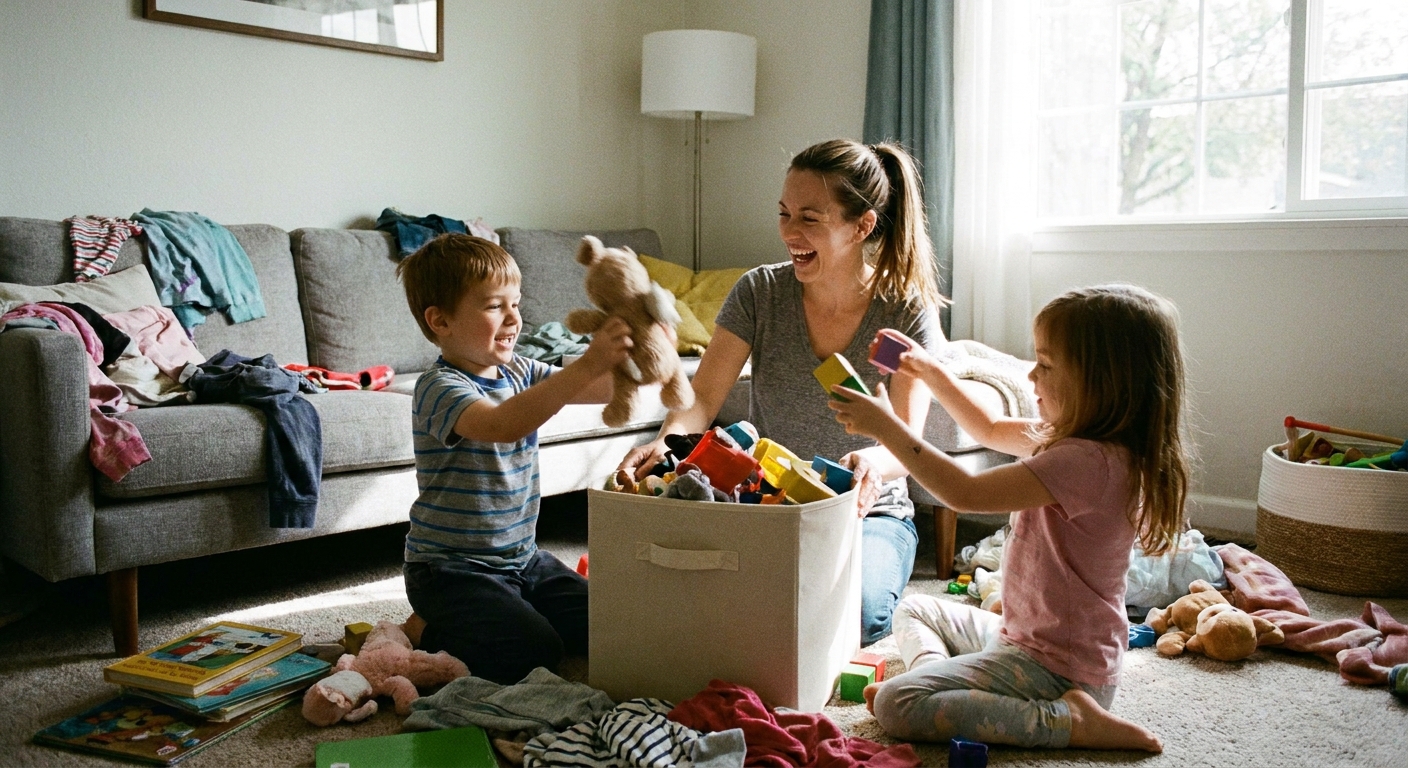
Gather everyone in the messiest shared space (for us, usually the living room). Say one sentence:
“Ten-minute tidy. When the timer starts, we move fast. When it stops, we are done.”
Minute 1 to 2: Assign roles
Rooms can feel overwhelming. Roles are clear. Pick 3 to 5 depending on your family size:
- Trash Collector: grabs obvious trash (and recycling too, if you already have a bin set up)
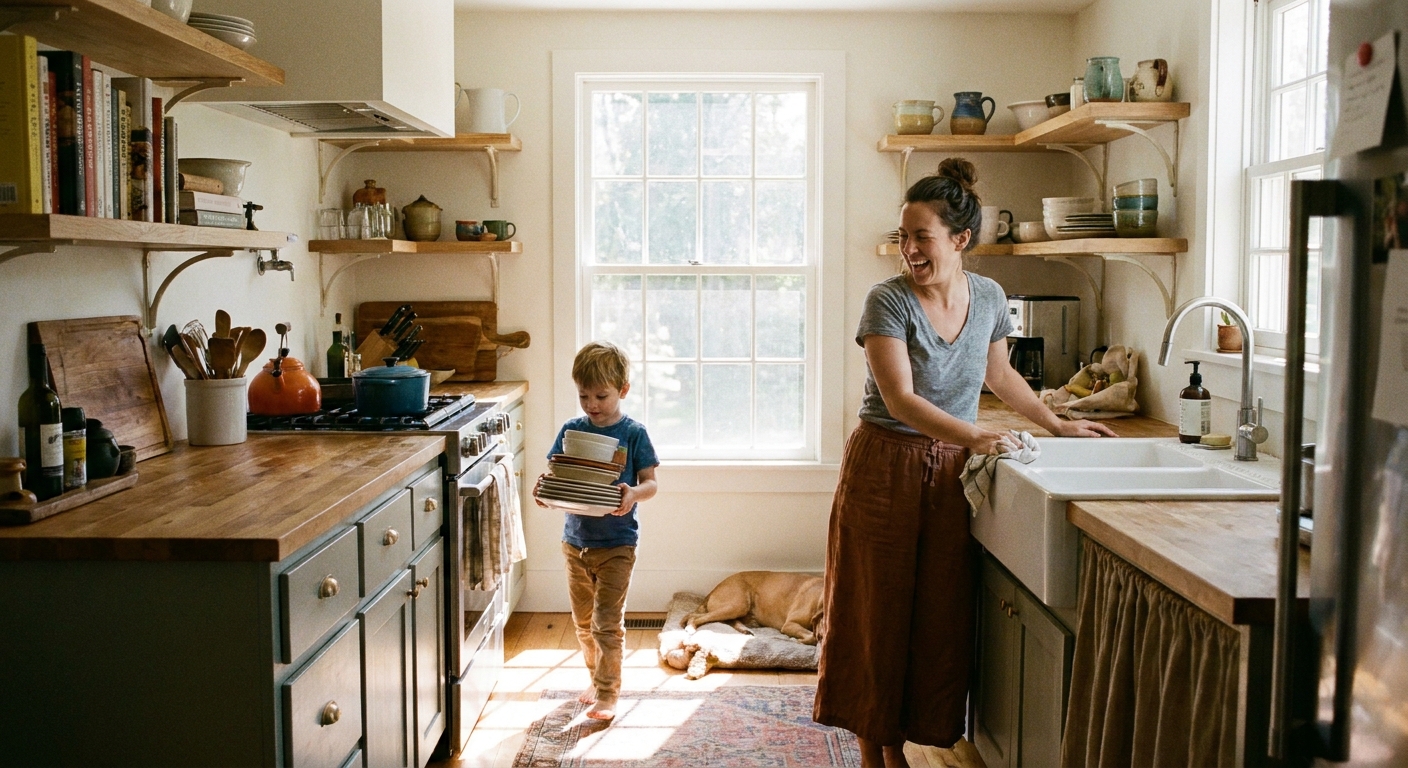
- Dish Dash: brings cups and plates to the kitchen
- Floor Finder: picks up anything on the floor and puts it in the right bin or basket
- Clothes Captain: gathers dirty clothes, puts clean strays in bedrooms
- Pet Patrol: quick sweep of dog toys, water spills, and kibble scatter
Rotate roles daily so one kid is not always stuck doing the same job.
Minute 2 to 9: The sprint
Start the timer. Turn on one upbeat song if that helps your crew. I keep it simple: fast hands, fast feet, no perfection.
Minute 9 to 10: The finish line
With one minute left, I announce: “Last lap!” Everyone drops what they are doing and does one fast, high-impact task:
- fluff couch pillows
- push in chairs
- crumb sweep plus a quick wipe of the table
- put shoes on the rack
When the timer ends, we stop. Even if the house is not perfect. Especially then.
Game modes
I am not against rewards. I just try to keep them small and sustainable, so I am not handing out prizes like I run an arcade.
Try these
- Beat Your Best: see if you can clear the floor faster than yesterday
- Color Hunt: everyone picks up items of one color first (great for younger kids)
- Rescue Mission: “Save the sofa!” or “Clear the table before the spaceship lands!”
- Silent Ninja Round: can you tidy without talking for 3 minutes?
- Team vs. Timer: the timer is the opponent, not each other
Use points sparingly
If your kids love points, keep it extremely simple. One point for:
- starting without arguing
- staying in your role
- finishing the 10 minutes
When the family hits a certain number (you pick), the “reward” is something you would probably do anyway: choosing movie night, picking the bedtime story, or a Saturday morning pancake request.
By age
Toddlers (2 to 3)
- put board books in a basket
- throw diapers or wipes packaging in the trash
- carry dog toys to a bin
Tip: Give them a container. Toddlers love putting things inside other things.
Preschoolers (4 to 5)
- match shoes near the door
- put dirty clothes in a hamper
- wipe a low surface with a slightly damp cloth
Early elementary (6 to 8)
- clear the table
- sort toys into labeled bins you already use
- collect all cups and put them by the sink
Big kids (9+)
- load dishwasher or wash a few items
- vacuum one high-traffic area
- reset the entryway and backpack zone
High-impact targets
If your family has limited energy, focus on what makes the house feel clean. These spots tend to deliver the most calm per minute.
- Kitchen counters and table: clear and wipe
- Living room floor: get everything off the floor
- Entryway: shoes, backpacks, jackets contained
- Bathroom sink: quick swipe and towels hung
When kids refuse
I try to avoid speeches. I want one calm sentence, then action.
Use a when-then line
- “When the 10 minutes are done, then we start the show.”
- “When the timer ends, then you are free.”
Lower the bar and start anyway
If someone is melting down, I assign a micro-task:
- “Put 10 things in this basket.”
- “Find five pieces of trash.”
- “Bring me all the cups you can see.”
Once they start moving, they often keep going.
For repeat battles, change the moment
If tidy-up always triggers drama, move it earlier. In our house, right before hunger hits is a disaster. Right after a snack works much better. I also like pairing it with a predictable routine, like before bedtime stories. If you need fresh story ideas for that wind-down window, this pairs nicely with these 5-minute bedtime stories.
Two variations
Company is coming (10 minutes)
- 2 minutes: trash and dishes
- 4 minutes: floors into bins or baskets
- 2 minutes: bathroom sink and toilet quick swipe
- 2 minutes: entryway reset
End of day reset (10 minutes)
- 5 minutes: living room reset
- 3 minutes: kitchen reset
- 2 minutes: set out tomorrow basics (backpacks, lunch items, shoes)
This is also where a tiny bit of storytelling can help. If your kids respond to play, try turning the basket into a character. We do silly versions inspired by household objects as story characters and suddenly the hamper becomes “Captain Laundry” who needs rescuing.
Safety and sanity
- No harsh cleaners for kids. If kids are wiping, stick to plain water, a mild soap-and-water mix, or a gentle multi-surface product you already trust, and stay nearby.
- Keep breakables off the route. Nothing kills momentum like a shattered glass.
- Music volume low enough to hear you. “Stop” needs to mean stop.
- Do not use cleaning as punishment. The game works because it stays neutral.
Overwhelm-friendly tweak: let kids pick their role first, and use simple picture labels on bins if reading or decision-making slows them down. Also, “no music” is a valid option.
Quick FAQ
Is 10 minutes really enough?
Not for deep cleaning. Yes for a daily reset that keeps the mess from becoming a weekend-long project.
What if my house is a disaster?
Start with 5 minutes for three days. Once you see the floor more often, bump it to 8, then 10.
Should I reward every time?
No. The best “reward” is the timer ending. If you want an extra motivator, use occasional privileges (pick the family game, choose dessert) instead of constant treats.
What if one kid does nothing?
Give them the smallest, clearest job possible and keep the timer short. Consistency matters more than lecturing. Tomorrow is another round.
A simple goal
I do not try to keep my home spotless. My goal is “reset enough that tomorrow morning feels easier.” If you can clear floors, corral the clutter, and start the dishwasher, you are winning.
Set the timer tonight and treat it like a family sprint. Ten minutes from now, you get your living room back.