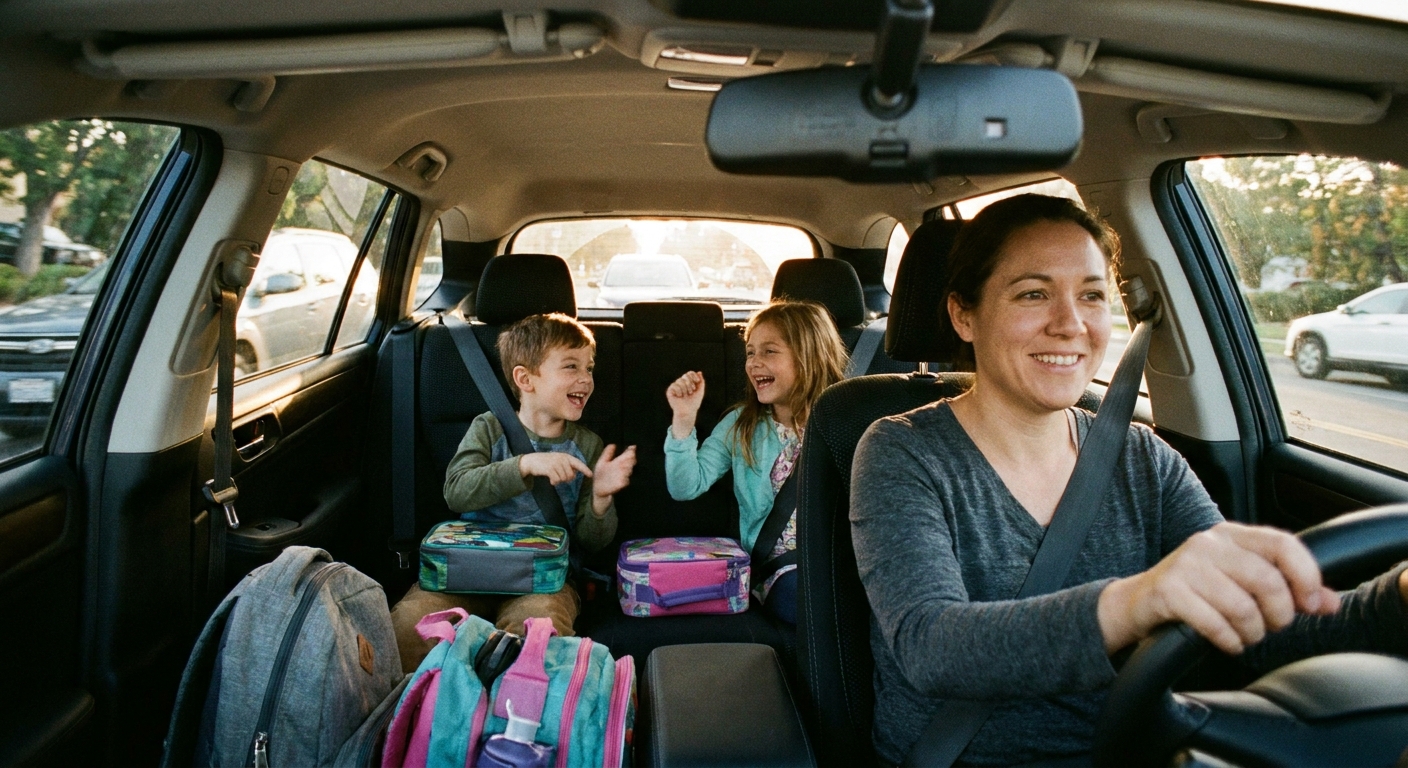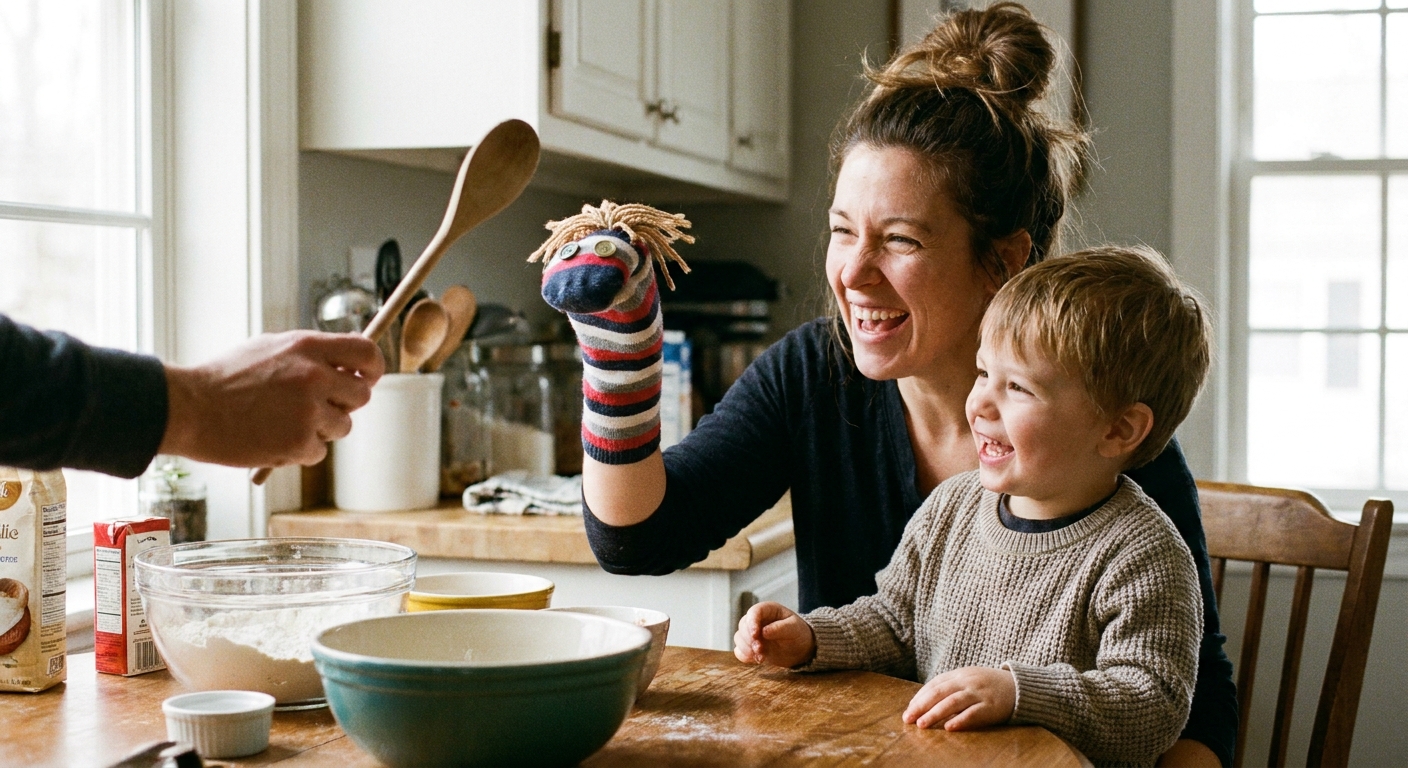

Dinner at my house can go from “family meal” to “track meet” in about 90 seconds. One kid needs more ketchup, one kid remembers a joke they must tell immediately, and our rescue dog is convinced someone is dropping chicken on purpose.
The simplest trick I have found for keeping kids seated longer (without turning dinner into a power struggle) is a tiny game called Add-a-Sentence. It is cooperative and low-energy, and it gives kids a reason to stay put because they want to hear what happens next.
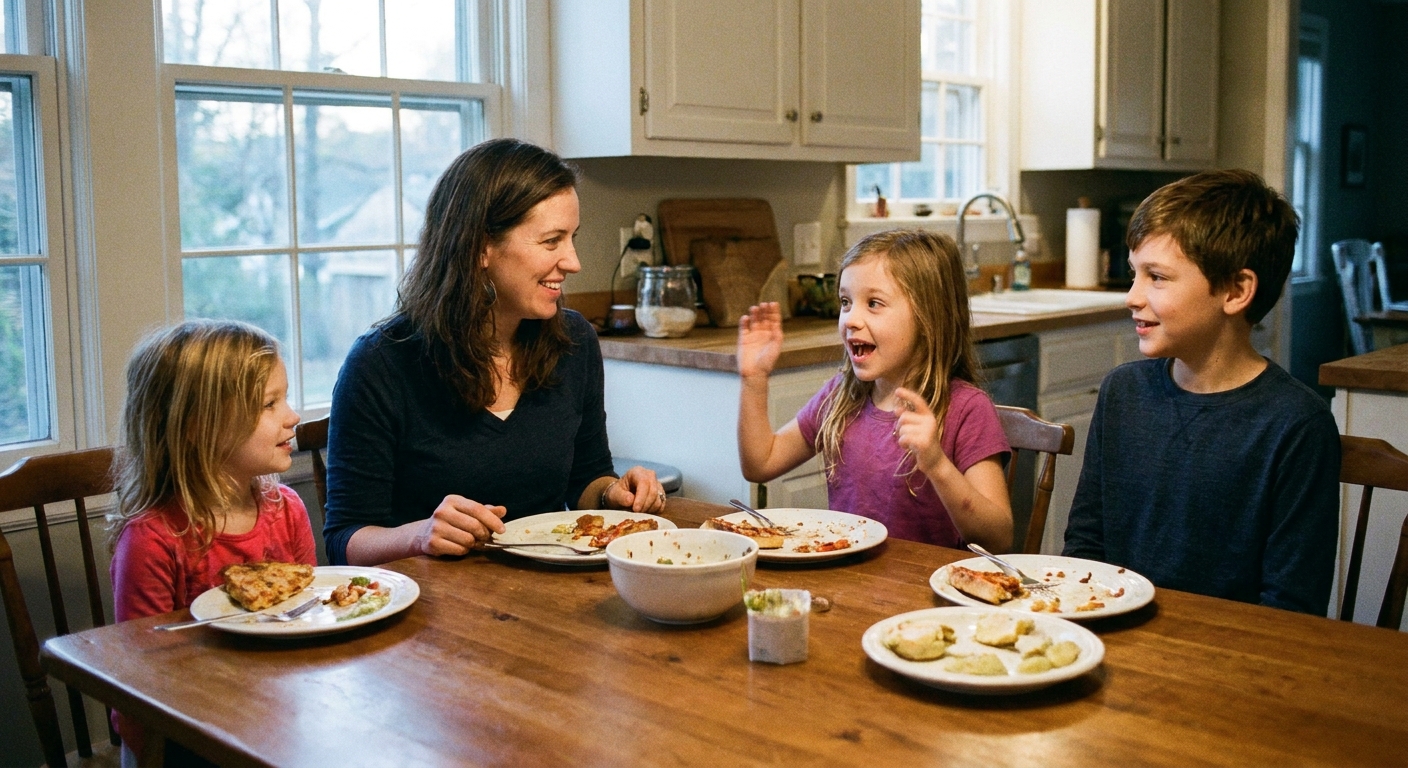
What it is (and why it works)
Add-a-Sentence is a collaborative story where each person adds one sentence when it is their turn. That is it.
In our house, it works at the dinner table because it often:
- Creates a gentle structure. Kids know when their turn is coming, so they are more likely to wait.
- Rewards staying seated. The payoff is hearing the next funny twist, not getting up and roaming.
- Cuts down on reminders. I am not repeating “sit down” every 30 seconds. The story can do some of the heavy lifting.
- Builds connection fast. Even a short story can shift the whole mood of the meal.
A quick note, because real life is real life: if a child is repeatedly leaving the table because they seem uncomfortable, overwhelmed, or distressed (or you suspect a sensory, developmental, or medical issue), adjust expectations. A game can help, but it is not a diagnosis. When in doubt, talk with your pediatrician or a qualified specialist.
Quick setup
Pick the moment
Start when everyone has food in front of them and the first wave of hunger is handled. In my experience, that is about 3 to 5 minutes into eating. Starting too early can backfire because hungry kids want food, not rules.
Choose a story anchor
An anchor is one simple idea that keeps the story from spiraling into chaos. Pick one:
- A location: “At the zoo,” “in a tiny bakery,” “on a submarine.”
- A mission: “Find the missing library book,” “deliver a surprise,” “rescue a lost kitten.”
- An object: “A mysterious lunchbox,” “a glittery key,” “a map with a coffee stain.”
If you want a list ready to grab, Smart Central has a great bank of prompts here: 50 quick story starters for parents.
Make one rule clear
Try wording it like this (or close): “One sentence only, and we stay in our seats while we tell it.”
That is the whole behavior expectation. Not “use your napkin,” not “no noises,” not “eat three more bites.” Keep it simple so you can actually enforce it.
How to play
Step 1: Start with a quick hook
A good opener gives the kids a character and a problem right away. Example:
“Tonight, a raccoon named Rosie found a shiny key under the swing set, and it was still warm.”
Step 2: Pick a turn order
Use the easiest order for your table:
- Go around the table clockwise.
- Youngest to oldest.
- “Pass the roll” (whoever has the dinner roll speaks, then passes it).
Keep it predictable. Predictable usually means fewer interruptions.
Step 3: Keep it to one sentence
If a kid starts running on, gently trim it:
- “That is a great idea. Pick your best one sentence.”
- “Save the rest for your next turn.”
If a full sentence is hard (speech or language delays, selective mutism, or just a shy day), let them offer a single word, a sound effect, or a short phrase. You can turn it into the sentence for them. Participation is the goal, not perfect grammar.
Step 4: Use the bite-and-build rhythm
This is my favorite part because it quietly supports eating without nagging. Between turns, everyone takes a bite. I do not announce it like a rule. I model it and keep the story moving.
If your kids respond well to explicit cues, you can say: “One bite, then the next sentence.”
Step 5: End it on purpose
Do not let it drag until someone melts down. In my experience, 5 to 10 minutes is a good starting point. Then wrap it:
- “And that is how Rosie used the warm key to open the tiniest door and find the missing cupcakes.”
- “To be continued tomorrow at dinner.”
Stopping while they still want more often makes them ask for it again.
Scripts for common hiccups
If kids argue about the story
Try: “In this game, we do not correct. We only add.”
If it continues, add a quick boundary: “If correcting happens again, we pause the story for two minutes.” Then actually pause it. In our house, that quiet usually feels like losing the game, and it is often enough.
If a child keeps getting up
Try: “We can keep playing when your bottom is back on the chair.”
No lecture. No debate. Just a simple pause. The story is the incentive.
If potty trips derail everything
Potty is non-negotiable, of course. When they come back, give them a fast re-entry point:
- “Tell one sentence that starts with ‘When I got back…’”
- “Your character returns holding something surprising.”
If kids go gross-out
Some silliness is fine. If it turns into bathroom humor that kills the vibe, I redirect the content without shaming:
Try: “Let’s keep it adventure-funny, not gross-funny. Add a sentence that brings us back to the mission.”
Easy variations
Two-Choice Turn (toddlers)
Instead of asking them to invent a sentence from scratch, you offer two options:
- “Did the key open a door or a treasure chest?”
- “Was the sound a meow or a beep?”
They pick one, and you turn it into the sentence.
Family Character (siblings)
Everyone controls the same main character. This can cut down on “No, my dragon would never do that!” arguments.
Cliffhanger Nights (slow eaters)
Stop the story while it is juicy and say, “We will finish tomorrow.” It gives reluctant sitters a reason to show up for the next dinner too.
Story Path (tactile kids)
If your table does better with a physical cue, try a card-based path you move along each turn. We have a full how-to here: Make a story path with paper cards.
Big family, mixed ages
If you have a lot of people at the table, the turns can take forever. Two options that work well:
- Adults alternate with kids: kid, adult, kid, adult. It keeps momentum and helps younger kids stay oriented.
- Team turns: two kids share one sentence together (they whisper it to each other first, then say it out loud).
Keep it calm
- One sentence each. This keeps the pace quick and can reduce interrupting.
- No fixing someone else’s sentence. It is collaborative, not competitive.
- Stay seated to stay in the story. If someone stands up, the story pauses.
- Parents play too. When you participate, it feels like connection, not control.
Notice what is not on the list: “Finish your plate,” “eat three more bites,” “no talking.” The goal is peaceful meals, not perfect eating.
Dinner-friendly starters
These are designed to be easy to continue and fun for a range of ages:
- “A tiny chef knocked on our door and asked to borrow one ingredient.”
- “A dog showed up wearing a backpack with our address on it.”
- “We opened the napkin, and a map fell out.”
- “The spoon started tapping twice, like it was trying to warn us.”
- “A penguin called the house phone and asked for help.”
If you want more short, age-friendly story ideas that fit into everyday routines, you might also like: Micro stories for toddler chores. The same concept works wonders for toothbrushing and cleanup too.
FAQ
What ages is this best for?
I have used it successfully with preschoolers through upper elementary. For toddlers, use the Two-Choice Turn so they can participate without pressure.
How long should we play?
In my experience, most families do best starting with 5 to 10 minutes. If dinner is long, you can do two rounds with a break in between.
What if my kid refuses?
Let them pass. Say, “You can listen this round.” Most kids join in once the story gets funny. For some kids, listening quietly is already the win.
Will this work if my kids are loud?
It can, especially because the one-sentence rule naturally limits steamrolling. If volume is the issue, add one extra rule: “We use our table voices so we can hear the next sentence.” Then keep moving.
A reminder from one busy parent
This game is not about forcing kids to sit like tiny adults. It is about giving them a positive reason to stick around long enough to eat and connect.
Some nights it will be magical. Other nights someone will add, “And then the raccoon exploded,” and you will take a deep breath and steer the story back to cupcakes.
Either way, you are building a routine where the table feels like a place to belong, not just a place to be corrected.