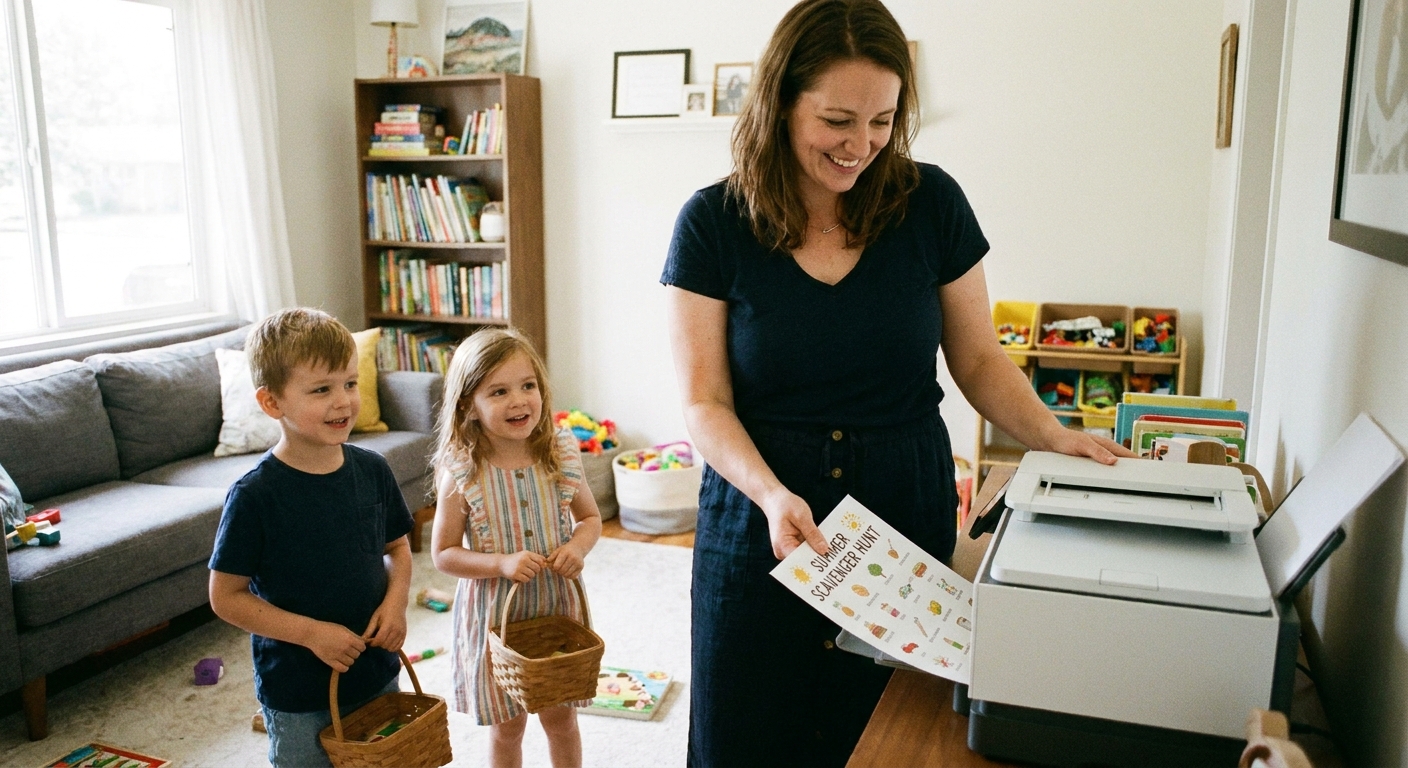

On the kind of afternoon where everyone is cranky, the dog is pacing, and I can feel my brain trying to “buffer,” I do not need a big activity plan. I need something that works right now. This backyard scavenger hunt is my favorite low-prep reset because it gets kids moving, noticing, and hunting, without me turning into Cruise Director.
Timing note: The “15-minute” part is the quick setup plus a short wrap-up. The actual hunt is usually 6 to 10 minutes, depending on your kids and your yard.
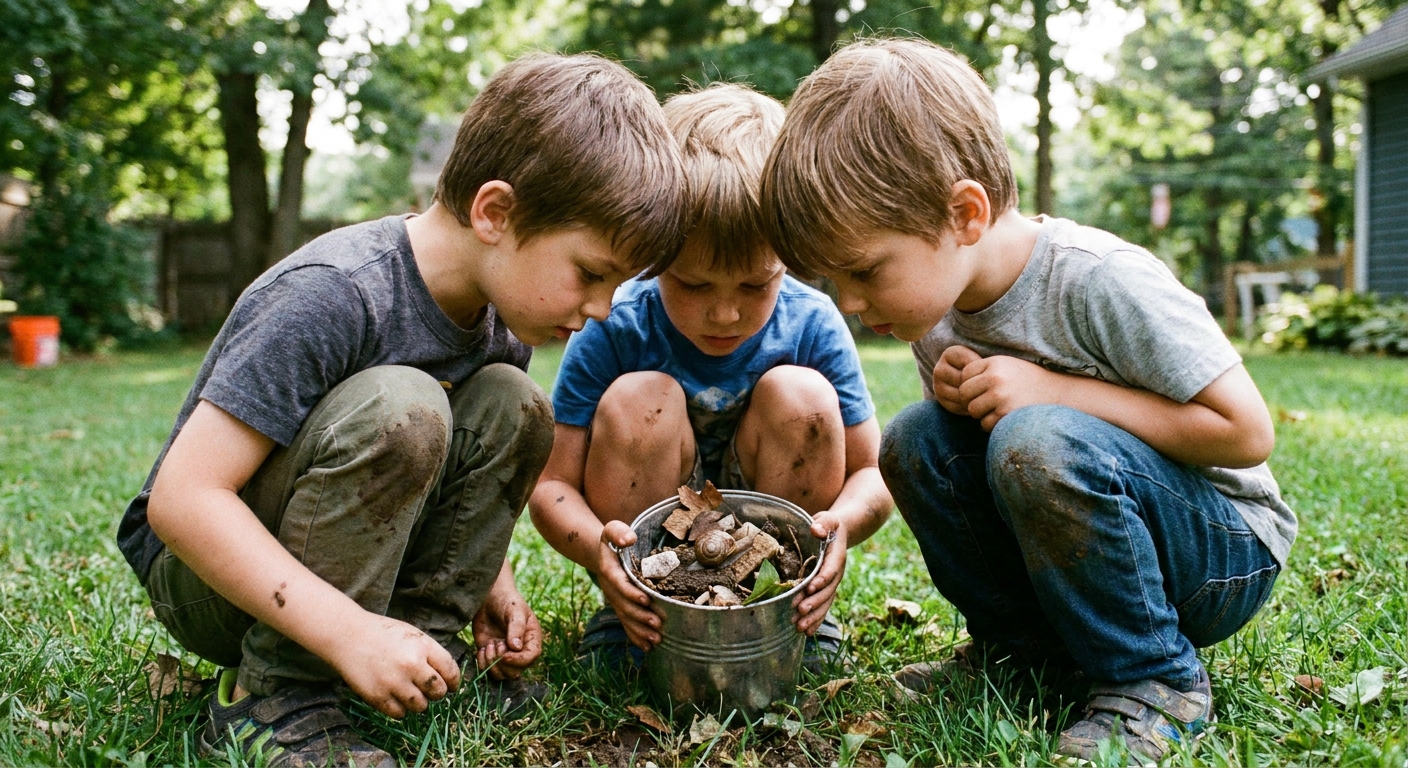
Why this works when you are tired
A scavenger hunt feels like a game, but it quietly does a lot of heavy lifting for parents:
- Instant structure: A short list plus a timer replaces “What should we do?”
- Often lower conflict: Kids can spread out and work independently or as a team (and you can tweak the rules if competitiveness shows up).
- Real outdoor engagement: They start noticing tiny details they usually step over.
- Flexible energy level: You can make it calm and observational or active and silly.
And yes, it counts as “getting outside” even if you never leave your own yard.
5 quick grabs (2 minutes)
You do not need printables or special gear. Here is the whole supply list:
- A small bag, bucket, or recycled grocery bag
- A pen and a scrap of paper (or your phone’s Notes app)
- Sunscreen or hats, if needed
- A drink of water for each kid
- A phone timer
Quick parent win: If you have kids who love arguing over fairness, give each child their own bag. If you have kids who love collaborating, give them one shared bag and a “team captain” role.
Set it up fast
Minute 1 to 3: Pick your hunt style
- Collecting hunt: Kids bring items back to a “home base” spot.
- Photo hunt: Kids take pictures instead of collecting. Great for flowers, insects, and anything you do not want picked.
- Spotting hunt: Kids call out when they see something and you check it off. Best for toddlers.
Minute 4 to 6: Set boundaries
Before the list, I set three clear boundaries:
- Where they can go: “Front steps to the back fence, not past the shed.”
- What they can touch: “Leaves and rocks yes, bugs only with a grown-up.”
- Safety rule: “If you cannot identify it, you do not pick it up.”
If you have a dog like mine who thinks every game is about him, this is also when I decide whether the dog is indoors or on a leash.
Minute 7 to 9: Make a simple list
Pick 8 to 12 items. More than that usually drags on. I like a mix of easy wins and “look closely” items.
Minute 10 to 12: Explain the goal and timer
Keep it short: “You have 8 minutes. Bring everything back to the steps when the timer beeps.” Short hunts feel exciting and help prevent the slow wander that turns into whining.
Minute 13 to 15: Start, then do the parent job
Your job is not to lead. Your job is to:
- Stay where you can see the boundaries
- Celebrate finds
- Referee only when necessary
I usually sit with water and call out, “Two minutes left,” like I am running a very casual game show.
Backyard scavenger lists
Classic nature hunt
- Something yellow
- Something that smells good
- A leaf bigger than your hand
- A tiny leaf (smaller than a thumb)
- Two different kinds of rocks
- A feather (or spot or photograph a bird)
- Something soft
- Something rough
- A stick shaped like a letter
- A seed, acorn, or pinecone
No-pick photo hunt
- A close-up photo of a flower
- A shadow pattern on the ground
- A bug on a leaf (from a respectful distance)
- Something with spots
- Something with stripes
- A plant growing through a crack
- Something shiny in the sunlight
- A cloud that looks like an animal
- A tree trunk texture
- Your favorite corner of the yard
Toddler version
- A rock you can hold
- A leaf you can wave like a fan
- A stick (not longer than your arm)
- A flower you can point to (no picking)
- A bird you can hear
- Something you can hop over
- Something you can tap that makes a sound
- Something that feels warm from the sun
High-energy sibling challenge
- Find 3 things that are the same color (any color)
- Build a “nature rainbow” pile (one item per color)
- Find 5 different leaf shapes
- Make a tiny “fairy bed” using only fallen items
- Collect 10 sticks and sort them by size
- Find a safe place where ants might travel (observe only)
- Find something that rolls
- Find something that floats (guess, do not test unless you have a water bin)
If your kids get really into nature collecting, you can follow it up with one of our simple outdoor craft ideas from 7 Easy Nature Crafts for Kids Using Leaves, Sticks, and Rocks.
Collecting rules
This is the quick set of rules that keeps the whole thing fun and avoids the “wait, you picked what?” moment:
- Fallen items only: If it is growing, it stays.
- Leave habitats alone: No digging, no peeling bark, no tearing apart nests, logs, or rock piles.
- Lift and return gently: If a kid flips a rock to look under it, it goes back exactly as it was.
- One small bag worth: Limits keep it from turning into a yard cleanout.
Make it fun without adding work
Add one wild card
This is my easiest upgrade: include one prompt that makes them think.
- “Something older than you”
- “Something that looks like it belongs in a fairy house”
- “Something that would make a good superhero shield”
Pick a scoring style
If you have kids who love to compete, decide this up front:
- Co-op mode: One shared bag, one shared goal, everyone wins when the list is done.
- Points mode: Easy item = 1 point, tricky item = 2 points, wild card = 3 points.
- No-score mode: The “win” is finding a favorite and telling the group why.
Try the trade-up rule
Kids can swap one find for a better one, but only once. This keeps them moving and adds just enough strategy.
Do a lightning round
When attention starts fading, I call “Lightning round, 60 seconds!” and name 3 quick items like:
- Something smooth
- Something crunchy (like a dry leaf)
- Something with a pattern
Keep it safe and low drama
- Skip anything risky: No “find a berry” or “find a mushroom.” If you cannot confidently identify it, it stays put.
- Watch for hidden hazards: Make “do not touch” items explicit, like animal droppings, sharp yard tools, broken glass, or unknown spiders and stinging insects.
- Use gloves if needed: If your yard is thorny or you have mulch with splinters, kids garden gloves make the whole thing calmer.
- Bug boundaries: Observing is always allowed. Handling is an opt-in with a grown-up.
- Handwashing: After any collecting, we wash hands. It solves a lot of problems before they start.
- Allergies: If pollen is a problem, switch to a photo hunt and wash hands and faces after.
2-minute wrap-up
This is where the activity actually lands and buys you a little peace afterward.
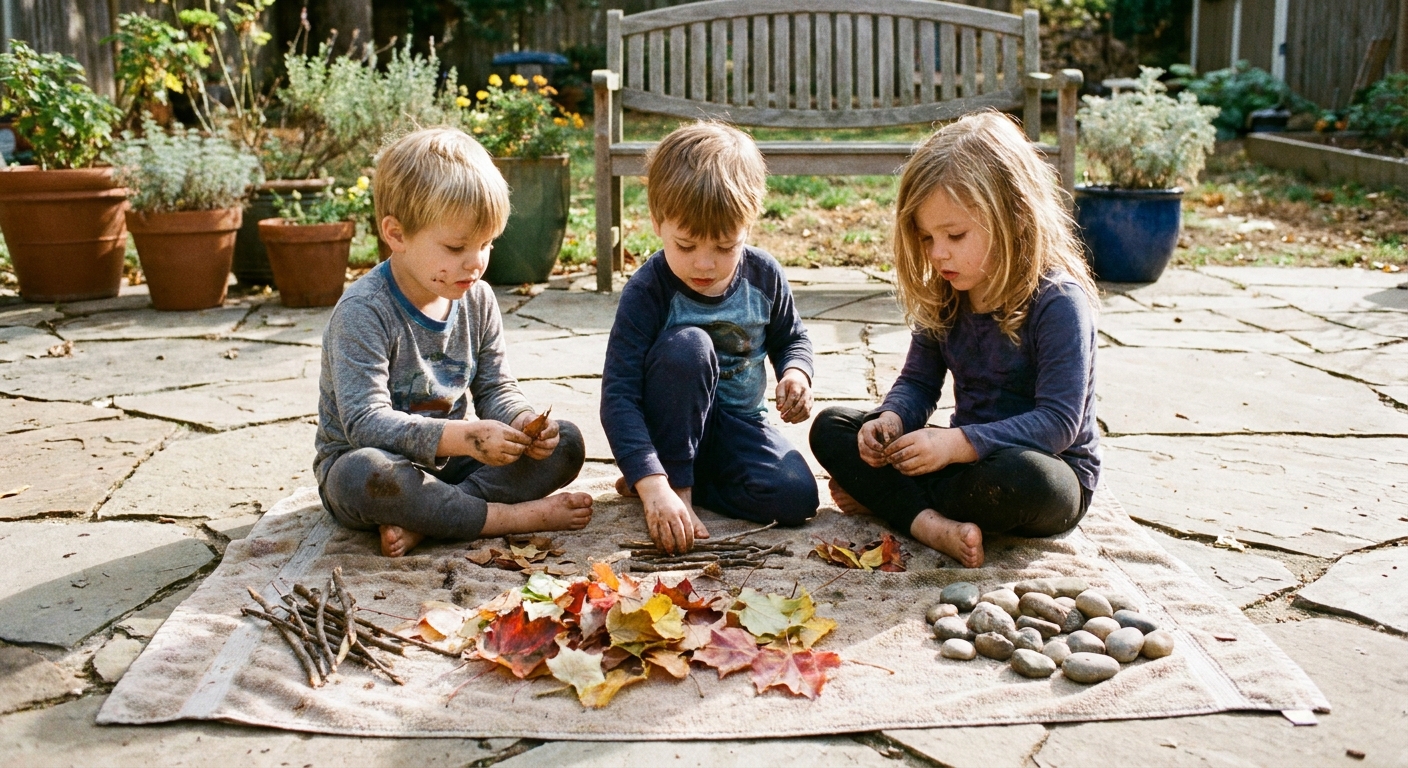
- Sort the haul: “Put all the rocks here, all the leaves here.”
- Pick favorites: Each kid chooses one favorite item and tells why.
- Reset the yard: Return anything that should go back (especially in a shared neighborhood space).
If your kids want to keep their treasures, designate a small “nature tray” on a porch table for one day only. In my house, a time limit prevents The Collection from taking over the kitchen counter.
Rainy day or no-yard options
Porch, patio, or small outdoor space
Go with a spotting or photo hunt:
- Something that moves in the wind
- Three different textures
- Two sounds you can hear
- Something that casts an interesting shadow
Indoor hunt
It works indoors too, usually with almost no prep. I just do a 30-second sweep for breakables and set one boundary like “We stay out of my bedroom.” Then we use household prompts:
- Something soft
- Something that opens and closes
- Something that smells nice
- Something you can stack
- Something round
For more quick, low-prep ideas like this, our Family Activities guide is where I keep the “pull it out when you are tired” favorites.
Quick FAQ
What ages does this work for?
Toddlers do best with spotting and pointing. Ages 4 to 7 often love collecting. Ages 8 and up usually enjoy photo challenges, time trials, and “mystery” prompts.
How long should the hunt last?
For many kids, 6 to 10 minutes of hunting is the sweet spot. If you want a longer outdoor window, run two short rounds with a water break between.
What if my kids fight the whole time?
Switch to “everyone gets their own list” or make it cooperative: one bag, one goal, and each child is responsible for a category (rocks, leaves, something soft). Also, shorten the timer. Less time usually means fewer opportunities to argue.
What if I do not want them picking things?
Photo hunt, every time. You can even make a simple rule: “We only collect fallen items. Anything growing stays.”
My best tip: keep it repeatable
The magic of a backyard scavenger hunt is not that it is Pinterest-perfect. It is that you can run it again next week with a slightly different list and it still feels brand new to kids. When I am exhausted, repeatable is the whole point.