

Some weekends, I do not want a “big outing.” I want fresh air and a memory without the packing, the spending, and the inevitable meltdown that happens the moment we arrive anywhere with a line.
That is where the one-hour micro-adventure saves me. It is short enough to fit between naps and errands, but it still feels like you did something special. And the secret is simple: you plan it like a tiny appointment, not a whole production.
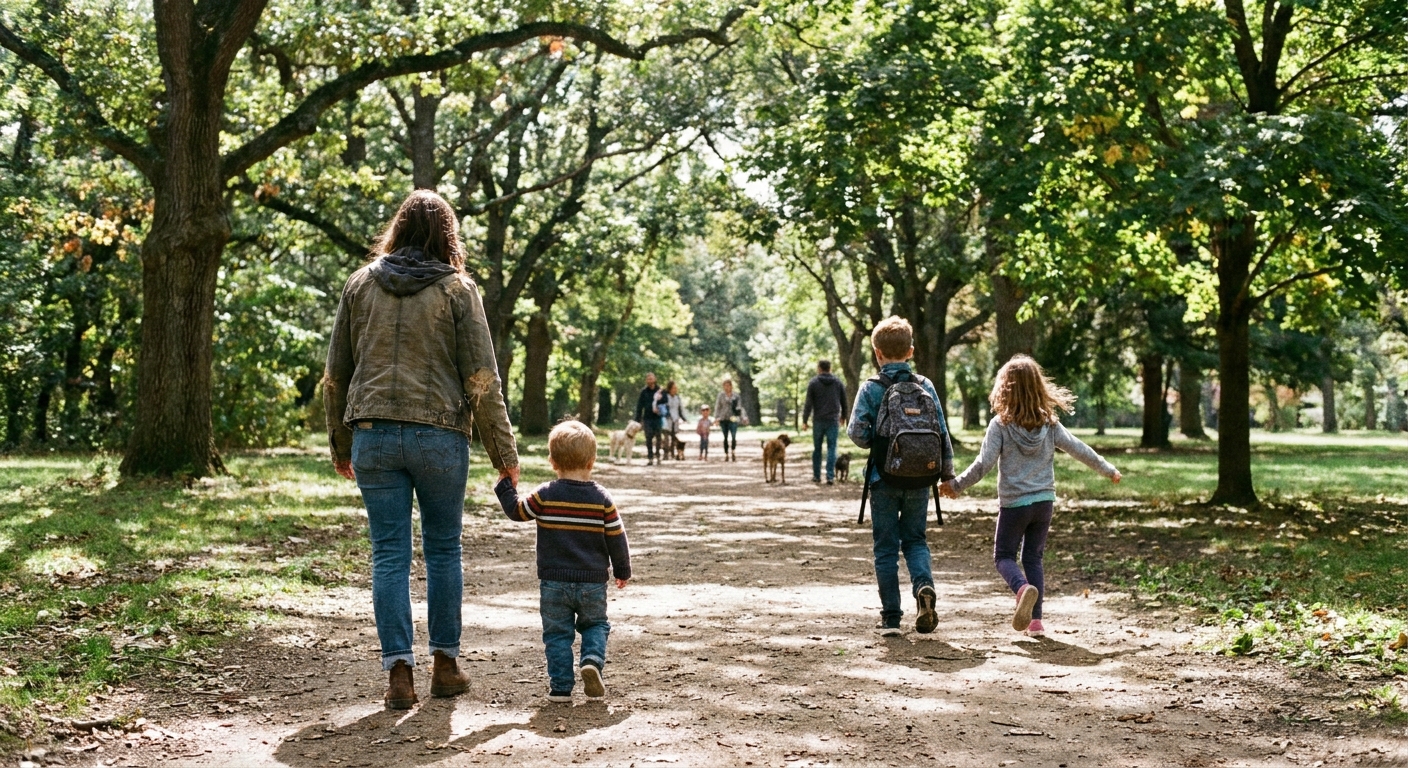
What counts as a micro-adventure?
A micro-adventure is a local outing with a clear start and stop. You are not trying to “do the whole place.” You are doing one small mission, close to home, with just enough structure to keep kids engaged.
- Local: ideally 15 minutes away or less
- Short: 60 minutes total at the destination (not counting the drive)
- Lightweight: minimal gear, minimal money
- Memorable: one tiny goal that makes it feel like a story
The 15-minute planning formula
If I have an hour to spare this weekend, I plan it in 15 minutes on Saturday morning while someone is eating cereal.
Step 1: Pick a “close enough” location
Choose one place you can reach quickly and leave quickly. Options that work well:
- A neighborhood park you do not normally use
- A short nature trail
- A public library (especially for air-conditioned adventures)
- A small downtown strip for a “window-shopping walk”
- A creek, pond, or lake overlook
- A community garden
Step 2: Choose one mission (the magic ingredient)
The mission keeps the hour from turning into “we are just walking.” Pick one:
- Find 10: 10 smooth rocks, 10 pinecones, 10 different leaf shapes (where collecting is allowed)
- Photo quest: take 6 silly photos (something round, something tiny, something taller than Dad)
- Sound hunt: listen for 5 sounds (bird, car, wind, water, footsteps)
- Color challenge: spot one thing for every color of the rainbow
- Map it: let one kid be the “navigator” and choose left or right at each fork
Step 3: Set a clear end time
This is what keeps it low-stakes. Decide your end point before you leave:
- “We leave at 11:05, even if we are mid-game.”
- “When the timer hits 60 minutes, we do one last thing and head out.”
- “We walk to the bridge and back, then we are done.”
Step 4: Add one tiny treat (does not have to cost money)
Kids love a predictable ending. Choose one:
- A snack on a bench before you leave (or in the car if that is your reality)
- Hot chocolate at home
- Pick the music on the drive back
- Choose a short story when you get home
If you want a simple storytelling add-on for the ride, I love using our dinner-table style game on the way home: The Add-a-Sentence Dinner Table Story works just as well in the car.
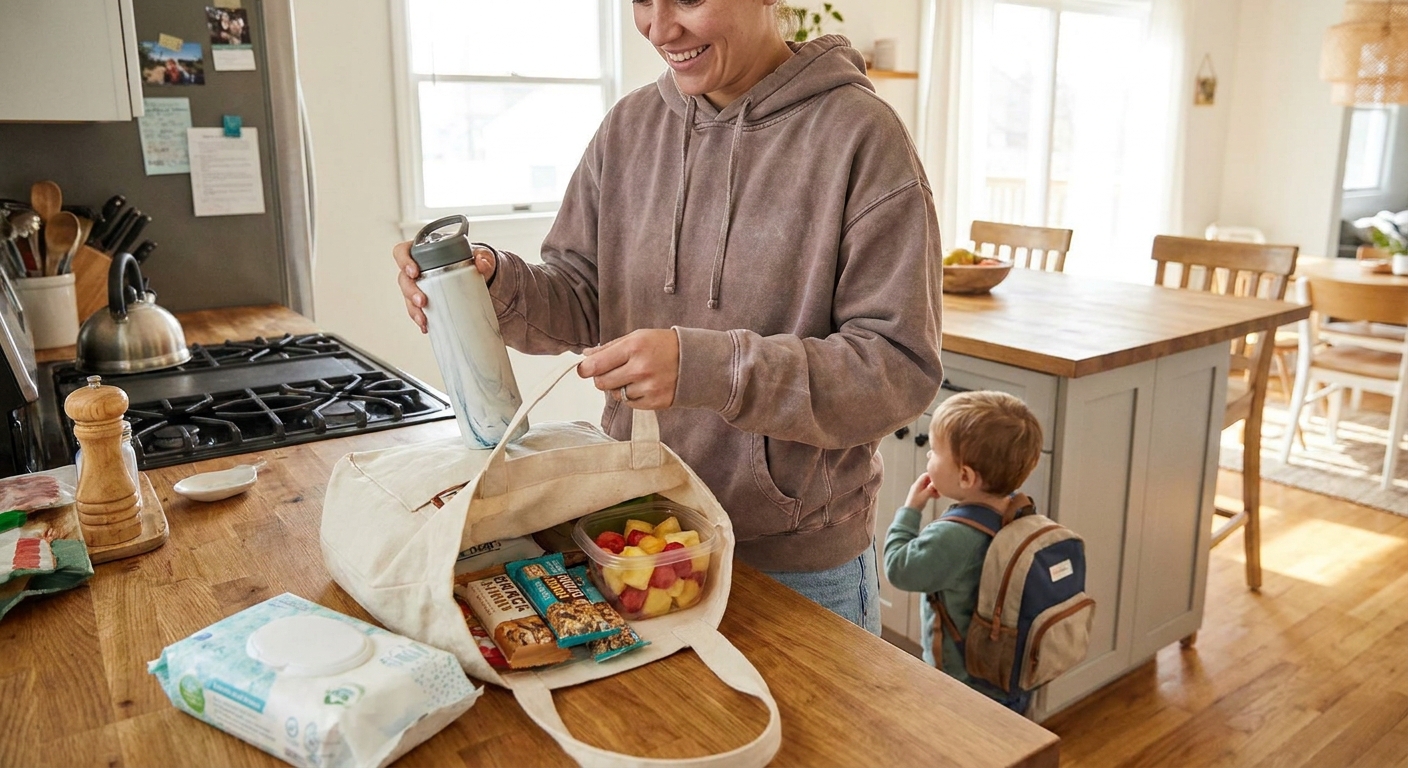
The packing list (one tote)
I keep this simple on purpose. The goal is to avoid the “we have to bring everything” spiral.
- Water: one bottle per person (or at least two to share)
- Snack: something that does not crumble into 1,000 pieces
- Wet wipes or napkins: the universal fix
- Bandages: a few basics for scraped knees
- A small trash bag: for wrappers and muddy finds
- Weather add-on: sunscreen, hats, and/or bug spray as needed
- Optional: a magnifying glass or kid binoculars if you already own them (for little kids, skip neck straps and use a hand strap or keep them in your bag until you stop)
If your family does better with a “we are ready to walk out the door” setup, you might like the idea behind a tidy reset before you go. We use a fast version of The 10-Minute Family Tidy-Up Game so the house is not a disaster when we come back.
Safety and courtesy (quick and real)
- Follow local rules: some parks do not allow collecting rocks, plants, or “nature treasures.” When in doubt, take a photo and leave it.
- Be water-smart: watch edges, avoid fast water, and skip stones only where it is safe and permitted.
- Leave it better: stay on trails, do not pick living plants, and pack out your trash.
- Respect neighborhoods: on “new street” walks, stay on sidewalks, do not cut through yards, and keep voices and curiosity polite.
7 one-hour micro-adventure ideas
1) The scavenger hunt, but at a different park
Take the concept that already works and move it somewhere new. If you need prompts, start with our classic list and tweak it for your location: The 15-Minute Backyard Scavenger Hunt.
2) “Snack safari” walk
Walk for 20 minutes, stop for snack, walk back. That is it. The snack break turns it into a whole event.
3) Library micro-adventure
Mission: each person finds one book in a category (animals, space, a funny picture book, a cookbook). Sit and read for 15 minutes, then check out.
4) Creek or pond “skip test”
Bring a small towel for hands, and adjust for sun and bugs. Mission: find the best skipping stone only if the shoreline is safe and local rules allow it. Older kids can track how many skips they get.
5) Neighborhood “new-to-us” street walk
Pick a neighborhood you never walk in. Mission: spot 10 porch decorations, 10 garden statues, or 10 types of flowers. Kids love novelty, and this costs zero.
6) Nature craft supply stroll
Mission: collect a small handful of leaves, sticks, and rocks (where permitted), then go home and make something. If you want craft ideas that are genuinely doable, here are my favorites: 7 Easy Nature Crafts for Kids Using Leaves, Sticks, and Rocks.
7) Indoor micro-adventure (when the weather is rude)
Do a one-hour “expedition” in your own living room. Set a timer, choose a start and end, and keep it moving. These ideas are perfect when you need the energy out without leaving the house: 10 Fast Indoor Obstacle Course Ideas Using Living Room Furniture.
Age-based ideas (no extra prep)
Toddlers: the “tiny things” loop
Choose the closest park. Walk one short loop. Mission: find three tiny things (a pebble, a leaf, a stick), then sit on a bench for two minutes and do a snack. Repeat the loop once. Leaving early is part of the plan.
Older kids and teens: the “director” challenge
Let them run it. Mission: they plan the route and create a 6-photo quest for everyone else. Your only job is timekeeping and making sure nobody wanders into traffic or water.
How to fit it between naps, meals, and chores
This is the part that makes micro-adventures work for families. You plan around the anchors you already have.
Use “anchor points” instead of open-ended time
- After breakfast: out the door by 9:30, home by 11:00
- After nap: out the door 30 minutes after wake-up, home before the next meal
- Before dinner: do a 4:30 to 5:30 micro-adventure and keep dinner easy
Make the drive part of the adventure
If the outing is short, the drive can feel like it “does not count.” I fix that with a car game or a story prompt. This one is simple and works for mixed ages: Interactive Storytelling Games for the School Commute.
Keep the “re-entry” plan tiny
When you get home, do one small reset only:
- Shoes away
- Trash out of the car
- Everyone washes hands
That is it. If you try to fold laundry and empty the dishwasher the moment you walk in, it stops feeling like a treat and starts feeling like punishment.
Low-stress rules that save the hour
- One bag, one mission, one hour. More than that and you are back in “big outing” territory.
- End while it is still fun. Stopping early is not quitting. It is the whole strategy.
- Say yes to small joys. If the mission becomes “watch ants for 12 minutes,” let it. That is childhood.
- Skip the souvenir. Take a photo, collect a leaf, tell the story later. No gift shop required.
Micro-adventure FAQ
What if we only have 30 minutes?
Do a “there and back” walk with a mission that can be finished fast, like finding 5 interesting rocks (where allowed) or taking 3 funny photos. The clear cutoff matters more than the length.
What if my kids are different ages?
Pick a mission with layers. Little kids can “find something red,” older kids can “find something red that is natural,” and teens can take the photos.
What if someone melts down?
Micro-adventures are forgiving because they are short. Use your end time. Head to the car, do snack and water, and call it a win anyway. You still got outside, and you are building the habit.
Do micro-adventures have to be outdoors?
No. Libraries, indoor obstacle courses, and even a “science experiment hour” at home counts. If you want an easy rainy-day option, our kitchen science ideas are quick and high-reward: 5 Baking Soda and Vinegar Kitchen Science Experiments.
Make it a tradition
If you want this to happen more than once, give it a repeating slot, like “Saturday 10:00.” Then rotate who chooses the mission each week. In my house, the kids will happily repeat the same park 20 times as long as they get to be the one in charge of the mission.
One hour. Close to home. No big prep. It is the smallest kind of escape, and honestly, it has saved more weekends than any elaborate plan ever has.