
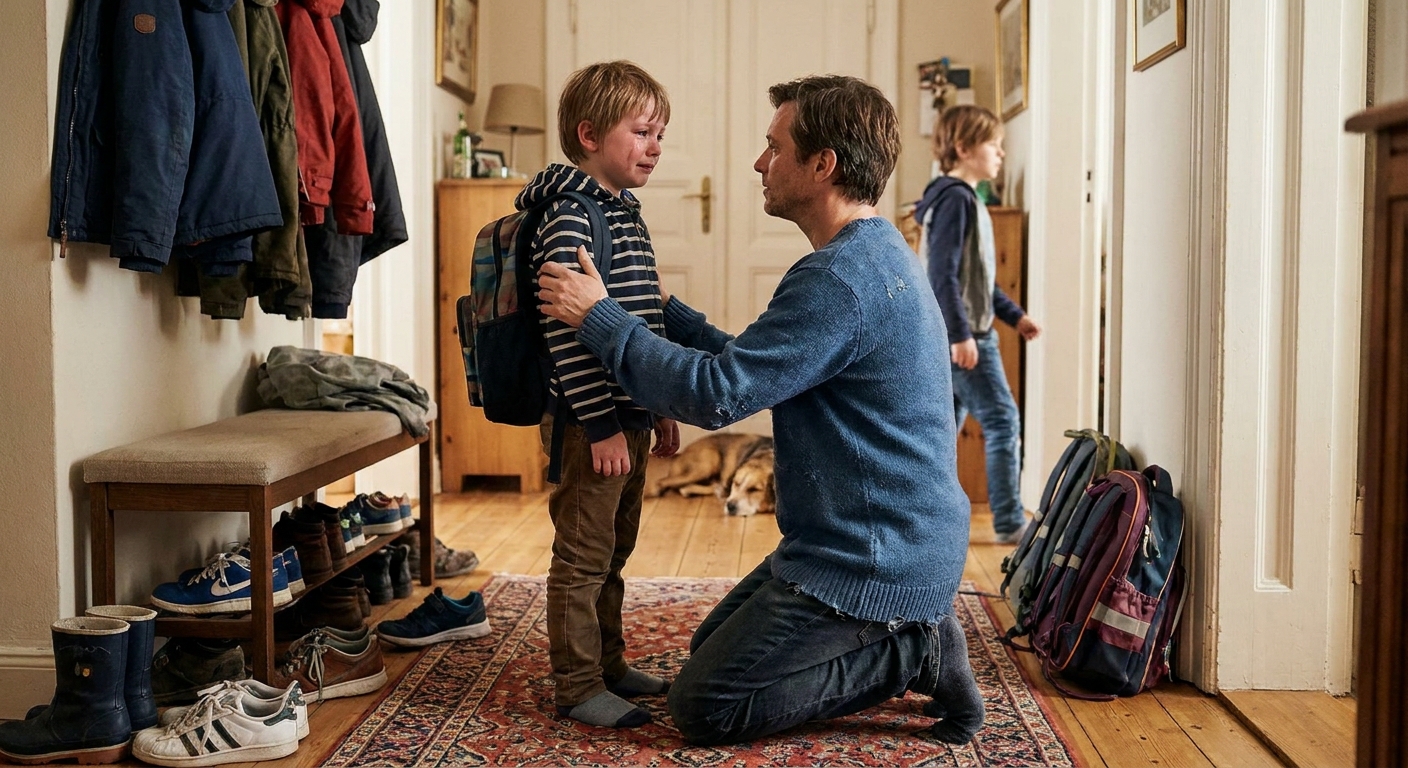
There is a moment I know too well: one kid melting down because the sock seam is “wrong,” another asking where their library book is, the dog barking because someone dared to walk past our house, and I am standing there thinking, We are not even late yet. How are we already here?
In those moments, I have one tool that works surprisingly often, and it is not a lecture, a bribe, or a perfect breathing script.
It is a tiny story that starts with: “When I was little…”
Not a long story. Not a life lesson. Just a quick, relatable memory that tells my child, “You are not alone, and this feeling can be handled.”
Why these stories help
Kids who feel anxious are usually not being difficult. They are feeling unsafe, uncertain, rushed, embarrassed, or out of control. For many kids, reasoning and problem-solving come later. First, they often need a steady signal that says, “You are safe, and I’m with you.”
A short childhood memory can deliver that signal in a few powerful ways.
1) Connection before correction
When you share a real moment from your own childhood, you step onto their side of the problem. You are not hovering above them handing down instructions. You are with them.
2) It normalizes the feeling
“You are fine” can feel like “Your feelings are wrong.” But “I remember feeling that way too” lands differently. It tells them their reaction makes sense.
3) It gives their brain something to follow
When anxiety spikes, a child’s attention can get narrow and hard to shift. A simple story can sometimes widen the moment again, especially in milder moments, just enough for them to borrow your calm and take the next step.
4) It offers a map for what comes next
The best “when I was little” stories end with a small coping move. Not a moral. Not a warning. Just “Here is what helped me.”
If you want more easy, calming story ideas in general, our Kids Stories guide is a good place to browse when you have a little more time.
Keep it calming, not preachy
I learned this the hard way: the goal is not to make your child admire your resilience. The goal is to help them regulate.
Here is the simple recipe I use.
Keep it short
Think 20 to 60 seconds. If your child is panicking, their brain often cannot track a five-minute plot. One scene is enough.
Match the feeling
Your child does not need an identical situation. They need the emotional match.
- They are worried about being late? Tell an “I hated rushing” story.
- They are scared of a new place? Tell a “first day jitters” story.
- They are embarrassed? Tell an “I wished I could disappear” story.
Use simple sensory details
This helps your child’s brain land in the story instead of spiraling.
- “My tummy felt swirly.”
- “My cheeks got hot.”
- “I held my backpack straps so tight.”
End with one tiny coping step
Think: one sentence your child can borrow immediately.
- “I took three slow breaths and counted the tiles.”
- “I asked my teacher to show me where to sit.”
- “I held a coin in my pocket and rubbed it with my thumb.”
That is it. Connection, normalization, and a next step.
5 story starters to use
If you freeze in the moment, you are not alone. Try memorizing a few openings that you can customize.
1) “I didn’t want to go”
Try: “When I was little, there were days I did not want to walk into school either. My stomach felt tight, like it was holding its breath. I used to pick one tiny job, like finding the classroom clock, and that helped my brain settle.”
2) “I worried about messing up”
Try: “When I was little, I worried I would do it wrong and everyone would notice. I remember practicing the first step only, just the first step, and that made it feel possible.”
3) “I hated being rushed”
Try: “When I was little, I hated the feeling of being hurried. It made my head feel buzzy. I learned to pick one must-do and ignore the rest for a minute. We can do that right now.”
4) “I felt left out”
Try: “When I was little, I remember watching other kids talk like it was easy, and I felt outside of it. I started by saying one simple thing, like ‘Can I sit here?’ and that was enough to get me in.”
5) “I couldn’t fall asleep”
Try: “When I was little, my brain would keep talking at bedtime. I used to listen for three sounds in the room and then make up a tiny scene in my head. Want to try it with me?”
If bedtime anxiety is a frequent visitor at your house, you might also like 5-minute bedtime stories that help kids sleep.
When to use them
The magic of “when I was little” stories is how easily they fit into busy routines. You do not need dim lighting and a perfect parenting voice.
Also, a quick note on expectations: everyday worries are part of growing up. If anxiety is frequent, intense, or starts shrinking your child’s life, that is a different category, and it is worth extra support. I talk more about that in the FAQ below.
During the morning rush
- Tell a 30-second “I forgot my homework once” story while tying shoes.
- End with: “And I still got through the day. Let’s do the next right thing.”
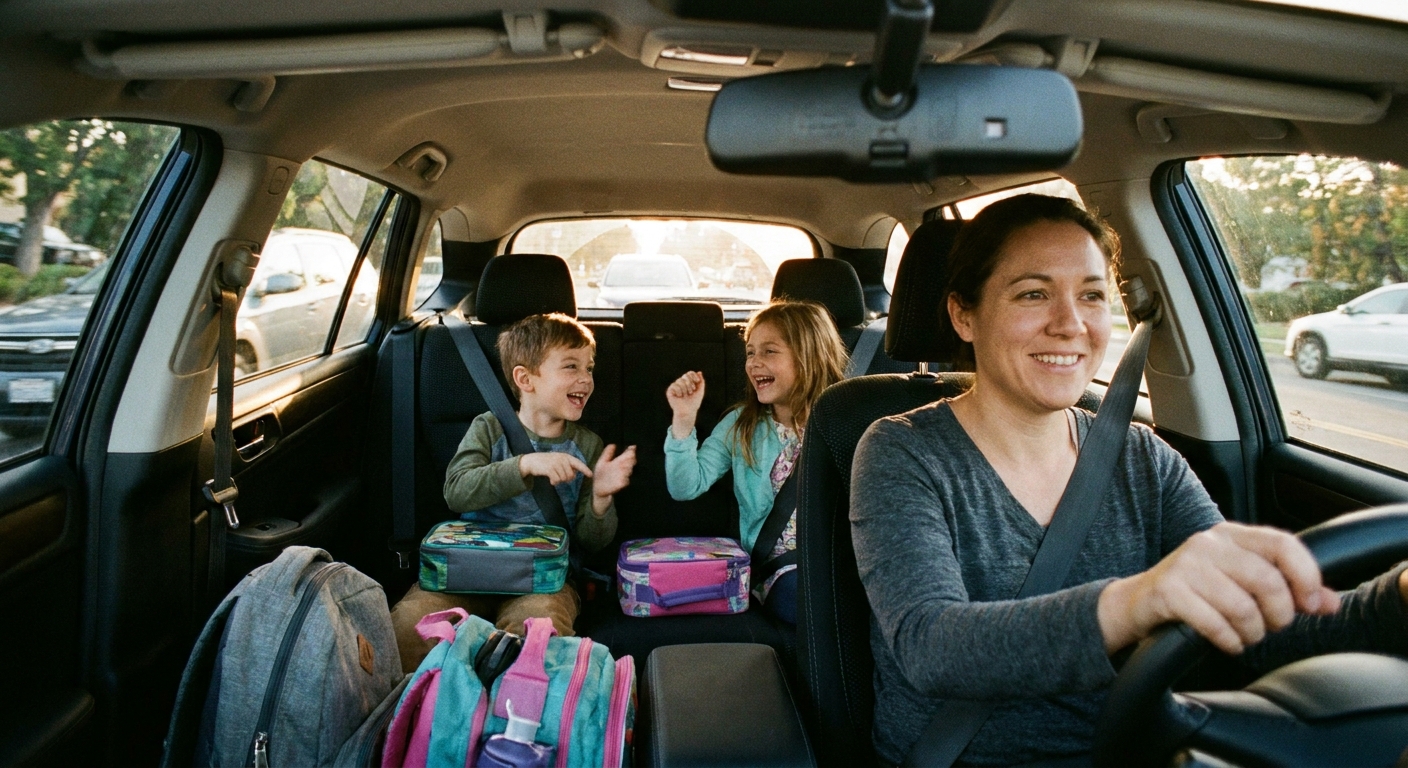
In the car or on the walk
This is one of my favorite places for these. No intense eye contact required, and kids often talk more when they are facing forward.
If you need ideas for keeping the tone light while still connecting, these interactive storytelling games for the school commute can help.
Before something new
- Sports, birthday parties, a new classroom, a new babysitter.
- Offer a “first time I tried this” story and name one helpful anchor: “I kept my water bottle in my hand so I had something steady.”
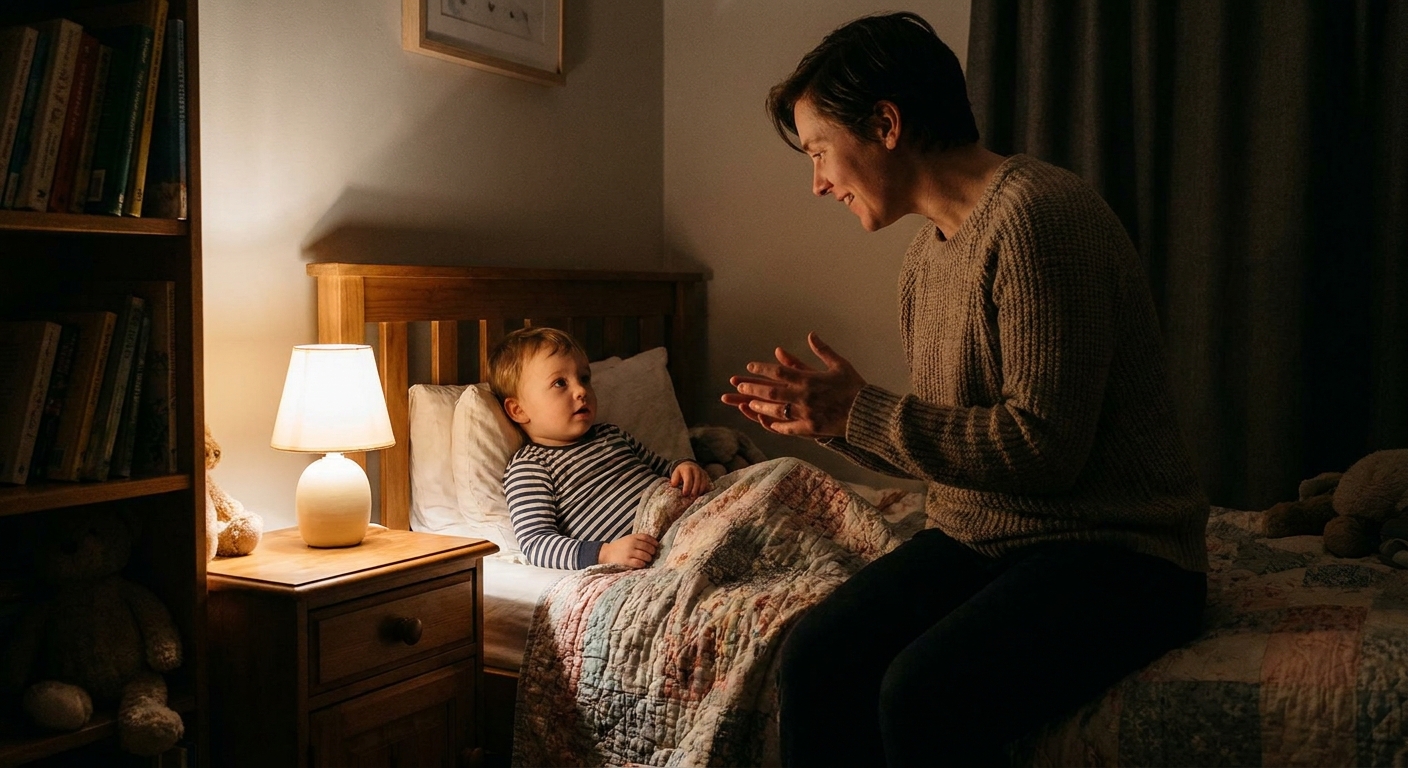
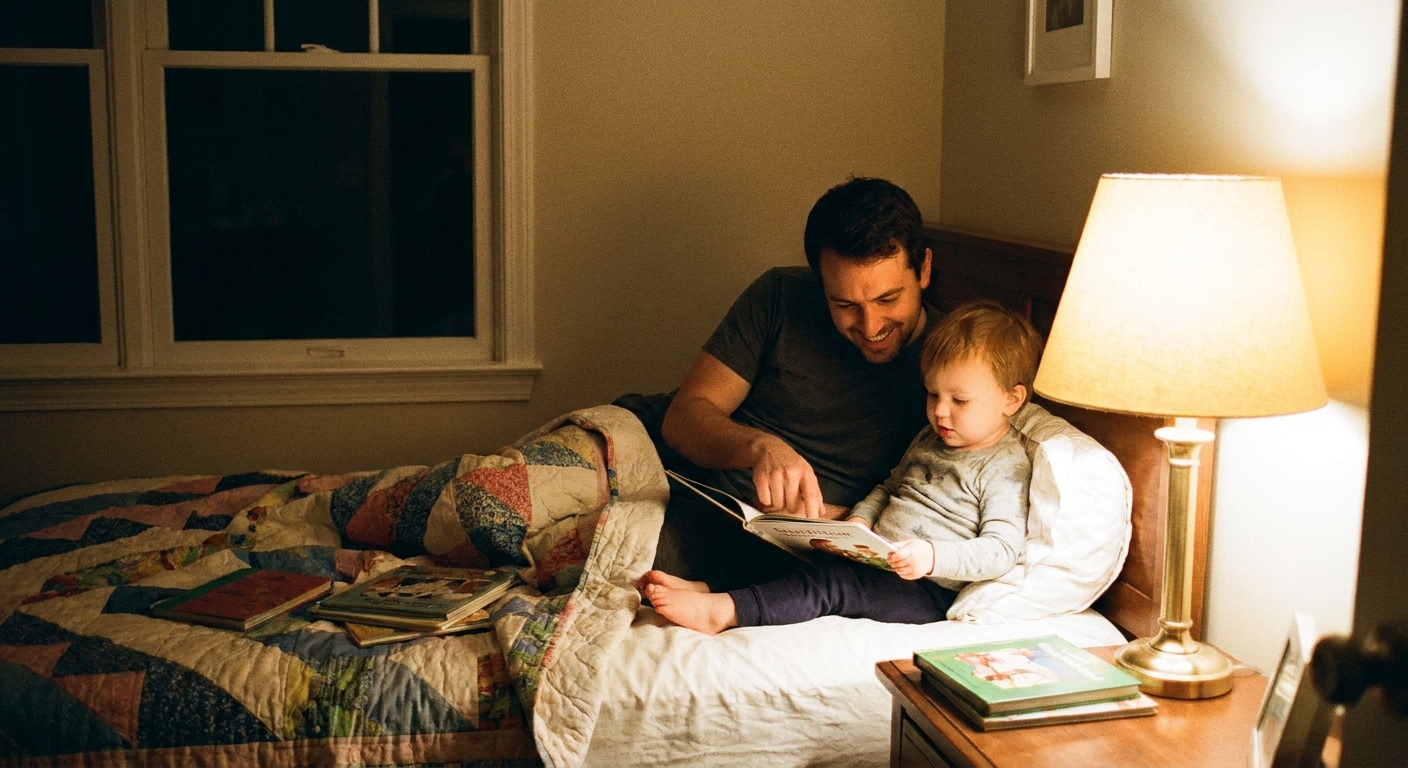
At bedtime
If your child is replaying the day and getting stuck on “I shouldn’t have…” a gentle childhood memory can move them toward “That happened, and I am still safe.”
If they are too upset to listen
Sometimes a kid is so escalated that no story, no script, no gentle insight is going to land. In that peak moment, I treat the story like a recovery tool, not a stop-the-meltdown tool.
What I do instead is simpler:
- Get close and get quiet.
- Use one steady line: “I’m here. You’re safe.”
- Help their body settle first: slow breathing together, a sip of water, a firm hug if they want it, or a few minutes of space if they do better with distance.
If there is an immediate safety issue, like your child is hurting themselves or someone else, safety comes first. Get help right away and reach out to a professional for support.
Then, when they are coming down, that is when a tiny “when I was little” story can work beautifully.
What to avoid
Over-sharing
Save the heavy stories for adult conversations. For an anxious child, too much detail can make the world feel scarier than it already does.
Turning it into a lesson
Kids can smell a moral from a mile away. If your tone shifts into “And that’s why you should…” you may lose them.
Comparisons that add pressure
Avoid: “I did it, so you can too.”
Try: “I remember how hard it felt, and I am right here with you.”
Using the story to erase a boundary
The point is not to talk them out of their feelings. The point is to help them move through the feeling while you keep the boundary steady.
For example: “You can be upset, and we are still getting into the car seat.”
Rushing the ending
Leave a beat after you finish. Sometimes the calm comes in the quiet, not in the follow-up instruction.
A 3-step script
If you want something you can practically memorize, here is what I use when emotions are high and time is short.
- Name what you see: “This feels big right now.”
- Share the tiny memory: “When I was little, I used to feel that tight feeling too, especially when…”
- Offer one next step: “Let’s do one thing together. We can…”
Then pause. If your child takes the step, great. If not, stay close and repeat the next step, not the whole speech.
Prompts for your own stories
You do not need a dramatic childhood to do this well. Small memories are often the most relatable.
- A time you felt shy walking into a room
- A time you lost something important
- A time you worried about being in trouble
- A time a loud noise or strong smell made you overwhelmed
- A time you missed someone
- A time you made a mistake in front of other kids
If you want help generating kid-friendly story ideas on the fly, keep these quick story starters handy for the days your brain feels like plain oatmeal.
FAQ
What if my child says, “That’s not the same”?
That is normal. Try: “You’re right, it’s not exactly the same. I’m not saying it’s identical. I’m saying I recognize that worried feeling, and we can handle it together.” Then offer the coping step.
What if I cannot think of any good childhood stories?
Start with something tiny that happened in the last week instead. “When I was little” can become “When I was new at a job” or “When I was learning to drive.” The key is that you are modeling: people feel nervous, and they still move forward.
Does this work for toddlers?
It can, with simpler language and much shorter stories. Toddlers do not always process narratives the way older kids do, so you are often leaning more on your tone, your face, and one simple line they can repeat.
Aim for 10 to 20 seconds and one sensory detail. For toddlers, I also love micro-stories during transitions, like cleanup or getting dressed. You may like micro-stories for toddler chores.
When should I get extra help for my child’s anxiety?
If anxiety is regularly blocking school, sleep, friendships, eating, or daily routines, it is worth talking with your pediatrician or a licensed child therapist. As a quick gut-check, if your child is avoiding normal life more days than not, or your whole household is reorganizing around the worry, it is time to ask for support.
For a general overview of anxiety in children and when to seek support, the American Academy of Pediatrics has a parent resource here: https://www.healthychildren.org/English/healthy-living/emotional-wellness/Pages/Anxiety-and-Children.aspx.
The takeaway
You do not need the perfect words to calm an anxious kid. You need connection, honesty, and one doable next step.
A simple, true sentence like “When I was little, I felt that too” can turn a scary moment into a shared moment. And in a busy family life, shared moments are often where calm finally starts.