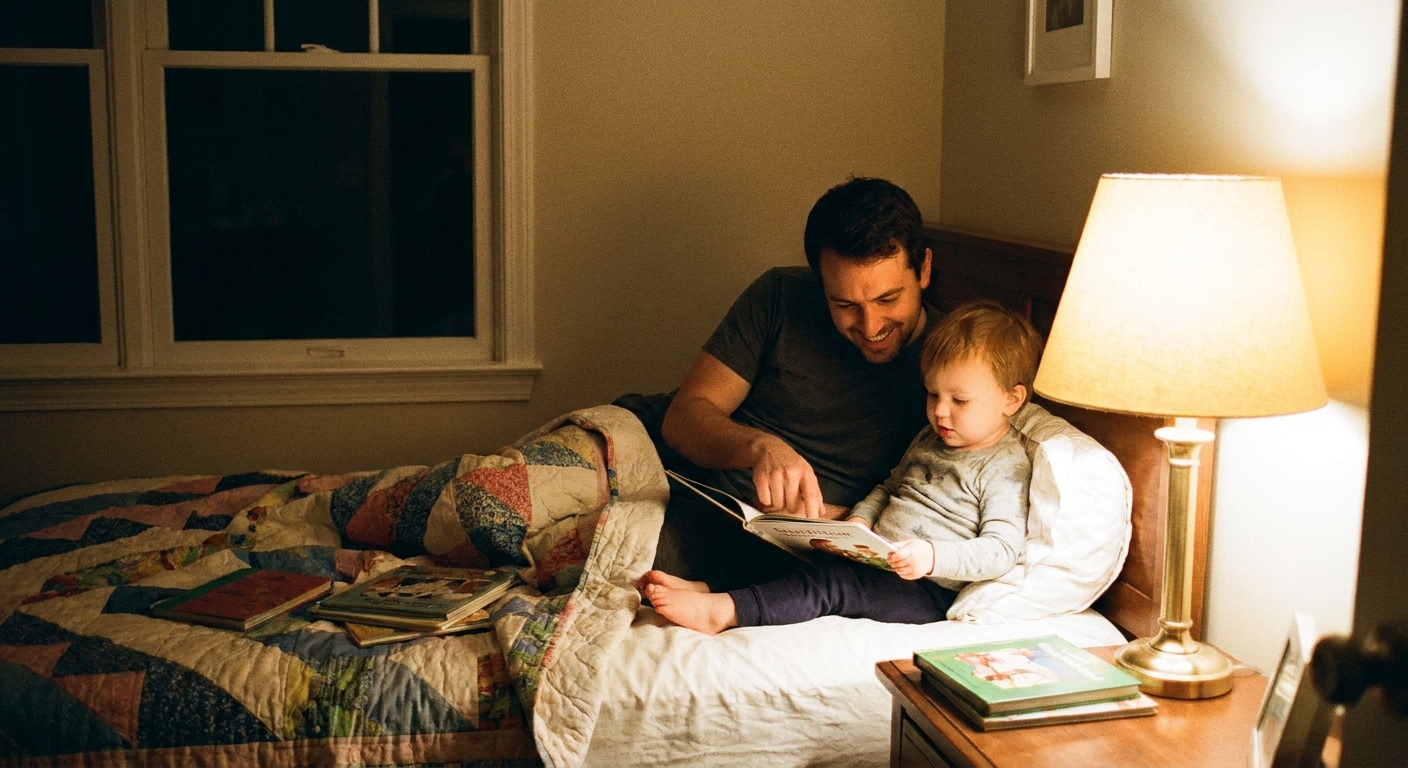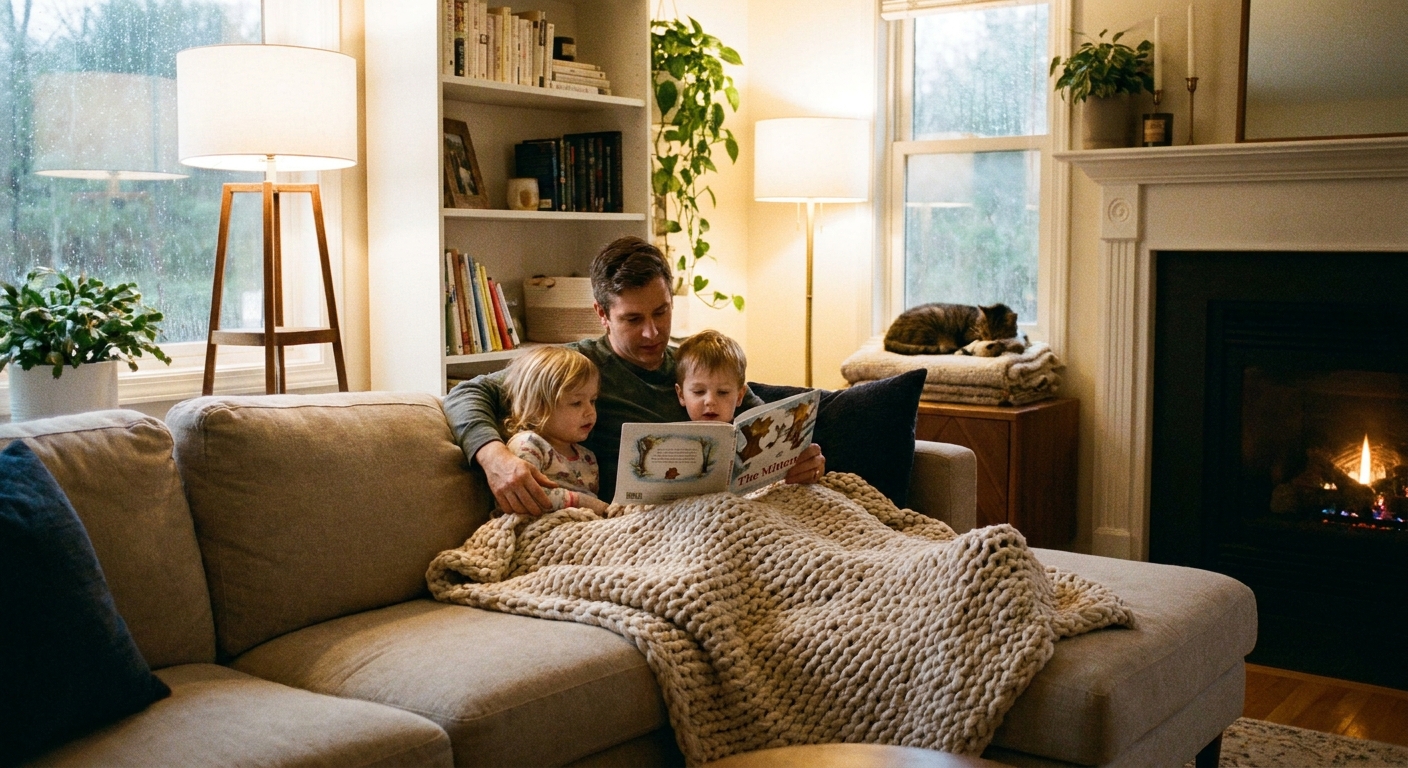

There is a very specific kind of tired that hits at bedtime. The kitchen is finally quiet, someone cannot find their favorite stuffed animal, and your brain is too done to perform a full theatrical reading of a 32-page book.
On those nights, I do not reach for perfection. I reach for a short, steady story that lowers the energy in the room instead of revving it up. After a lot of trial and error with three kids, I have a simple 5-minute bedtime story “recipe” that I can make up on the spot, and it actually helps them drift off.
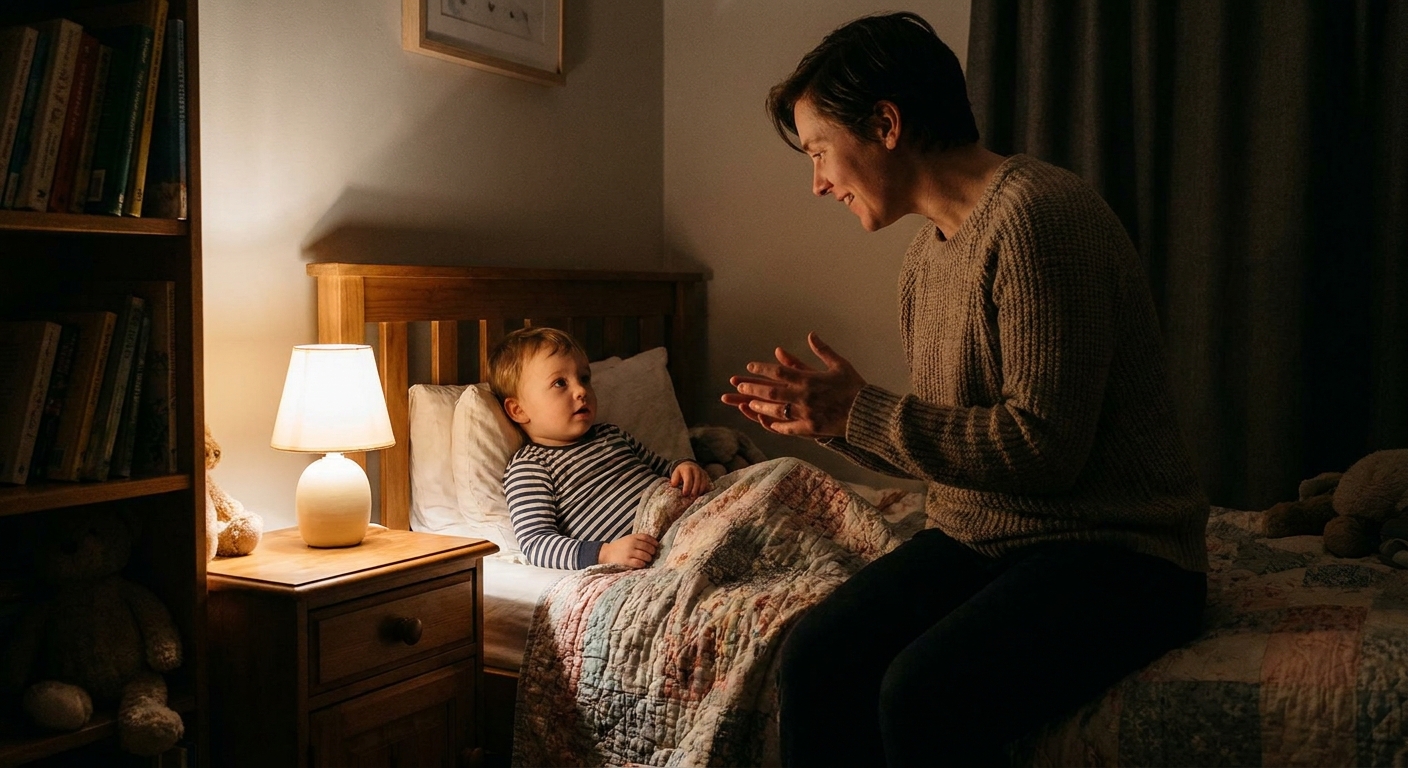
Why a 5-minute story works
A bedtime story is not just entertainment. It is a bridge from “busy day brain” to “sleepy body.” Short stories can be especially helpful because:
- They keep the routine predictable. Your child learns, “Story ends, lights dim, sleep happens.”
- They can prevent accidental excitement. Longer plots can invite problems to solve, villains to defeat, and cliffhangers that pull kids right back into alert mode.
- They match a tired parent’s bandwidth. If you can deliver it calmly, your child can often receive it calmly.
The trick is choosing ingredients that signal safety and slowing down: gentle repetition, familiar settings, and an ending that tapers instead of pops.
The 5-minute story recipe
When I am exhausted, I think in five tiny beats. Each beat is about a minute. You can do this sitting in the dark with zero props.
Step 1: Pick a sleepy main character
Choose someone your child already feels comfortable with:
- a stuffed animal
- a family pet
- a friendly vehicle (a little bus, a mail truck)
- your child as the hero, but in a calm way
Rule: the character wants rest, comfort, or coziness. Not adventure.
Step 2: Choose one familiar setting
Keep it close to home: their bedroom, grandma’s porch, the backyard, a quiet pond. Familiar places help kids relax because they are not working hard to picture what comes next.
Step 3: Give a tiny, gentle problem
Good bedtime problems are calm and solvable without effort:
- finding the coziest spot
- getting tucked in
- choosing a lullaby
- delivering one goodnight
Avoid anything that spikes alertness: getting lost, being chased, storms, conflicts, big surprises.
Step 4: Use a “slow three” rhythm
This is the part that makes it work. Repeat a calming action three times, with softer and quieter language each time.
- three yawns
- three cozy snuggles
- three slow breaths
- three gentle goodnights (to the lamp, the door, the moon)
Repetition is often soothing because it reduces anticipation and surprise. The brain can stop scanning for the next twist.
Step 5: End with the same closing line
Pick one sentence and keep it consistent. Your child may start to relax the moment they hear it because it signals the finish line.
Examples:
- “And that is the end, because everyone is safe and sleepy.”
- “The room stayed quiet, and Little Bear fell asleep.”
- “Goodnight now. Your body can rest.”
A complete story for tonight
If your brain is blank, you can tell this one exactly as written. It is simple on purpose.
The Cozy Search
Minute 1: Tonight, Little Bear was getting very sleepy in his bedroom. His eyes felt heavy, and his paws felt warm under the blanket. He listened for a moment. The house was quiet.
Minute 2: Little Bear wanted to fall asleep, but first he needed one thing. He needed the coziest spot in the whole room. Not the biggest spot, and not the fastest spot. Just the coziest.
Minute 3: Little Bear tried spot number one, right by his pillow. He gave one slow yawn. He snuggled in for a moment. It was cozy.
Minute 4: Little Bear tried spot number two, tucked into the soft corner of his blanket. He gave two slow yawns. He let his shoulders drop. It was even cozier.
Minute 5: Little Bear tried spot number three, right in the middle where the blanket felt warmest. He gave three slow yawns. He took one slow breath in, and one slow breath out. The room stayed quiet. Little Bear felt safe and sleepy, and he fell asleep. And that is the end, because everyone is safe and sleepy.
That is it. No twist. No extra scene. When you feel tempted to add more, that is your cue to soften your voice and finish softly.
Three quick examples
1) The Sleepy Puppy Patrol
A little rescue dog does a “patrol” of the house: the couch is quiet, the sink is quiet, the hallway is quiet. On the third check, the puppy chooses their bed, circles one time, two times, three times, and sleeps.
2) The Little Train Parks
A small train visits three calm stations: Blanket Station, Pillow Station, Nightlight Station. At each station, the train slows down more. Finally it parks in the cozy roundhouse and the engine goes quiet.
3) The Moon’s Goodnight List
The moon says goodnight to three things your child can picture in the room: the door, the window, the rug. Each goodnight gets slower and softer. The moon’s light stays gentle, and everyone sleeps.
Make it even sleepier
If your kid loves stories but keeps popping back up with questions, the story might be accidentally energizing. These quick fixes help.
Use calmer words
Words like “suddenly,” “amazingly,” and “huge” can wake some kids right up. Swap them for “slowly,” “gently,” and “quietly.”
Keep the body calm
Running, jumping, racing, and chasing can be contagious, even in story form. Choose actions like stretching, snuggling, rocking, floating, swaying.
Add restful details
- the blanket feels warm
- the room is dim
- the air is still
- the pillow feels soft
Slow your voice
I aim for slower than feels normal. If your child asks you to repeat a line, that is often a good sign. Repetition can be calming.
When kids interrupt
Interruptions are normal, especially for toddlers and preschoolers. The goal is to respond without waking the room back up.
If they ask for a different story
Try: “This is the sleepy story tonight. Tomorrow we can choose another.” Then continue with the same character and the same rhythm.
If they correct you
Some kids love being the editor. Give a calm nod and fold it in once: “You are right, it is the blue truck. The blue truck is getting sleepy.” Keep moving.
If they ask big questions
At night I keep answers tiny. “That is a good question. We can talk about it in the morning. Right now we rest.” Then return to the repeating “slow three.”
If they get silly
Do not fight it with more words. Shorten the story. Whisper the ending line. Lights stay dim. The boundary is calm, not dramatic.
What can wake kids up
- A surprise ending. Even a happy surprise can still be a jolt.
- Too many characters. More voices often equals more attention.
- High-stakes emotions. Fear, conflict, and even intense excitement can keep bodies alert.
- Making the child the fixer. If the hero has to solve something, your child’s brain can stay in task mode.
- Letting the story run long. When the story stretches, kids may start treating it like playtime.
Older kids tweak
For kids around 6 to 9 who want more “story,” I keep the same five beats, but I add richer sensory detail instead of higher stakes. More cozy description, not more conflict. Think: the sound of the ceiling fan, the feel of warm socks, the way the room looks under the nightlight.
If bedtime fears show up
If your child is persistently anxious at bedtime or frequently having nightmares, keep the story extra steady and pair it with simple reassurance. I also try to talk about the worries in daytime, when everyone is regulated and rested.
A simple routine
I like to stack the story into a routine that is boring in the best way:
- Bathroom
- A sip of water
- Two-minute tidy of the bed area (just pillows and favorite stuffy)
- Lights dim
- 5-minute story
- Same closing line
If you want more story ideas for different ages and attention spans, you can browse our kids story collection here: https://smart-central.com/guide-kids-stories/.
Quick FAQ
What age is this best for?
It works well for toddlers through early elementary, but it is especially helpful for ages 2 to 6 when routines and repetition can feel very soothing.
Should I make my child the main character?
You can, but keep the action calm. If your child gets energized imagining themselves doing things, choose a stuffed animal or pet instead.
My kid asks for longer stories
You are not doing anything wrong. Hold the boundary kindly: one short story at bedtime. If your child wants more stories, add them earlier in the evening when sleep is not the goal.
What if they fall asleep mid-story?
That is the win. Gently finish your closing line (quietly), then stop talking.