

There is a special kind of parenting disappointment that happens when you spend 20 minutes printing, cutting, and taping a paper toy… and it crumples before you can clear the table. I have been there more times than I care to admit (usually while the dog is doing zoomies and someone is asking for a snack).
The good news is that most “my 3D printable fell apart” problems are paper problems, not you problems. A small upgrade in paper type or weight can be the difference between a one-minute wonder and a paper toy that survives actual playtime.
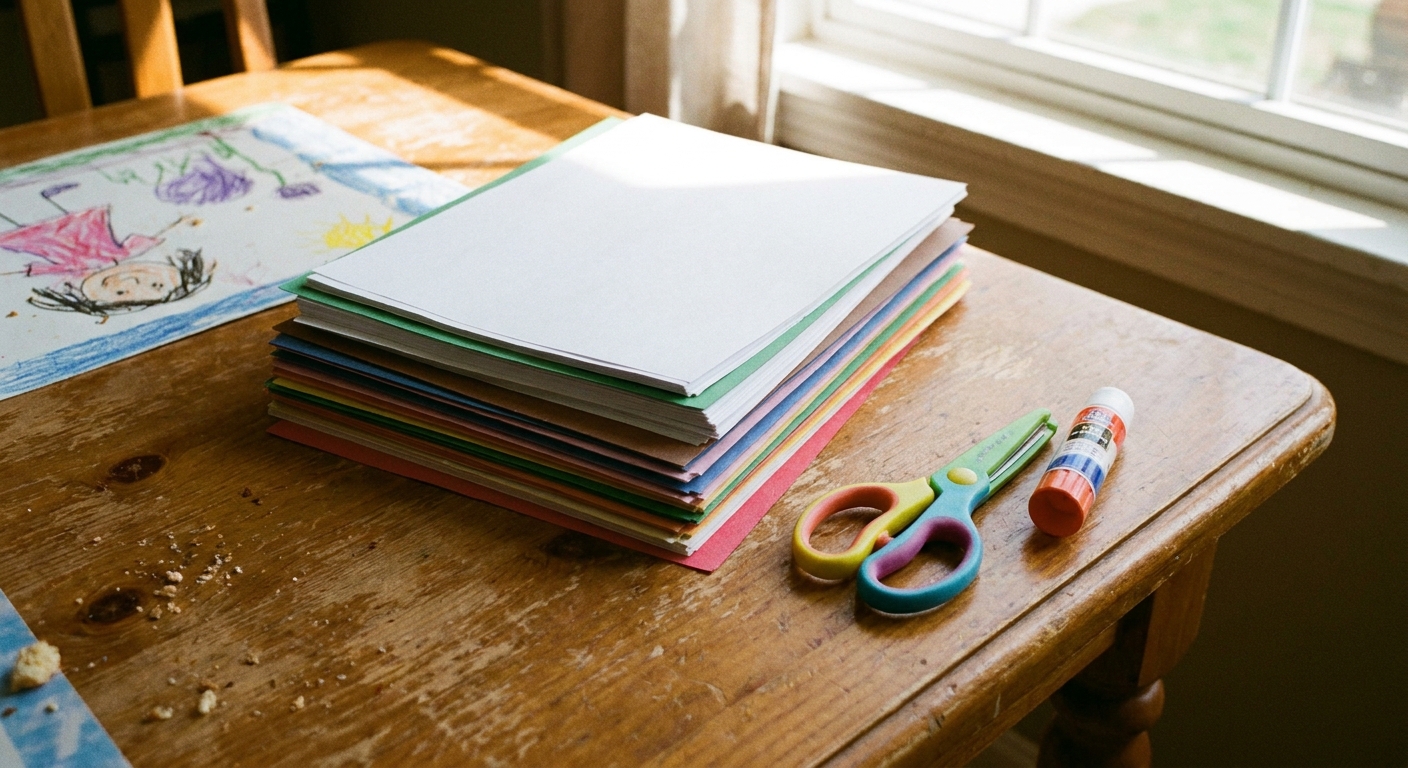
Paper basics that matter
You do not need to memorize a bunch of print shop terms. For kids crafts, you mainly need to understand three things: weight, finish, and fiber direction (only sometimes).
- Weight (thickness): Heavier paper holds shape better and tears less, but can be harder to fold and may not feed well in every home printer.
- Finish: Matte is easier to color and glue. Glossy looks bright but can smudge and resists some glues.
- Fiber direction (grain): Some thicker papers fold cleaner in one direction than the other. If your folds crack, you can usually fix it by scoring and folding slowly, even if you ignore grain completely.
Quick translation tip: In the US you will often see paper sold by pounds (lb). In many craft templates and international listings you will see GSM. Here is the important part: lb is not universal. A “65 lb” sheet can mean different things depending on whether it is labeled as cover, index, or text/bond. For sanity (and fewer returns to the craft store), treat the numbers below as common rough equivalents for typical home-printable papers, and use GSM as the more consistent number when you have it.
- 20 lb copy paper (usually 20 lb bond/text) is commonly around 75 GSM (you may see small variation by brand and finish)
- 28 to 32 lb “premium” paper is often around 105 to 120 GSM
- 65 lb cover cardstock is often around 175 to 185 GSM
- 80 lb cover cardstock is often around 215 to 220 GSM
- 100 to 110 lb cover cardstock is often around 270 to 300 GSM
What to look for on the label: If it says cover and also says cardstock, you are usually in the right aisle for 3D printables.
Best paper for durable printables
1) Standard printer paper (20 lb, about 75 GSM)
Best for: simple coloring pages, quick puppets, flat cutouts, practice runs, and anything your kid will decorate heavily with crayons or markers.
What it is great at: clean folds, easy cutting, and smooth feeding through any printer.
Where it fails: tabs tear fast, corners get dog-eared, and 3D shapes slump.
My mom hack: If a template has tiny glue tabs or narrow connection points, printer paper is usually the wrong choice. You can still print the first version on copy paper as a “test build,” then reprint on cardstock when the kids are committed.
2) Premium printer paper (24 to 32 lb, about 90 to 120 GSM)
Best for: paper toys that fold a lot but do not need to stand up on their own, like fortune tellers, mini books, paper dolls, and masks that will be worn once and then retired.
Why I like it: It is sturdier than copy paper but still folds nicely and does not fight small hands.
Store label hint: Look for “premium,” “presentation,” or “bright white” printer paper in the 24 to 32 lb range.
Durability tip: This is a sweet spot for paper toys with moving parts (spinners, sliders) because it is less likely to crack at the fold than thick cardstock.
3) Light to medium cardstock (65 to 80 lb cover, about 175 to 220 GSM)
Best for: most 3D printables: cubes, boxes, favor containers, play food, simple vehicles, stand-up characters, and sturdy flashcards.
Why it survives playtime: It holds shape. Tabs tear less. Edges do not fuzz as quickly.
Store label hint: Look for “65 lb cover” or “80 lb cover” and the word “cardstock.” If the label only says “index,” it may feel different than what most papercraft templates assume.
Watch-outs:
- Thicker paper means folds can pop open if they are not scored.
- Some home printers struggle with 80 lb cover. If you hear unpleasant clicking or see roller marks, step down to 65 lb cover or use the manual feed tray.
4) Heavy cardstock (100 to 110 lb cover, about 270 to 300 GSM)
Best for: display crafts, keepsakes, and pieces that need to stand very firmly, like photo props or sturdy “play signs.”
When I do not recommend it: intricate papercrafts with lots of tiny tabs or layered folds. Kids can get frustrated because it is harder to crease and harder to cut.
Printer reality check: Many home printers are not happy at this thickness. If your printer manual lists a maximum weight, follow it.
5) Photo paper (glossy or semi-gloss, usually 200 to 300 GSM)
Best for: crafts where color matters more than folds, like printable game cards, memory matching cards, or “photo-real” play food.
Pros: very bright colors, great contrast, a wipeable surface for light mess.
Cons: folds can crack, some inks smudge if handled too fast, and many glues do not bond well to slick coatings.
If you use it: choose semi-gloss if possible and let prints dry longer than you think you need. For assembly, use strong double-sided tape instead of a glue stick.
Inkjet vs laser note: Many photo papers are made for inkjet printers. If you use a laser printer, make sure the package says laser-compatible. Some coated papers can blister or smell weird in a hot fuser, and laser toner can crack along folds.
6) Matte photo paper or presentation paper
Best for: printable cards and pieces that need crisp color but still want a surface that takes glue and tape decently.
My take: If you want “nice looking” without the glue drama of glossy, matte photo paper is usually the easiest upgrade for families.
Quick cheat sheet
| Craft type | Best paper | Why |
|---|---|---|
| 3D paper toys (boxes, cubes, vehicles) | 65 to 80 lb cover cardstock | Holds shape and resists tearing at tabs |
| Paper dolls, masks, hats | Premium paper (24 to 32 lb) or 65 lb cover cardstock | Sturdy but still comfortable to wear and fold |
| Game cards, memory cards | Matte photo paper or 80 lb cover cardstock | Good color and durability for shuffling |
| Spinner wheels, sliders, moving parts | Premium paper (28 to 32 lb) | Folds cleanly and does not crack as easily |
| Coloring-first crafts (decorate, then build) | Premium paper or 65 lb cover cardstock | Handles markers better and stands up after decorating |
| Quick rainy-day cutouts | 20 lb printer paper | Fast, easy, low frustration |
Matte vs glossy
Matte and uncoated
- Best for: crayons, colored pencils, washable markers, glue sticks.
- Bonus: fingerprints barely show.
Glossy and coated
- Best for: vivid photo-like printables that will not be folded much.
- Tradeoff: glue sticks can peel right off later.
Real life rule in my house: If the craft will be handled by multiple kids (siblings, playdate, classroom-style chaos), I pick matte whenever possible. It is simply more forgiving.
If you are also choosing supplies, my favorite round-up for kid-friendly art materials is here: Best washable kids markers and paints.
Make paper last longer
Score folds before creasing
Scoring is just making a light line where the fold will go. It reduces cracking on thicker paper and helps tabs stay crisp.
- Use the back of a butter knife, a dull craft tool, or an empty ballpoint pen.
- Run it along a ruler, then fold slowly.
Safety note: If you are using anything metal (even a butter knife), I treat scoring as a grown-up job. Kids can do the folding after.
Match adhesive to the finish
- Uncoated paper and cardstock: glue stick for broad areas, white glue for strong bonds, double-sided tape for quick assembly.
- Glossy paper: strong double-sided tape usually works better than glue sticks.
Reinforce high-stress spots
If your printable has a handle, hinge, or pull tab, add reinforcement before your kid starts playing.
- Put a small strip of clear tape on the back of the area.
- For slots, reinforce around the cutout with tape first, then cut through the tape and paper together.
Print, then rest
Ink needs a little time to set, especially on coated papers. If your kids tend to grab fresh pages like they are winning prizes, set a two-minute drying station on the counter.
Pick bigger pieces for younger kids
Durability is not just paper strength. It is also whether your child can assemble it without shredding it in frustration. For toddlers and preschoolers, pick printables with big tabs and simple shapes, then save the intricate papercrafts for later.
Printer settings that help
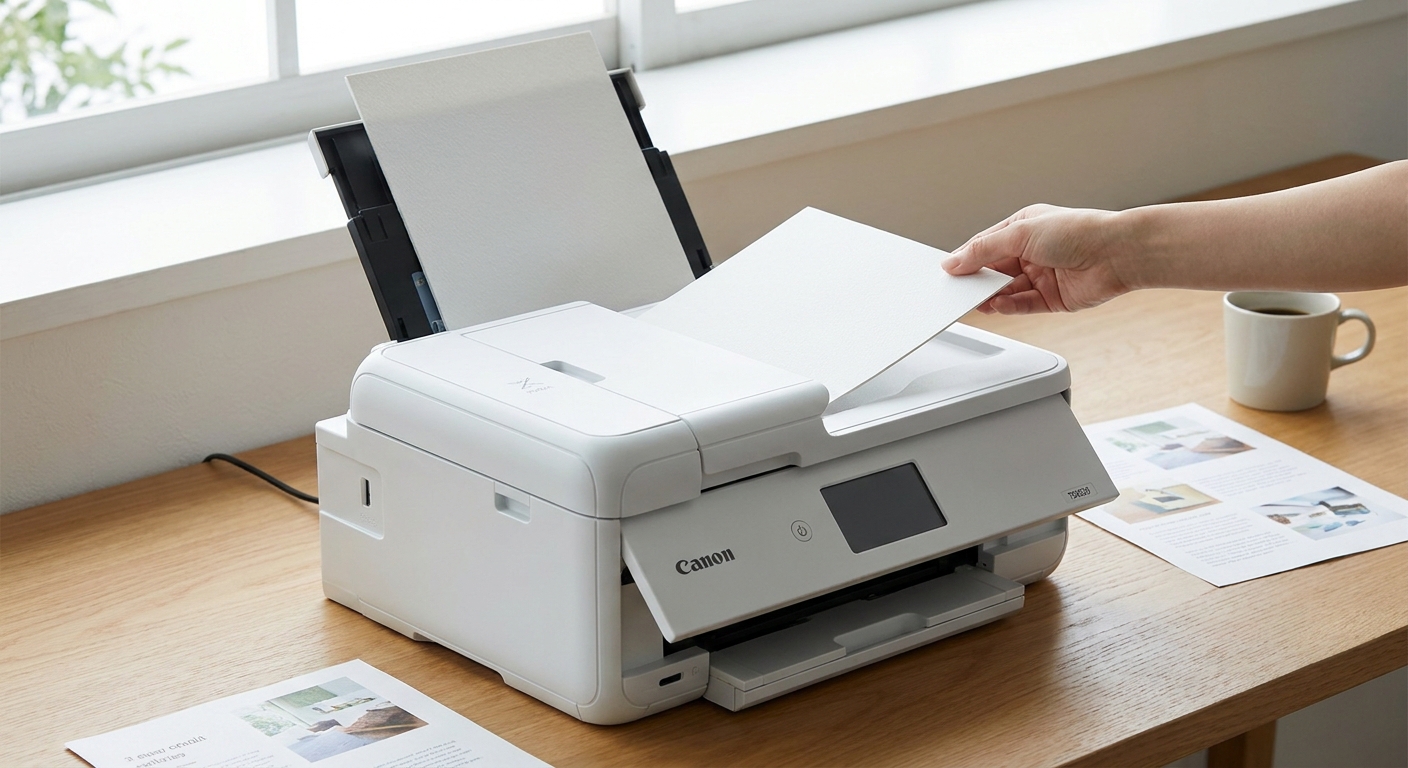
- Select the correct paper type in printer settings (Plain, Cardstock, Photo). This changes how the printer feeds and how much ink it lays down.
- Use the rear or manual feed tray for cardstock whenever your printer offers it. Straighter paper paths mean fewer jams.
- Print single-sided for most 3D crafts unless the template is designed for double-sided. Many home printers struggle to duplex thick cardstock cleanly.
- Let heavyweight prints dry longer before folding. Even on matte cardstock, heavy ink coverage can stay tacky for a bit.
Inkjet vs laser quick note: Inkjet prints can smudge if you handle them too fast, especially on glossy papers. Laser prints dry instantly, but toner can crack on sharp folds. If a build has lots of tight creases, I usually do better with matte cardstock and scored folds either way.
Common problems and fixes
“The tabs keep tearing off.”
- Move up from copy paper to 65 lb cover cardstock.
- If you are using white glue, use less. Too much can soak in, wrinkle the tab, and weaken the edge. Double-sided tape is often cleaner for tabs.
- Reinforce tabs from the back with a small strip of tape before assembly.
“The folds are cracking.”
- Score folds before creasing.
- Step down one thickness (for example, from 110 lb cover to 80 lb cover).
- Avoid glossy photo paper for fold-heavy builds.
“The colors look dull.”
- Try a brighter white cardstock or matte presentation paper.
- In printer settings, choose a higher quality mode for crafts with lots of solid color.
“The printer keeps jamming.”
- Use the manual feed or rear feed if possible.
- Do not overfill the tray. Feed one or two sheets at a time for thick stock.
- Drop from 80 lb cover to 65 lb cover cardstock.
“Glue is not sticking.”
- On glossy paper, switch to strong double-sided tape.
- On very smooth coated paper, you can gently rough the glue area with a clean eraser, but test on a scrap first. Some coatings and printed areas will scuff.
My one-paper pick
If you want to buy one paper that will handle most printable kids crafts well, I would start with 65 lb cover cardstock in bright white. It is sturdy enough for 3D paper toys, but still manageable for little hands with safety scissors. Then keep a pack of basic copy paper around for test prints and coloring-heavy pages.
And if you are building a small stash of activities you can grab fast, I keep a running list of easy wins in our Printables guide.
More low-prep ideas
FAQ
Is cardstock the same as construction paper?
No. Construction paper is usually thicker than copy paper but softer and more porous than cardstock. It is great for classic kid art, but it does not hold crisp folds and tabs as well as cardstock for 3D builds.
Do I need a laminator for printable game cards?
Not necessarily. Matte photo paper or 80 lb cover cardstock is often enough for home use. If you want extra durability, you can use clear packing tape on both sides (trim edges carefully) as a no-laminator option.
What is the best paper for paper airplanes and origami with kids?
For origami-style folding, lighter paper usually works better. Try standard copy paper or a premium 24 lb sheet. Cardstock tends to crack and feels bulky on detailed folds.
Can I use cardstock in any printer?
Many printers can handle 65 lb cover cardstock, but not all. Check your printer manual for the maximum supported weight, use the manual feed if available, and feed fewer sheets at a time.