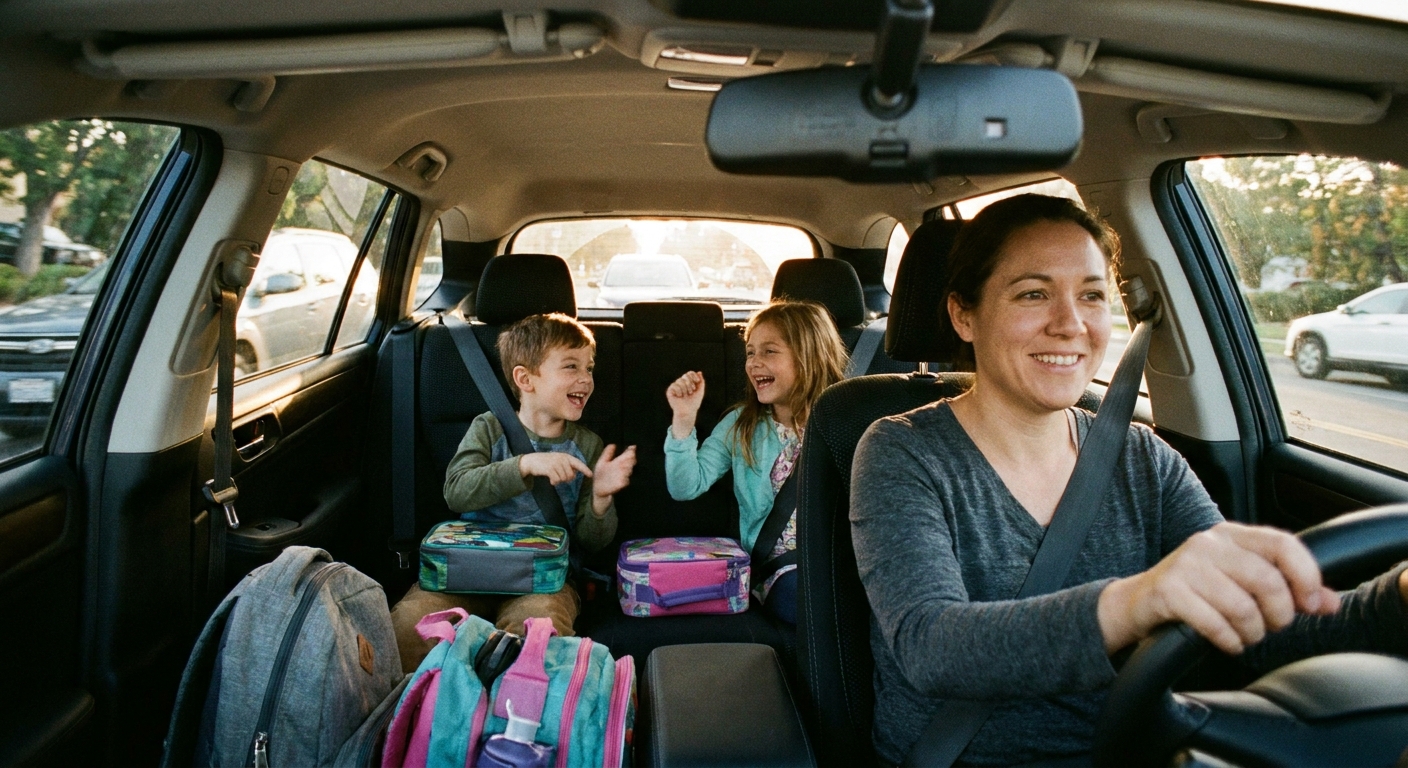

On long drives, my biggest goal is not “perfectly quiet kids.” It is independent, contained, screen-free busy. I have three kids and an energetic rescue dog, so if a toy drops under a seat or explodes into 47 tiny pieces at mile 12, it is not a “learning activity.” It is my villain origin story.
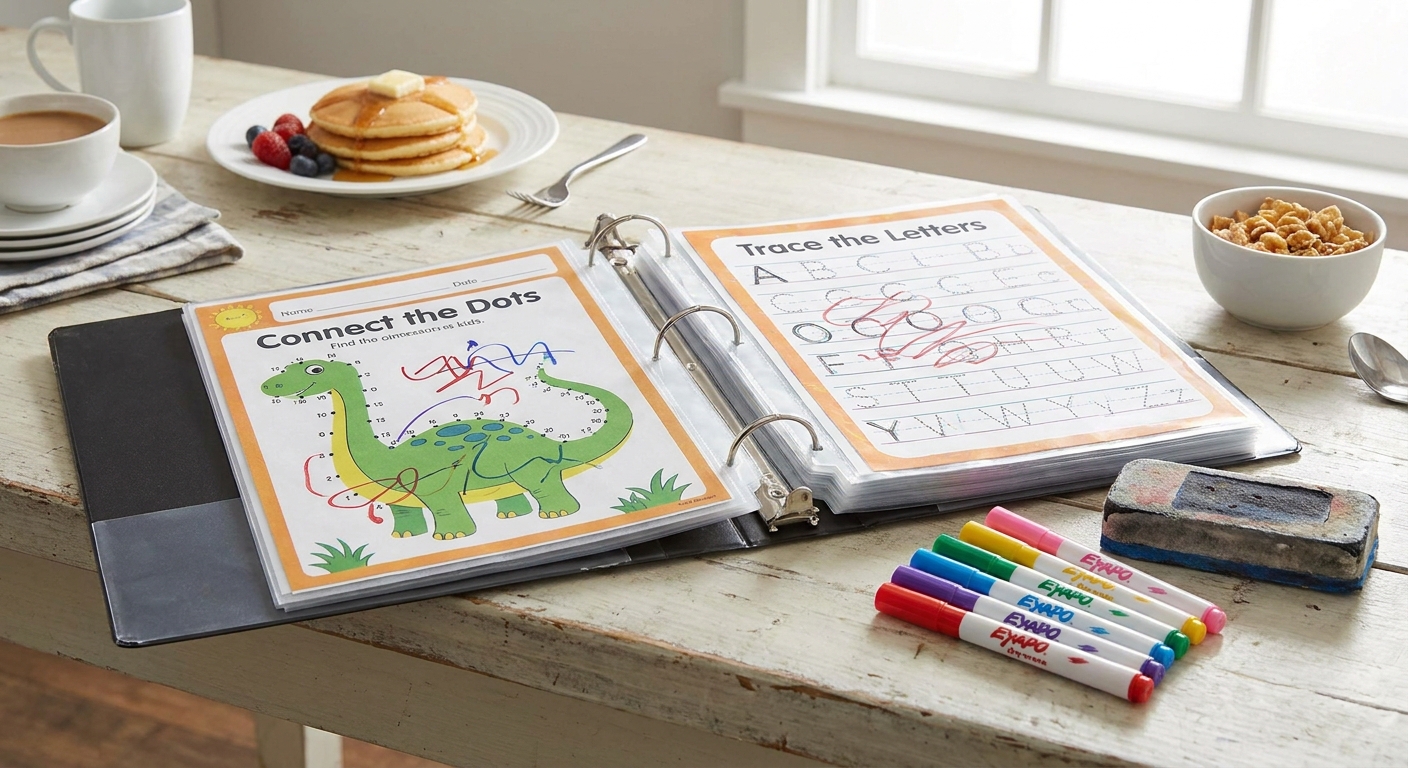
This is my practical comparison of magnetic toys (great for staying put) versus motor skills toys (fine-motor, hands-on toys that keep fingers working, like lacing, buckles, twist-and-push fidgets, and mess-free art). I’m also sharing the specific features I look for so a travel toy actually survives real car life.
Quick pick: Magnetic or motor skills?
If you just want the shortcut, here is how I choose.
- Choose magnetic toys when you need maximum containment, minimal setup, and something that can be paused instantly at a stoplight or when you need to pass snacks back.
- Choose motor skills toys when your child craves “real work” with their hands, gets bored with flat activities, or needs sensory input (twisting, lacing, pushing, pulling).
- Pack both for trips longer than an hour. I rotate every 20 to 40 minutes, and the novelty does half the parenting for me.
What makes a great travel toy
Before we get into types, these are the features that matter more than the brand name.
- One-piece container: built-in storage (closes like a book, snaps shut, or is a single case). Separate baggies are where organization goes to die.
- True “lap size”: works on a child’s lap without needing a table, and does not poke them with hard corners.
- Quiet-ish: clicking is fine, clattering is not. Avoid hard plastic pieces that ping off windows.
- Drop-test friendly: if it falls, it should not open, spill, or break.
- Pause button built in: child can close it mid-task without losing pieces.
- Age-appropriate pieces: for toddlers and preschoolers, bigger pieces and fewer steps win. For older kids, more complexity helps it last longer.
- Wipeable or washable: car toys get grimy fast. I love anything I can hit with a baby wipe, or fabric books I can toss in a gentle wash.
And one safety note I do not mess around with: keep high-powered magnets out of the car if they are loose or could be swallowed. Swallowing more than one magnet (or a magnet and a metal object) can be especially dangerous because they can attract through intestinal walls. If magnet ingestion is suspected, seek emergency care immediately. Stick with reputable kids’ sets designed for children, and avoid anything with tiny, separable magnets.
Magnetic travel toys
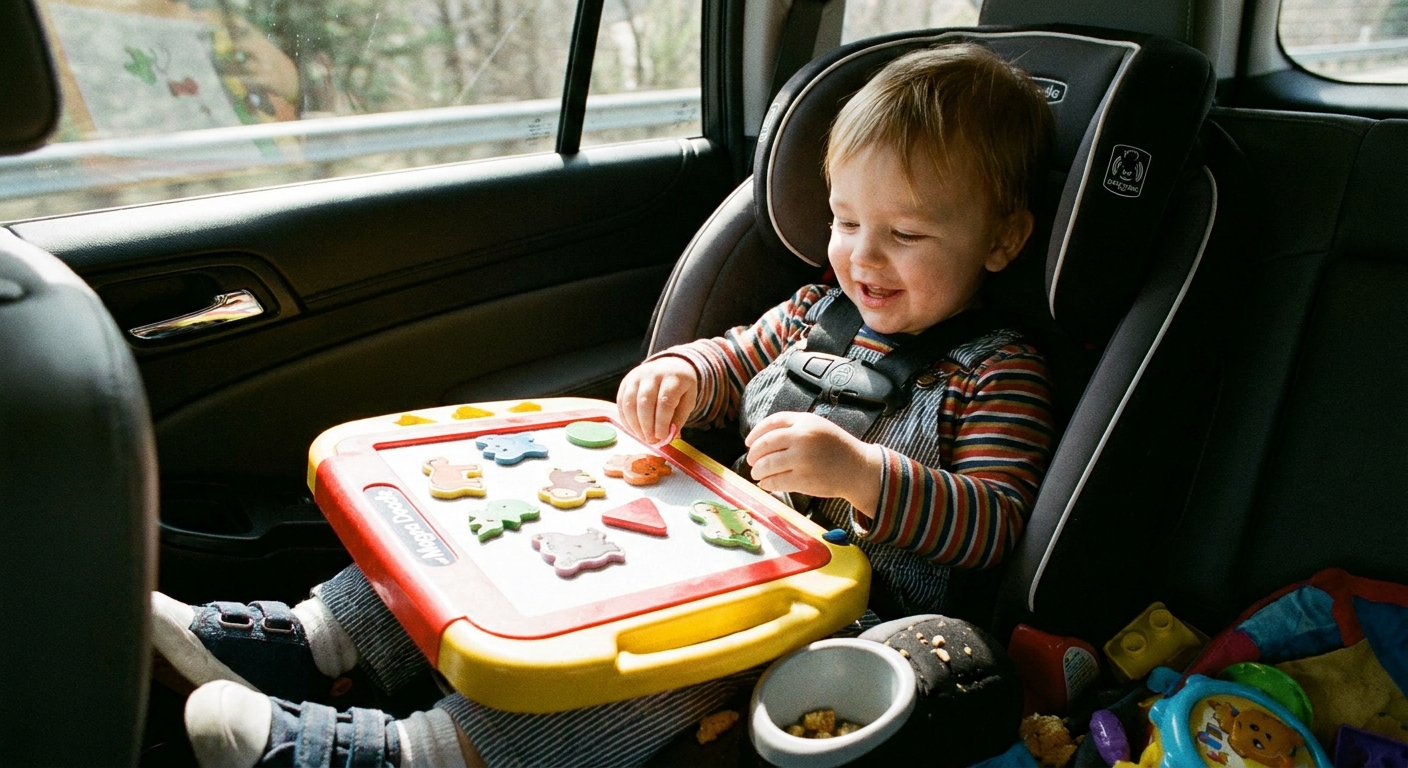
Magnetic toys shine in cars because they fight gravity for you. When my kids were in the “drop it on purpose” phase, magnetic sets were the only thing that did not turn into an under-seat excavation project.
1) Magnetic dress-up sets
What it is: A magnetic scene board with outfits and accessories to mix and match.
Why it works in the car: The “open, play, close” rhythm is perfect for short errands or those 25 minutes when you just need everybody to stay okay.
Look for:
- Thicker magnets that are easy to peel up (thin pieces frustrate little fingers)
- A case that closes fully with a latch or strong flap
- Simple themes for ages 3 to 5, more detailed sets for 6+
Watch-outs: Tiny accessory pieces are the first to vanish. If your family is already in a “we cannot keep one sock matched” season, pick a set with fewer, larger pieces.
2) Magnetic tiles in a tin (limited set)
What it is: A small selection of magnetic shapes that can build flat designs on a metal tin or tray.
Why it works in the car: It feels like building, but stays 2D, which is more realistic on a lap.
Look for:
- A shallow metal tin with a lid
- 12 to 25 pieces max for travel (more pieces equals more loss and more arguments)
- Chunky shapes for younger kids
Watch-outs: If the child tries to build tall structures, it turns into falling towers. Keep expectations “flat art and patterns,” not skyscrapers.
3) Magnetic puzzle or pattern cards
What it is: A magnet board plus picture cards or patterns to recreate (animals, vehicles, tangrams).
Why it works in the car: Pattern copying buys time. It is also often self-checking if the set includes a picture card to match (or a solution on the back), so you are not constantly asked, “Is this right?”
Look for:
- Cards that store inside the case
- Multiple difficulty levels
- Pieces that are not razor thin
4) Magnetic maze boards (sealed)
What it is: A board with beads inside a sealed track that kids move using a magnetic wand.
Why it works in the car: Nothing falls out. Ever. This is my definition of mess-free.
Look for:
- Sturdy sealed top (no gaps)
- A tethered wand that is hard to detach
- Clear start and finish paths for younger kids
Watch-outs: Some versions make loud tapping sounds. If noise is a trigger for anyone in the car, test it at home first.
Motor skills travel toys
Motor skills toys are what I pull out when a kid is restless, sensory-seeking, or needs something that feels more physical than moving magnets around. They are also great for kids who have outgrown “little kid” activity boards but still need screen-free options.
1) Water-reveal drawing boards
What it is: A reusable board that reveals color when “painted” with water, then dries back to blank.
Why it works in the car: The mess level is low, and it scratches the drawing itch without markers rolling under the brake pedal.
Look for:
- A pen that stores inside the board
- A tight water reservoir that does not leak when squeezed
- A board size that fits on a lap
Watch-outs: If your child chews pen tips, supervise. Also, do not overfill the pen. A little water goes a long way.
2) Lacing and stitching cards (chunky)
What it is: Thick cards with holes, plus a lace or shoelace-like string.
Why it works in the car: It takes time, uses two hands, and feels like “real work.” Great for kids who get antsy.
Look for:
- Shorter laces for travel (less tangling)
- Stiff lace ends for easier threading
- A zip pouch that actually closes
Watch-outs: For toddlers, lacing can turn into “wrap it around my arm.” Choose age-appropriate sets and keep it simple.
3) Busy books (felt or fabric activity books)
What it is: Soft books with snaps, buckles, zippers, buttons, and matching activities.
Why it works in the car: Quiet, durable, and ideal for children who like fidgets with a purpose.
Look for:
- Pages with pieces attached by cords or sewn down
- Sturdy binding that survives being yanked open repeatedly
- Age-appropriate fasteners (buckles for older preschoolers and up)
- Machine-washable fabric, or at least wipeable pages
Watch-outs: Some books come with lots of loose shapes. If you pick one like that, add a simple rule: “All pieces stay on your lap or inside the book.”
4) Pop-it or silicone fidget toys (simple, not huge)
What it is: A tactile toy that pops or flips repeatedly.
Why it works in the car: It is one piece, easy to hold, and can calm nervous energy.
Look for:
- One solid piece (no detachable parts)
- Quieter styles if sound is an issue
Watch-outs: These are best as a supporting player, not the main event. They do not always hold attention for a whole drive.
5) Reusable sticker books (puffy or cling)
What it is: Thick stickers that peel and restick onto themed scenes.
Why it works in the car: All the fun of stickers with less commitment and less chaos.
Look for:
- Stickers that are truly reusable and not thin paper
- Scenes printed on glossy pages for easier repositioning
Watch-outs: If you hand a traditional sticker sheet to a toddler, you may end up with a stickered car seat buckle. Reusable versions are the safer bet.
Side-by-side picks
| Situation | Best bet | Why |
|---|---|---|
| Quick errand (10 to 25 minutes) | Magnetic dress-up or magnetic maze | Fast start, fast stop, minimal pieces |
| Long drive (60+ minutes) | Motor skills busy book + a magnetic set | Rotate for novelty and longer attention |
| Child gets carsick easily | Magnetic maze or simple fidget | Often helps because it is less visual “hunting” for tiny parts |
| Toddler in the "throw everything" stage | Sealed magnetic maze or one-piece popper | Nothing to toss, nothing to retrieve |
| Older kid who is "too big" for baby toys | Pattern-based magnetic puzzles or lacing | Feels like a challenge instead of busywork |
| Sibling sharing one toy | Magnetic scenes with two boards or two-sided activity | Reduces grabbing and turn-taking drama |
| Night driving or early morning | Busy book or water-reveal board | Quiet-ish play that will not wake the whole car |
How I pack travel toys
I keep a “car kit” ready because I do not want to rummage the night before a trip. Here is what works for us.
The 5-minute car kit
- One pouch per kid, each with 2 to 3 activities
- One shared bin for backups (extra maze, extra fidget, small book)
- A rule: toys live in the pouch unless you are actively using them
- Wipes: I throw in a small pack of wipes because everything in a car eventually ends up sticky
Rotation trick
Do not hand over everything at once. I offer one activity, then “trade” for a new one when attention fades. This avoids the mid-drive moment where everything is out at the same time and everybody is suddenly bored.
If you need a few more screen-free ideas that require zero supplies, I also love these 5-minute invisible story games and the interactive storytelling games for the school commute. They work in the car just as well as they work in a checkout line.
Age-by-age recommendations
Ages 18 months to 3 years
- Sealed magnetic maze board
- One-piece silicone popper
- Chunky busy book with attached pieces
Tip: At this age, fewer choices equals more calm. Two options is plenty.
Ages 3 to 5 years
- Magnetic dress-up
- Reusable sticker scenes
- Water-reveal drawing board
- Simple lacing cards
Tip: Add a tiny ritual: “Toy comes out after seatbelt check.” It cuts down on the constant reaching.
Ages 6 to 9 years
- Magnetic pattern puzzles (tangrams, build-the-picture cards)
- More complex busy books (buckles, time, matching)
- Lacing or stitching sets with harder patterns
Tip: This is the sweet spot for “challenge” toys that buy real time.
Ages 10+ years
- Compact logic puzzles (peg puzzles, sliding puzzles)
- More advanced pattern-based magnetic puzzles
- Small sketchbook plus a single mechanical pencil (if your child can handle it responsibly)
Tip: Older kids often do best when the activity feels like a hobby, not a toddler toy.
Safety and sanity checks
- Avoid tiny loose magnets and any toy that sheds magnetic bits.
- Skip projectile pieces: hard plastic balls, marbles, anything that can launch forward if dropped.
- Keep strings short: lacing is great, but avoid very long cords for younger kids.
- Pick quiet for early morning or late night: the wrong toy noise can sour the whole trip fast.
- Do a home trial first: 10 minutes at the kitchen table tells you if the toy will frustrate or delight.
My bottom line
If you want the most reliable, low-mess win, start with a sealed magnetic maze and a water-reveal drawing board. Then add one “challenge” toy as your child grows, like a magnetic pattern puzzle or lacing cards.
The best car toys are not the flashiest ones. They are the ones your child can manage alone, that stay contained, and that you can reset with one hand while you keep your eyes on the road.
For more screen-free routines beyond car travel, you can browse our Family Activities guide.