

Most mornings in my house are a race between brushing my teeth and breaking up a debate about who looked at who. What finally helped was a small, repeatable routine that often buys me about 20 minutes of calm: a morning story basket.
It’s exactly what it sounds like: a basket with a handful of books plus a few simple story props that invite kids to “read” and then act out their own tales. The trick is curating it like a tiny stage, not like a toy bin. When it works, your kid’s busy narrating, building, and problem-solving while you get dressed, pack lunches, or drink coffee that’s still warm.
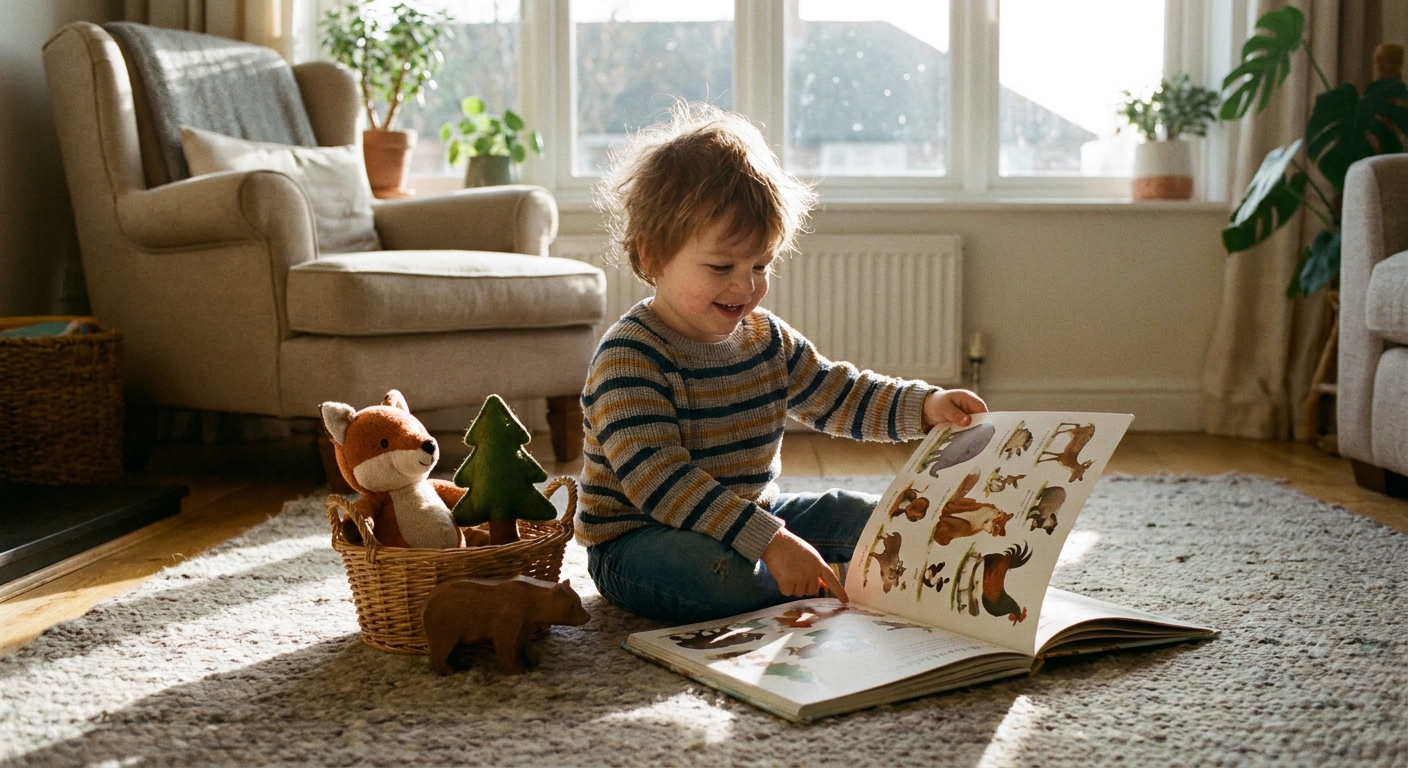
What it is (and isn’t)
It’s: a small, themed set of books and props that stays interesting for about one week at a time.
It isn’t: a huge collection, a complicated craft project, or something that requires you to “host” it. The whole point is independent play with a gentle story prompt built in.
- Best for: preschool through early elementary (about ages 3 to 8), and younger toddlers with fewer, bigger pieces.
- Time goal: aim for 15 to 25 minutes of focused play (some days it’ll be 5, some days you’ll get the full stretch).
- Parent involvement: can be as little as 2 minutes to set out and under a minute to reset, once the routine sticks.
Simple setup: basket, books, characters
1) Pick the container
Choose a basket or bin that’s easy to carry and easy to put away. If you’ve got multiple kids, a handled basket helps you relocate the whole scene quickly if someone needs the table for breakfast.
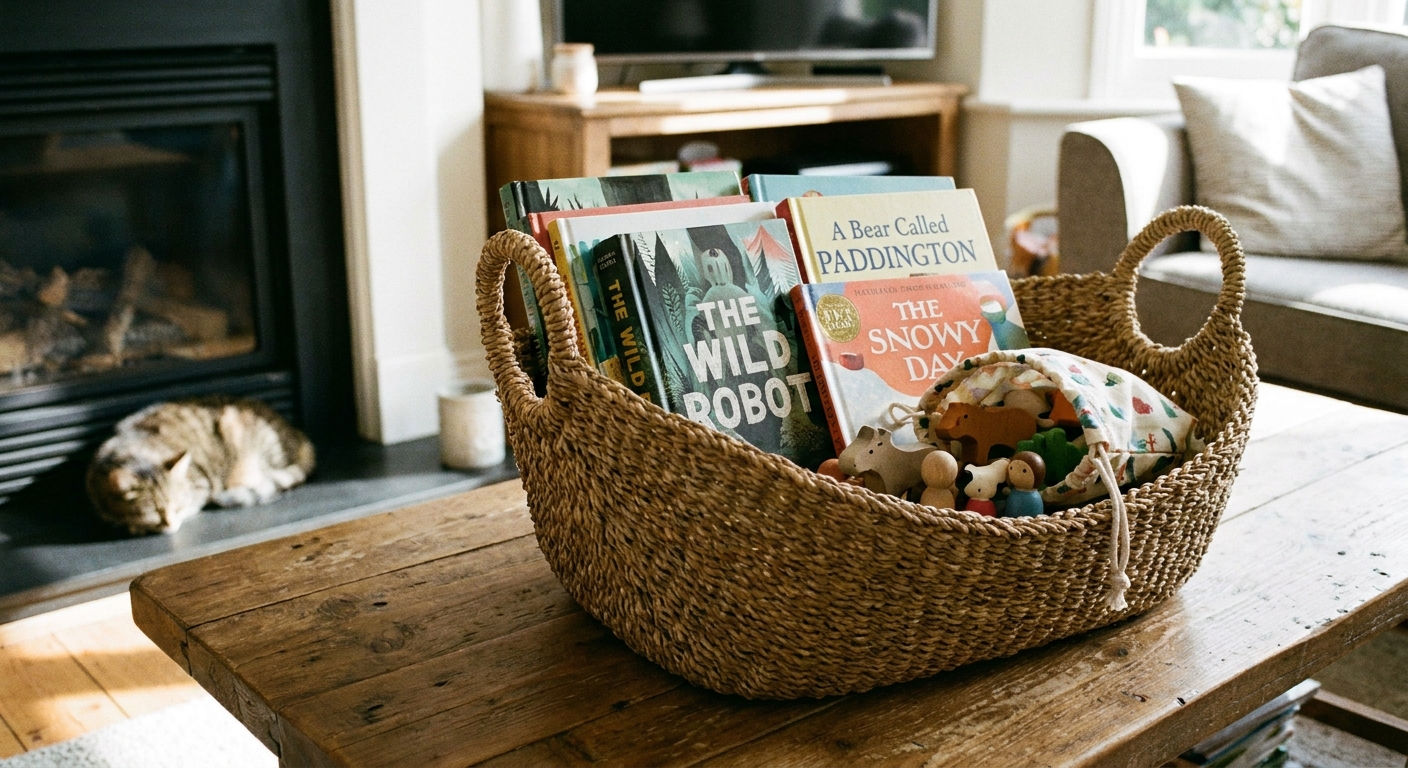
- Size: big enough for 4 to 6 picture books, plus a small pouch of props.
- Location: somewhere out of the main traffic line but within your sightline from the bathroom or kitchen.
2) Choose 4 to 6 books that invite retelling
The best picks have clear characters, a simple problem, and a strong setting. Kids don’t need complicated plots. They need an idea they can borrow.
- Great book types: fairy tales, animal adventures, “day at” stories (zoo, farm, construction site), and books with repeating phrases.
- Avoid (for morning basket purposes): very long stories, delicate pop-ups, or books with lots of tiny flaps unless you truly don’t mind repairs.
3) Add 6 to 12 open-ended props
You don’t need a full toy set. A few versatile pieces go a long way.
- Characters: small animals, people figures, peg dolls, or even simple wooden blocks that become “the hero.”
- Setting helpers: a small scarf (river, cape, blanket), a paper plate (moon, shield, pizza), a small box (house, cave, spaceship).
- One vehicle max: if you add a truck, boat, or train, keep it to one. Otherwise the basket turns into “vehicle hour,” which is fine, just not always story-focused.
If you need more storytelling inspiration for quick prompts, I keep a list handy here: 50 quick story starters for parents who have run out of ideas.
Safety and durability
Quick but important note: avoid small parts for kids under 3, and always follow toy age labels. If you’ve got a toddler who explores with their mouth (very normal), keep this basket simple and supervised.
Also, pick props you can live with. Washable, inexpensive, and not breakable is the vibe. A scarf you can toss in the laundry beats a delicate “special” cape every time.
10-minute weekly refresh
This is the part that makes it sustainable. I do a tiny reset about once a week so the basket feels “new” without buying anything.
- Pick a theme for the week. One theme keeps decision fatigue low for you and makes play deeper for them.
- Pull 4 to 6 books. Two favorites, two fresh choices, and one wildcard is my sweet spot.
- Select props that match the theme. Not perfectly, just enough to spark imagination.
- Put the props in a small pouch or zipper bag. This is my number one cleanup trick. If props are loose, they spread.
- Pre-stage one scene (optional but powerful). I sometimes open one book to the first page and place two figures ready to go. It invites immediate play, especially for kids who struggle to start.
Five easy weekly themes
1) Animal rescue
- Books: lost pet stories, animal doctor stories, brave helper tales.
- Props: stuffed animal, small bandage roll, toy stethoscope if you have one, small blanket.
- Story spark: “Who needs help today, and what’s the plan?”
2) Tiny town
- Books: community helpers, busy town books, neighborhood stories.
- Props: block buildings, people figures, one vehicle, sticky notes as signs (no writing required).
- Story spark: “There’s a problem in town. Who notices first?”
3) Space mission
- Books: rockets, planets, astronauts, bedtime-in-space stories.
- Props: a small box as the spaceship, foil ball as a planet, flashlight for “control panel.”
- Story spark: “Your ship lands somewhere new. What do you find?”
4) Fairy tale remix
- Books: classic fairy tales plus one funny twist version.
- Props: crown (paper), small scarf as cape, animal figures as characters in disguise.
- Story spark: “Retell the fairy tale, but change one big thing.”
5) Construction site
- Books: diggers, builders, teamwork stories.
- Props: blocks, one truck, painter’s tape roads on a placemat.
- Story spark: “What are you building, and what goes wrong halfway through?”
Age tweaks that help
Ages 3 to 4
- Use fewer props (6 is plenty).
- Stick to chunky figures and board books if needed.
- Pre-stage the first scene more often so they can jump right in.
Ages 6 to 8
- Add a notepad for simple maps, menus, or “tickets.”
- Toss in three index cards that say: beginning, middle, end. They can place a prop on each to build a plot.
- Swap in slightly longer picture books, but keep the basket small so it doesn’t sprawl.
If pretend play isn’t their thing
Some kids would happily build forever and never make the characters talk, and that’s fine. Make it a “story building” basket instead: blocks plus one hero figure. Your prompt can be as simple as, “Build where the character lives, then show me what happens there.”
How to introduce it
The introduction matters. If you hand your child a basket and say, “Go play,” you might get a blank stare. Here’s what works in my house.
Do a 2-minute demo for the first 2 mornings
Sit down, open one book, and narrate one tiny scene using two props.
- “This bear is the baker.”
- “He drops the bread.”
- “Now he needs help.”
Then stop and say: “Your turn. You can change the story any way you want.”
Use one simple rule: props stay on the rug
Pick a defined play spot, even if it’s just a small rug or blanket. Kids can spread out without the pieces migrating to your hallway.
Give a finish line
I say: “When the timer beeps, the characters go back in the pouch and the books go in the basket.” It’s calm, predictable, and it prevents the basket from becoming a permanent floor installation.
Troubleshooting
“My kid dumps it and walks away.”
That usually means there are too many options or the props are too random.
- Reduce to 3 books and 6 props for a week.
- Pre-stage a scene with one open book and two characters.
- Try a favorite theme first (animals and vehicles are easy wins).
“The baby puts everything in their mouth.”
Totally normal. For toddlers, switch to a board-book-only basket with large soft props (one stuffed animal, one scarf, one large ball). Keep small figures out until the mouthing phase is calmer, and supervise closely.
“My kids fight over the pieces.”
I handle this two ways:
- Duplicate the key character. Two identical animals or two peg dolls solves a lot.
- Assign roles. One child is the narrator, the other is the builder. Swap the next day.
“They keep asking me to play.”
This is where a quick bridge phrase helps: “Start the story without me. Tell me the best part when I come back.” Kids love a later audience. It isn’t rejecting them, it’s giving the story a purpose.
Tie it to an existing routine
Independent play works best when it’s anchored to something predictable. For us, it’s: breakfast finished, story basket out, parent gets ready.
- Same time each day: even 3 days a week builds the habit.
- Same location: kids settle faster when the stage is familiar.
- Same reset: props in pouch, pouch in basket, basket on shelf.
If your mornings happen in the car or you need something equally low-effort on the go, you might like: 7 interactive storytelling games for the school commute.
No-pressure prompts
I keep these in my head because once a kid freezes, they often just need one tiny nudge.
- “Who’s the main character today?”
- “What do they want?”
- “What’s in the way?”
- “Who helps?”
- “How does it end?”
- “Now tell it again, but funnier.”
And if you want a gentle way to keep story time short and sweet later in the day, this pairs nicely with: 5-minute bedtime stories that help kids sleep.
Example basket you can copy
If you want a ready-to-go formula, here’s a starter basket that’s worked for all three of my kids at different ages.
- Theme: Lost and found
- Books (4): any story about a lost item or lost animal, one search-and-find style book, one cozy home story, one favorite reread
- Props (8): 2 animal figures, 2 people figures, 1 small box (house), 1 scarf (river or blanket), 1 flashlight, 1 paper notepad (maps)
- Starter line: “Oh no. Someone is missing. Who is it, and where do we look first?”
You don’t need perfection or Pinterest-level props. You just need a small, consistent invitation to play. In a busy house, 20-ish minutes of independent storytelling can feel like a tiny miracle, and it’s one you can set up with what you already have.