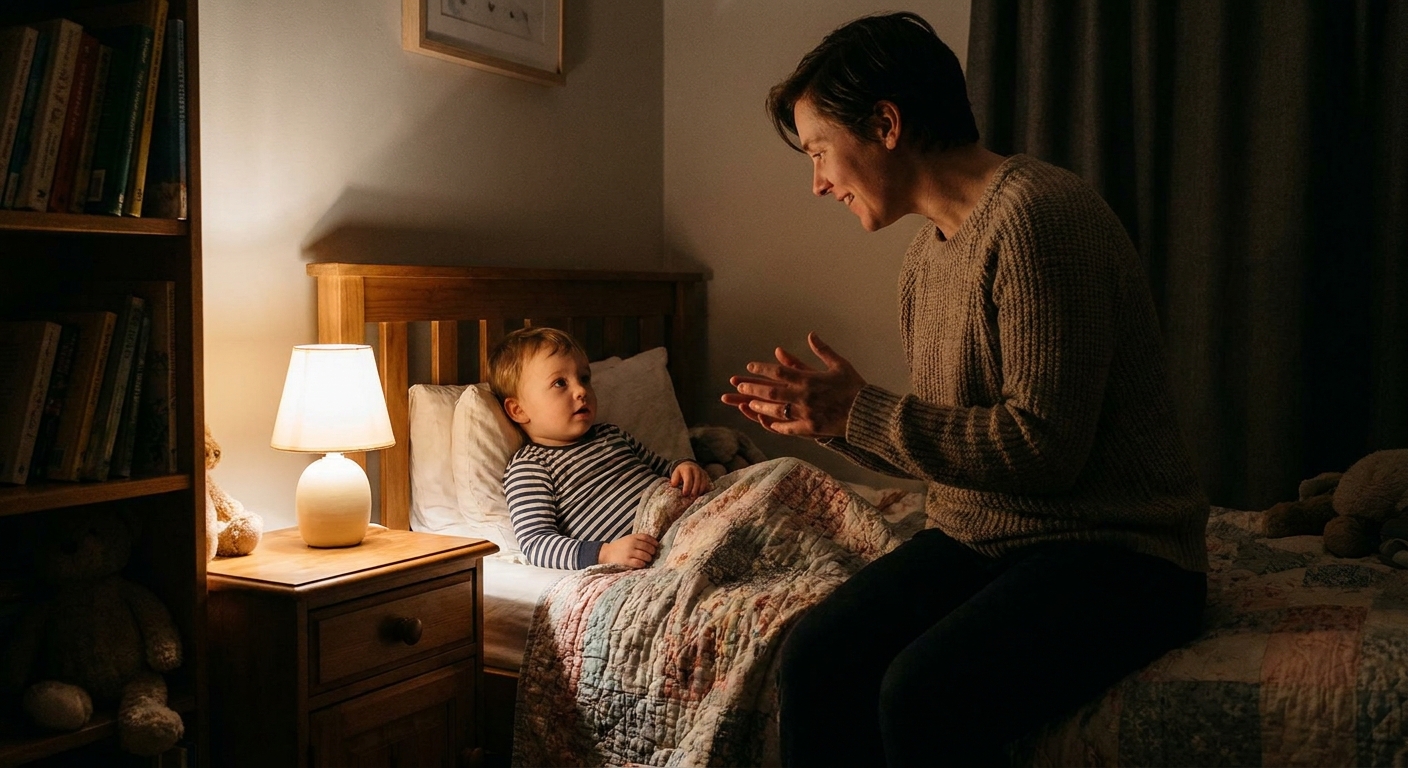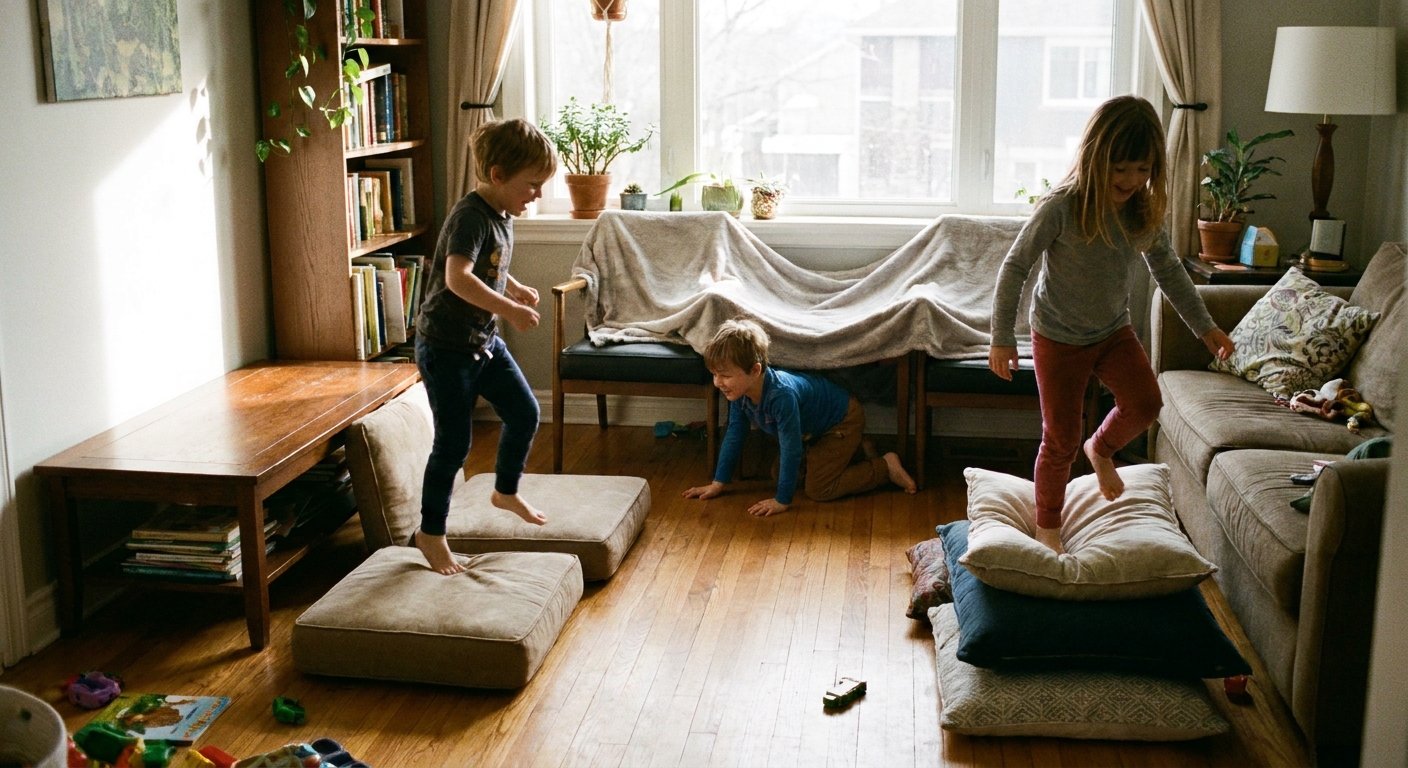

There is a specific time of day in my house when the kids have been running like tiny tornadoes for hours, the dog is doing zoomies, and I can practically feel dinner and bedtime slipping away from me. When we are in that in-between window, I do not try to force “calm.” I transition into it.
These seven gentle stretching and yoga routines are my go-to reset buttons. Each one takes about five minutes, needs no equipment, and works best when you treat it like a game, not a class. Think: soft voices, slow counts, and lots of “try it this way” instead of “do it right.”
Age note: These work best for preschool through elementary kids. Toddlers may only copy one move (that still counts). Older kids often like longer holds, so feel free to repeat a favorite pose.
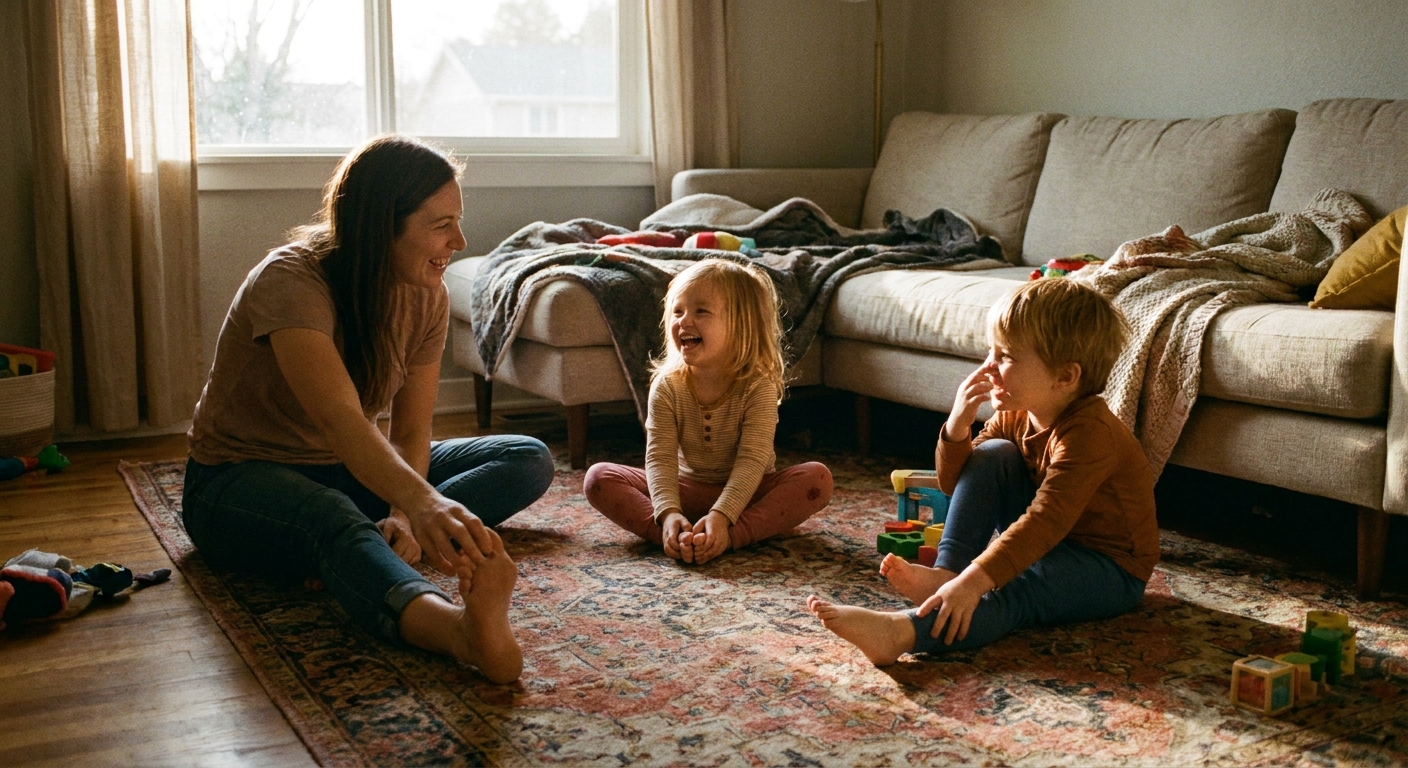
Before you start: 30 seconds of setup
If you have tried kid yoga before and it turned into wrestling, this quick setup makes a difference.
- Pick a small boundary: a rug, a towel, or two couch cushions as the “mat.”
- Clear the floor: move toys, sharp corners, and anything slippery. Bare feet are usually better than socks.
- Dim the energy, not the lights: you can keep the room normal, just turn off loud music or screens.
- Use a predictable cue: I say, “We are switching gears,” every time. Same words, same meaning.
- Comfort rules: no bouncing into stretches, no pain, no forcing flexibility. “Gentle like taffy” is our phrase. And we stop early if it gets silly, hurts, or turns into a power struggle.
If your child has injuries, joint issues, dizziness, reflux that flares with certain positions, or pain with movement, check with your pediatrician or a pediatric physical therapist before starting a new routine.
Routine 1: Balloon breathing + shoulder melt
Best for: kids who are wound up and talk a mile a minute
Time: about 5 minutes
How to do it
- Sit or lie down. Cross-legged on the rug or on their back with knees bent.
- Balloon belly: hands on belly. Inhale through the nose for a slow count of 3, belly rises like a balloon. Exhale for a count of 4, balloon deflates.
- Shoulder melt: on the exhale, lift shoulders up toward ears, then let them drop down heavy.
- Repeat. Do 6 to 8 rounds, or simply repeat until you hit about five minutes.
Kid-friendly cue: “Smell the pizza, cool the soup.”
Make it work for wigglers: let them hold a small stuffed animal on their belly and watch it rise and fall.
Routine 2: Cat-cow + tail wags
Best for: post-play stiffness and kids who need to move while calming
Time: 5 minutes
How to do it
- Hands and knees. Hands under shoulders, knees under hips.
- Cat: exhale, round the back, look toward the belly.
- Cow: inhale, drop the belly gently, look slightly forward.
- Repeat 6 rounds.
- Tail wags: keep hands down, slowly sway hips right then left like a wagging tail. Do 10 slow sways.
Safety note: keep movements small and smooth. If wrists get tired, do cat-cow seated in a chair with hands on knees.
Routine 3: Down dog walkouts
Best for: kids who love “sports stretches” and need hamstrings and shoulders opened up
Time: 5 minutes
How to do it
- Start standing. Feet hip-width.
- Fold halfway. Bend knees a lot, hands reach toward the floor.
- Walk hands forward until you are in a gentle down-dog shape, hips up, knees still bent.
- Pedal the feet slowly, one heel then the other. 10 pedals.
- Walk hands back to a bend, then roll up slowly like a “sleepy robot.” Repeat 3 times.
Kid-friendly cue: “Make a mountain. Now your mountain is melting.”
Routine 4: Butterfly + book openers
Best for: kids who get restless at the table or during homework and need hips and chest opened
Time: 5 minutes
How to do it
- Butterfly: sit, bring soles of feet together. Knees out to the sides.
- Gentle flaps: hands hold ankles, flutter knees like wings for 10 seconds.
- Still butterfly: stop flapping, sit tall for 3 slow breaths.
- Book openers: keep legs in butterfly or stretch legs out. Reach arms forward at shoulder height, then open arms out to a wide T. Keep shoulders down. Bring arms back together. Do 8 slow openers.
Tip: if sitting still is hard, do butterfly while leaning back against the couch.
Routine 5: Lizard crawl + child’s pose
Best for: kids who need one last “fun” move before they can settle
Time: 5 minutes
How to do it
- Clear a small lane (hallway or living room path).
- Lizard crawl: belly close to the floor, move as slowly and quietly as possible for 20 to 30 seconds.
- Freeze: stop and take 2 deep breaths.
- Repeat 3 rounds.
- Finish in child’s pose: knees down, sit hips back toward heels, forehead to hands or a pillow. Stay for 5 slow breaths.
Why it works (in my house): the slow crawl can give some kids that “heavy work” feeling that many find grounding, then child’s pose signals “done.”
If you need more movement-to-calm ideas for the same after-school window, you might also like our indoor obstacle course ideas using living room furniture. Do the obstacle course first, then pick one wind-down routine from this list.
Routine 6: Legs up on the couch
Best for: kids who are overstimulated and need a downshift
Time: about 5 minutes
How to do it
- Scoot to the couch. Sit sideways with one hip close to the couch.
- Roll to your back and swing legs up so calves rest on the couch seat. Knees bent at about 90 degrees.
- Arms relax by sides or hands on belly.
- Stay for 10 to 20 slow breaths, or about 1 to 2 minutes. Repeat once if you want the full five.
Make it cozy: add a light blanket. This is a great bridge into pajamas.
Safety note: this should feel comfortable, not like a stretch that hurts. If your child feels dizzy, uncomfortable, or reflux-y in this position, skip it and do child’s pose instead.
Routine 7: Bedtime flow
Best for: your nightly routine when you want something consistent
Time: 5 minutes
The flow
- Standing reach: reach arms up, inhale, then exhale and lower arms slowly. Do 3 times.
- Forward fold with bent knees: dangle for 2 breaths, sway gently side to side.
- Starfish rest: lie on back, arms and legs relaxed out wide, like a starfish. Take 5 breaths.
Repeat the whole sequence once more. If you want, add a quiet closing line: “My body is resting. My brain is resting.”
Pair this with a short story right after, while they are already still. If you need quick ideas, these 5-minute bedtime stories that help kids sleep are designed for that exact handoff.
How to choose a routine
Here is the simple shortcut I use:
- If they are bouncing off the walls: Routine 5 (slow lizard crawl) then child’s pose.
- If they are cranky and stiff: Routine 2 (cat-cow) or Routine 3 (walkouts).
- If they are emotional or overstimulated: Routine 1 (balloon breathing) or Routine 6 (legs on couch).
- If you want a nightly habit: Routine 7 (bedtime flow).
And truly, doing one routine okay-ish is better than doing the perfect routine never.
Troubleshooting
If they keep speeding up
- Give them a job: “You are the slow-count captain. Count to 4 like a turtle.”
- Switch to a pose that naturally slows them down: child’s pose or starfish rest.
If they will not stop talking
- Pick one “talking breath” at the start: ask them to name one good thing from today.
- Then switch to a nonverbal cue: tapping their shoulder once means “inhale,” twice means “exhale.”
If siblings start competing
- Do “mirror mode”: one kid leads one move, the other copies, then switch.
- Or separate by one room zone: each kid gets a cushion or towel as their personal space.
On nights when movement is not the right tool, I pivot to story-based calming. This one is a favorite in my house: the power of “when I was little” stories.
A gentle reminder
You are not trying to turn your kids into mini yogis. You are giving their bodies a clear path from “go go go” to “we are safe, we are settling, we are heading toward rest.” Five minutes often is enough to change the whole tone of the evening, especially when you do it consistently.
If you try one of these tonight, start with the one that sounds almost too simple. In my experience, the simple ones are the ones that stick.