

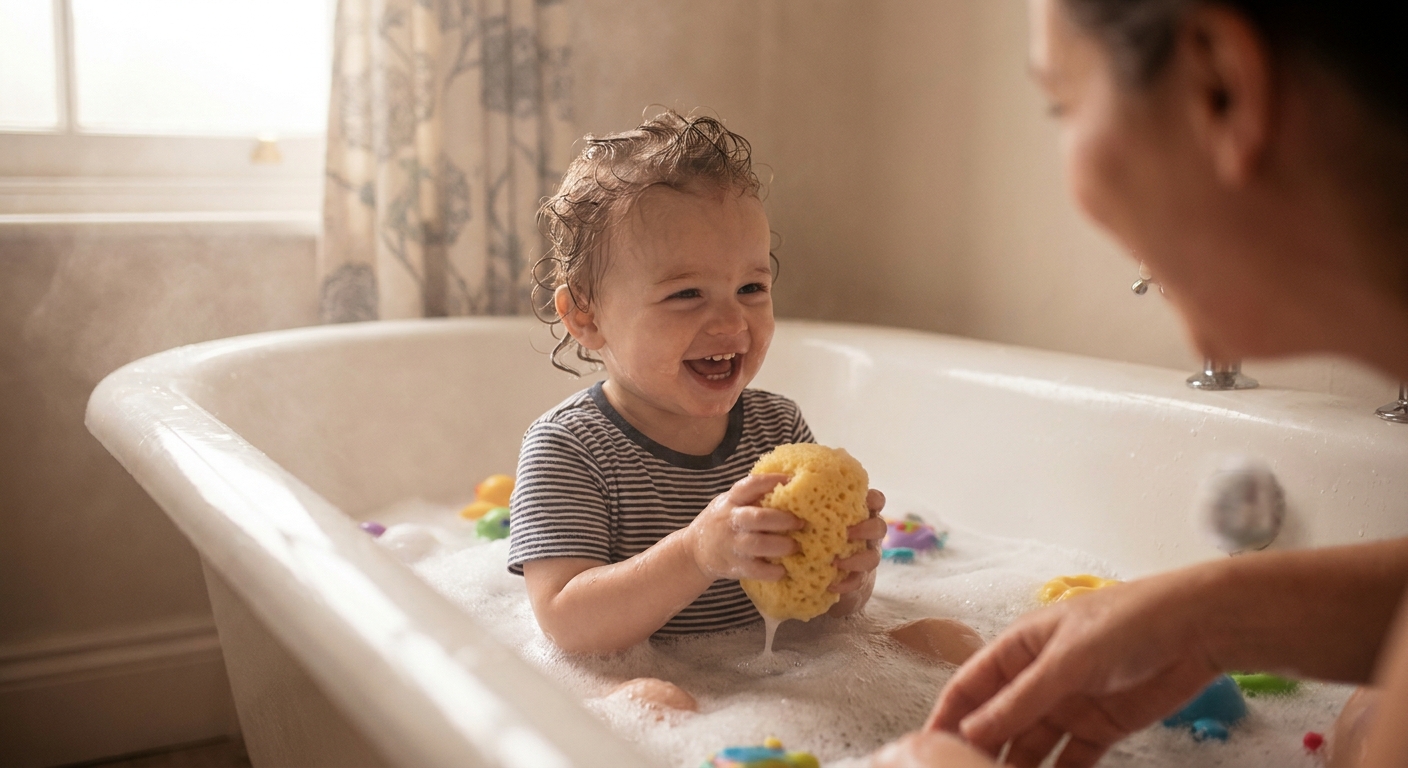
In my house, bath time can flip in seconds. One minute everyone is fine, the next someone is upset because the water is “too wet” or the bubbles are “touching them weird.” After years of juggling three kids and a rescue dog who believes towels are a personal enemy, I learned this: a simple story can do what a dozen reminders cannot.
The good news is you do not need special toys, bath crayons, or a Pinterest-worthy setup. You can invent sensory bath time stories using only two things you already have: bubbles and a sponge. When you use them as story props, you give your child something predictable to focus on, something soothing to touch, and something playful to imagine. For my kids, that combination often helped prevent tantrums and made the whole evening routine feel smoother.
Who this works best for
I use these most with toddlers and preschoolers, but you can stretch the same idea for older kids by making the “mission” a little more complex and the language a little less babyish. For very young toddlers, keep the story short and keep the sponge in your hands unless you are sure they will not mouth it.
Why bubbles and sponges work so well
Bath time is already sensory, which is exactly why it can be tricky. The water temperature, echoes in the bathroom, slippery surfaces, soap smells, and getting hair wet can feel like a lot. A story built around bubbles and a sponge can give your child:
- A predictable “script” to follow when their body feels overstimulated.
- A job for their hands (squeeze, dab, paint with suds) that can keep them grounded.
- Gentle control because they can help steer the story by choosing what happens next.
- Built-in transitions from play to rinse to out of the tub, without a sudden hard stop.
For us, it is basically a calm routine disguised as imagination.
Set up the story tools fast
You only need what is already there. I keep it intentionally boring, because boring is repeatable on a busy weeknight.
- Bubbles: your usual kid-safe bubble bath or gentle cleanser you already trust around eyes.
- Sponge: a clean bath sponge or soft washcloth (anything squeezable works).
Optional but helpful: a cup for pouring water. If you do use one, it stays a “cup” in the story, not a new character. The fewer props, the less negotiating.
Make a story in 3 steps
If you freeze up trying to be creative, use this tiny formula. I have used it half-asleep.
Step 1: Pick the setting
Choose one simple place your child can see: the Bubble Sea, the Sponge Island, the Waterfall Faucet, the Foggy Cave. If you use a towel, hold it up like a little canopy, not over a child’s face.
Step 2: Give the sponge a job
I usually make the sponge a helpful tool, not a talking character. Talking characters are fun, but they can also invite arguments. A “helper sponge” keeps it calm:
- Bubble painter
- Gentle cleaner robot
- Rescue raft
- Treasure finder
Step 3: Add three beats
Keep it short. Bath time stories should be more like episodes than novels.
- Beginning: “Uh oh, the Bubble Sea is too quiet.”
- Middle: “Let’s make bubble clouds and search for the missing splash.”
- End: “Mission complete. Time for the rinse waterfall and towel cozy cave.”
Five story starters
These are my go-to plots. They are intentionally simple so you can repeat them for weeks without your child noticing. Repetition is comforting.
1) The Bubble Bakery
What you do: Scoop bubbles with the sponge, “frost” arms and legs with suds, then gently wipe clean.
- Beginning: “Welcome to the Bubble Bakery. Today we bake bubble cupcakes.”
- Middle: “We need frosting swirls on elbows, knees, and toes.”
- End: “Uh oh, the frosting must be rinsed under the waterfall faucet so it does not melt.”
2) Sponge Submarine
What you do: Dip the sponge, squeeze it to make “submarine sonar,” and make tiny “boop” squeezes instead of big splashes. Aim the squeezes into the water, not toward faces.
- Beginning: “Our submarine is exploring the Bubble Sea.”
- Middle: “We have to find three bubble reefs.”
- End: “Submarine returns to dock for a quick rinse and towel wrap.”
3) The Bubble Storm
What you do: Swirl bubbles (storm), then smooth them flat (calm) with the sponge. This one is great when a child is revving up.
- Beginning: “The Bubble Storm is here. The water is whooshy.”
- Middle: “Let’s guide the bubbles into the calm harbor with our sponge boat.”
- End: “Now the harbor is quiet. Time for gentle rinse rain.”
4) The Lost Bubble Puppy
What you do: Make one larger bubble pile and call it the “puppy.” Use the sponge to “pat” it and move it around.
- Beginning: “A bubble puppy got lost in the tub.”
- Middle: “We look under bubble hats, bubble mountains, and bubble caves.”
- End: “We bring the puppy home, then wash away the bubble footprints.”
5) The Clean-Up Spell
What you do: Turn washing into the story ending. The sponge “casts” sudsy circles, then the water “erases” them.
- Beginning: “We need a clean-up spell for arms and legs.”
- Middle: “Sponge draws three magic circles: one on each arm, one on the tummy.”
- End: “Rinse spell: waterfall, waterfall, waterfall. All done.”
Timing that helps with tantrums
The biggest meltdown trigger for my kids was not the bath itself. It was the transition out of the bath. So I stopped ending bath time with a surprise announcement and started ending the story with a countdown that felt like part of play.
The three chapters routine
- Chapter 1 (about 2 to 4 minutes): bubbles and play setup
- Chapter 2 (about 3 to 6 minutes): the story mission (search, build, bake, rescue)
- Chapter 3 (about 2 minutes): rinse and goodbye scene
When my kids hear “Chapter 3,” they usually know what comes next. That predictability can do a lot of heavy lifting on tired nights.
Use calming sensory words
You do not have to be poetic. Just sprinkle in a few words that help your child notice safe sensations.
- Temperature: warm, cozy, just-right, gentle
- Touch: soft bubbles, squishy sponge, smooth water
- Sound: quiet splish, tiny drip, whooshy waterfall
- Movement: slow swirl, little squeeze, easy rinse
This can be especially helpful for kids who get tense about hair washing. The story language often helps my kids stay regulated long enough to get through it without a big fight.
Common snags and quick fixes
- If bubbles feel “bad” on their skin: Use fewer bubbles and keep them in one corner as the “bubble dock,” or switch to a washcloth story with only a few suds.
- If rinse water on the face is the problem: Make “rain” fall on shoulders first, then count down to a quick forehead rinse. Keep eyes looking up at the ceiling, and keep the story calm and short.
- If they want the story to go forever: Point back to the structure. “This one has three chapters. We are on Chapter 3 now.” Then repeat the same closing line.
- If siblings share a bath and conflict starts: Give each child a separate job in the same plot, like “you are the bubble builder, you are the sponge captain,” and keep the mission cooperative.
If your child takes over
Some kids love control, and bath time is prime negotiating territory. Here are boundaries that still feel playful.
Use two choices
- “Should the sponge submarine go to the bubble reef or the sponge island?”
- “Do you want bubble frosting on elbows or knees first?”
Keep the ending steady
I say it kindly and matter-of-fact: “Every story ends with the rinse waterfall and towel cave. That is how this book goes.”
And if they protest, I repeat the last line the exact same way. Repeating calmly has been one of my best parenting tools, even when I do not feel calm inside.
Safety notes
- Supervise closely at all times in the bath, even for older kids.
- Watch slipping: bubbles make the tub extra slick. Keep standing to a minimum.
- Choose gentle products: heavily fragranced soaps and some bubble baths can irritate skin or eyes. If your child is sensitive, use less product and rinse sooner.
- Avoid shedding sponges: skip loofahs or anything that can break into small pieces that a toddler might mouth.
- Clean the sponge regularly and let it dry well between baths.
The one minute version
For those nights when bedtime is late and nobody has extra patience, here is my fastest possible script:
“The Bubble Sea is closing. Sponge boat, one last squeeze. Now the waterfall rinse. One, two, three. Towel cave time. The end.”
It is short, predictable, and it still gives your child a feeling of closure.
More story help
If your kids respond well to tiny stories during transitions, you might also like my approach to quick routine storytelling in Micro Stories for Toddler Chores. It is the same idea as bath stories: short plot, clear ending, and a calmer path through the tricky part.
You can also browse more ideas in our Kids Stories guide.