

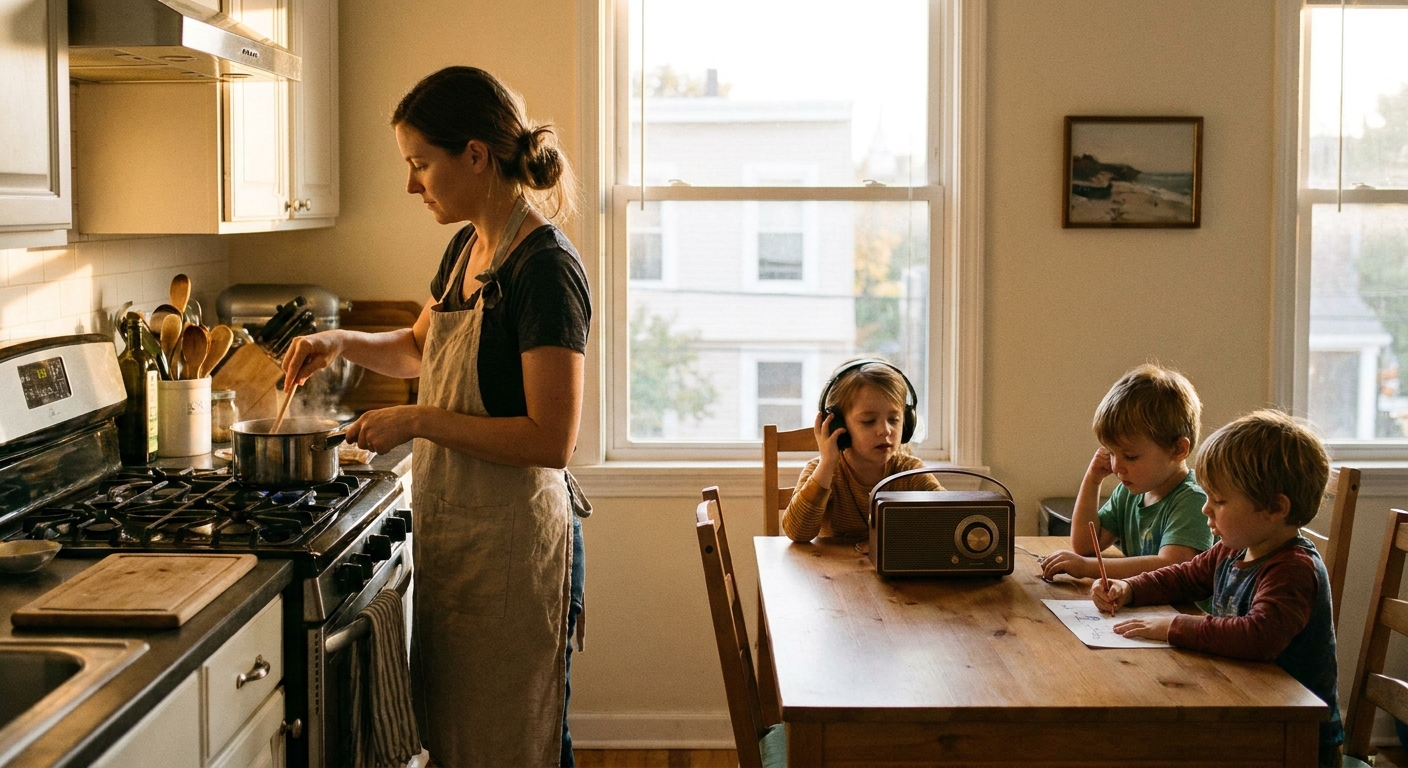
I love my kids. I also love the very specific kind of quiet that lets me drain pasta without someone announcing a crisis in the other room.
In our house, short audio stories are the sweet spot: long enough to hold attention, short enough to fit the dinner window. When I find a podcast that consistently gives me a solid 10 minutes to chop, stir, plate, and breathe, I keep it in heavy rotation.
Below are my favorite kids story podcasts and story-forward feeds that work for a 10-minute dinner window. Some have truly short episodes. Others run longer, but they have easy stopping points or segments you can use for about 10 minutes without turning it into a whole production.
What makes a dinner story work
- Short episodes or clean pause points, so you can finish a cooking step without negotiating for “one more.”
- Calm narration and clear pacing. High-energy voices can wind some kids up.
- Low-stakes plots (cozy, funny, everyday adventures). Big cliffhangers can backfire right when you need them seated.
- Clear endings, so you can say, “Story’s done. Time to eat,” and it makes sense.
- A good fit for your kid’s sensory needs. Some focus best with quieter narration, and some do better with a little more silliness.
- Easy access on your usual app, smart speaker, or car system if you’re picking up takeout.
If you want a bigger list of story formats (podcasts, read-alouds, audio series), our hub is here: Kids Stories guide.
Kids story podcasts for a 10-minute dinner window
All of these can work for dinner, either because the episodes are often short or because you can use a shorter episode, a mini-episode, or a natural break. I added a simple “typical length” note so you can pick with eyes open. Consider these ranges approximate since runtimes can vary by season and episode.
1) Circle Round
Best for: Ages 5 to 10, families who like folktales
Typical length: Often 20 to 35+ minutes (some shorter specials)
Why it works at dinner: Even when episodes run longer, the storytelling is structured and soothing, and you can usually pause at a clear moment without a full-on revolt. My kids get pulled in fast, which is the whole point.
Dinner tip: Start it when you begin cooking, then pause at a natural break and save the rest for tomorrow.
2) Stories Podcast
Best for: Ages 4 to 9, kids who love fairy tales and familiar characters
Typical length: Often 15 to 30 minutes (varies by episode)
Why it works at dinner: Many episodes start strong and feel very “once upon a time,” which helps kids settle quickly. The branding and distributor labels can look different depending on the app, but the show itself is a reliable go-to when you need story momentum right away.
Dinner tip: Choose stand-alone stories when you can. Serial episodes can lead to “play the next one” negotiations.
3) Story Pirates
Best for: Ages 6 to 11, kids who like silly humor and songs
Typical length: Often 25 to 45+ minutes (some shorter bits within)
Why it works at dinner: It’s funny enough to keep kids listening, which is gold when you’re doing the less-fun parts of cooking like unloading the dishwasher. It can be longer than a dinner window, but it’s easy to stop after a segment or song.
Dinner tip: Use it on nights when energy is already high. It channels the chaos into listening.
4) Good Night Stories for Rebel Girls
Best for: Ages 6 to 12, kids who enjoy real people and big ideas
Typical length: Often 10 to 20 minutes
Why it works at dinner: The tone is confident and calm, and the episodes are easy to drop into mid-week. You’ll also overhear a lot of great conversation starters for the table.
Dinner tip: Pair it with a simple “tell me one thing you learned” question once you sit down.
5) Little Stories for Tiny People
Best for: Ages 3 to 7, sensitive kids who do better with gentle storytelling
Typical length: Often 15 to 25 minutes
Why it works at dinner: Cozy, imaginative, and not shouty. When my youngest is overtired, this is the one that helps keep things from tipping into meltdown territory.
Dinner tip: Keep volume lower than you think. Calm audio works better as background focus.
6) Greeking Out
Best for: Ages 7 to 12, mythology fans
Typical length: Often 20 to 35+ minutes
Why it works at dinner: It hits that sweet spot of exciting but still structured. If you have a kid who wants “something interesting,” mythology can feel like a treat without requiring a screen.
Dinner tip: Use it on nights you’re cooking something repetitive (stirring, flipping, simmering), then stop at the midpoint and pick up next time.
7) Wow in the World
Best for: Ages 6 to 12, curious kids who like facts with their fun
Typical length: Often 25 to 45+ minutes (check for shorter episodes when you can)
Why it works at dinner: Some episodes are long, but the show is naturally broken into topics. It’s a great option when stories feel “too babyish” for an older sibling.
Dinner tip: Preview the runtime and pick the shortest episodes for weeknights. If you only have 10 minutes, stop at a segment break.
8) PBS KIDS podcasts (varies by app)
Best for: Ages 3 to 8, kids who already love PBS characters
Typical length: Varies widely by show and feed
Why it works at dinner: Familiar voices equal instant buy-in, which matters when you’re trying to start dinner on time. PBS KIDS has had multiple podcast feeds over time and what you see depends on your app and region, so I treat this as a category rather than one single “official” podcast.
Dinner tip: In your podcast app, search “PBS KIDS” and then narrow it down by a character or show your kid already knows. Save a couple of shorter favorites for quick access.
9) Sesame Street audio stories (varies by app)
Best for: Ages 2 to 6, shorter attention spans
Typical length: Often short segments, but titles and runtimes vary by feed
Why it works at dinner: The segments tend to be friendly, simple, and easy to stop without drama. Like PBS, Sesame Street audio options can show up under different feed names depending on the platform.
Dinner tip: Search “Sesame Street” and look for the shortest segments. This is my pick for the tightest nights: grilled cheese, scrambled eggs, leftovers. Quick dinner, quick story, quick win.
10) Brains On! (pick shorter episodes)
Best for: Ages 8 to 13, kids who like questions and debate
Typical length: Often 20 to 45+ minutes (some shorter specials)
Why it works at dinner: Not every episode fits a dinner window, but when you pick a shorter one, it can totally reset the mood in the kitchen. It gives older kids something to listen to that feels “grown up.”
Dinner tip: Great for “snack dinner” nights when everyone is scattered and you need a shared focus fast.
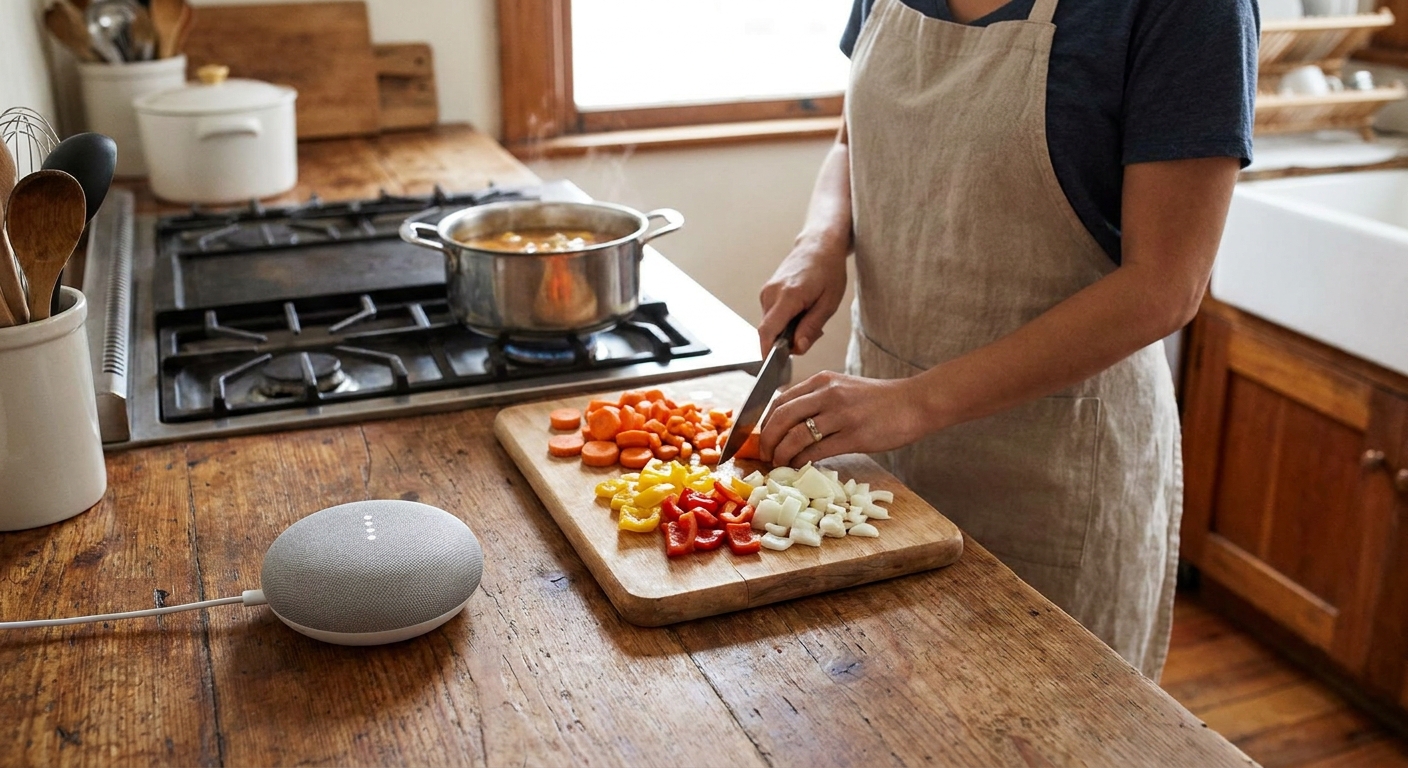
My 10-minute dinner routine
This is the simple system that keeps audio from turning into a bargaining session.
- Audio only happens after washing hands. I say, “Wash hands, then you can pick the story.”
- One episode or one timed block, then stop. I tell them ahead of time: one story while I finish cooking.
- Kids get a job while listening. Table setting, napkins, filling water cups, sorting cutlery. Listening goes better when hands are busy.
- Use a timer if needed. If episodes vary, set a 10-minute kitchen timer and stop when it dings.
- End with a predictable transition line. Mine is: “Story’s done. Now we eat.” Boring is good here.
When we want something more interactive on weekends, we do paper story prompts instead: Make a story path with paper cards.
Quick picks by age
Ages 2 to 4
- Sesame Street audio stories for short, friendly segments
- PBS KIDS podcasts for instant familiarity (availability varies)
- Little Stories for Tiny People for calmer nights
Ages 5 to 7
- Circle Round for folktales
- Stories Podcast for classic story energy
- Story Pirates when you need laughter
Ages 8 to 12
- Greeking Out for mythology-driven plots
- Brains On! and Wow in the World for curious kids
- Good Night Stories for Rebel Girls for inspiring listens
Settings that help
- Turn off auto-play when you can. Auto-play is how “one story” becomes four.
- Use a speaker, not headphones, during cooking. You still want kids to hear you, and you want to hear them.
- Keep volume low. The goal is focused calm, not a party in the kitchen.
- Preview new shows. Some podcasts aimed at older kids include jumpier ads or heavier themes. A 30-second skim can save your evening.
- If your app supports it, use kid profiles or explicit-content filters. It’s not perfect, but it lowers the odds of an awkward surprise when your hands are covered in raw chicken.
- If ads are a problem, try public-media-style shows first. They often have fewer or less aggressive ads, but it varies by platform and episode.
If stories are not the vibe
Some nights, my kids will not listen to a plot. If you still want the screen-free “everybody settle” effect, try one of these for 10 minutes:
- Instrumental music (one short playlist you only use while cooking)
- Nature sounds (rain, ocean, forest) for calmer nights
- Joke podcasts for kids who need humor more than story
FAQ
Are there truly ad-free kids story podcasts?
Some shows offer ad-free listening through paid platforms, and some public-media-style podcasts keep ads limited. Since options change by app and episode, I treat “ad-free” as a bonus, not a requirement. My workaround is picking calmer shows and previewing an episode once before using it at peak dinner chaos.
What if my kids argue over what to play?
I rotate “picker of the day” by weekday, or I keep a short list of three approved shows and they can only choose from those. Too many options makes it harder, not easier.
What if 10 minutes is not enough time to finish dinner?
Same. On nights when I need longer, I do two rounds: one 10-minute block while I cook, then a second short episode only after the table is set. It keeps the audio tied to helpful routines instead of turning into all-evening background noise.
If you’re building a bigger screen-free routine, you might like our roundup of easy weekend ideas too: Family Activities guide.